
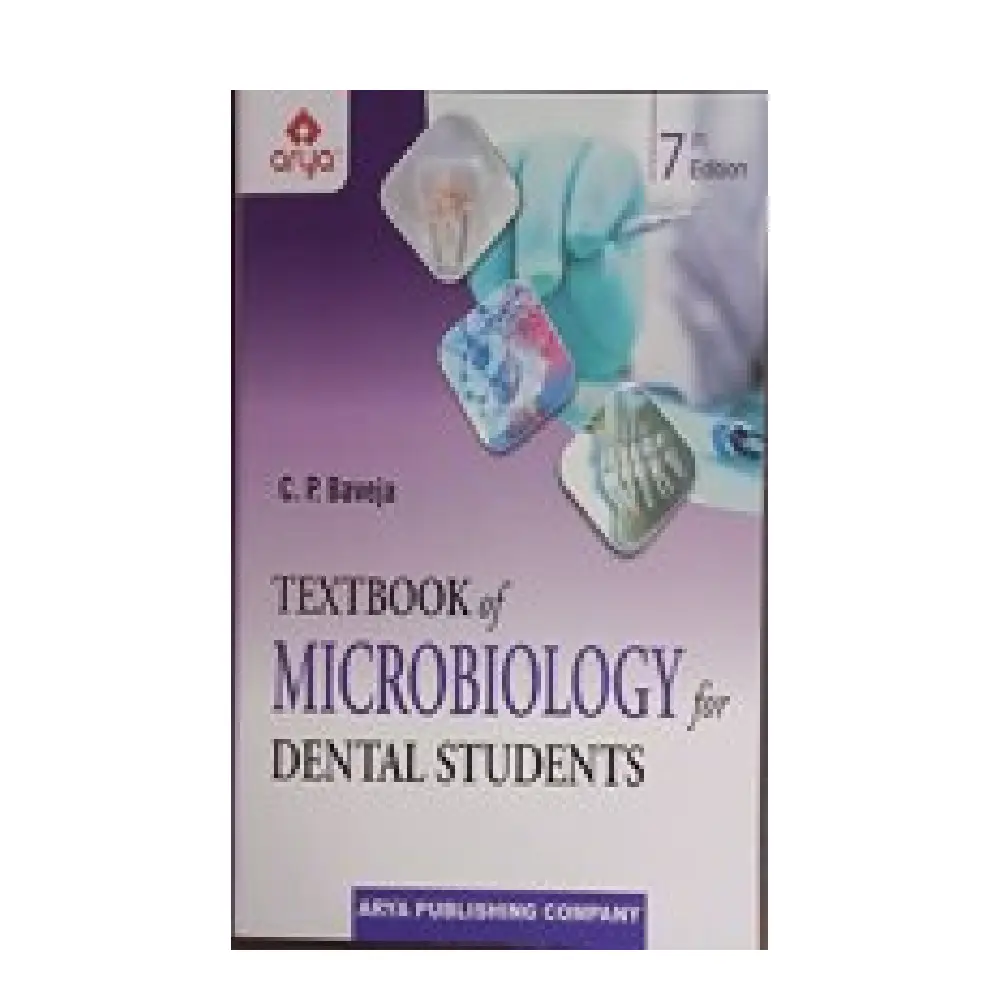
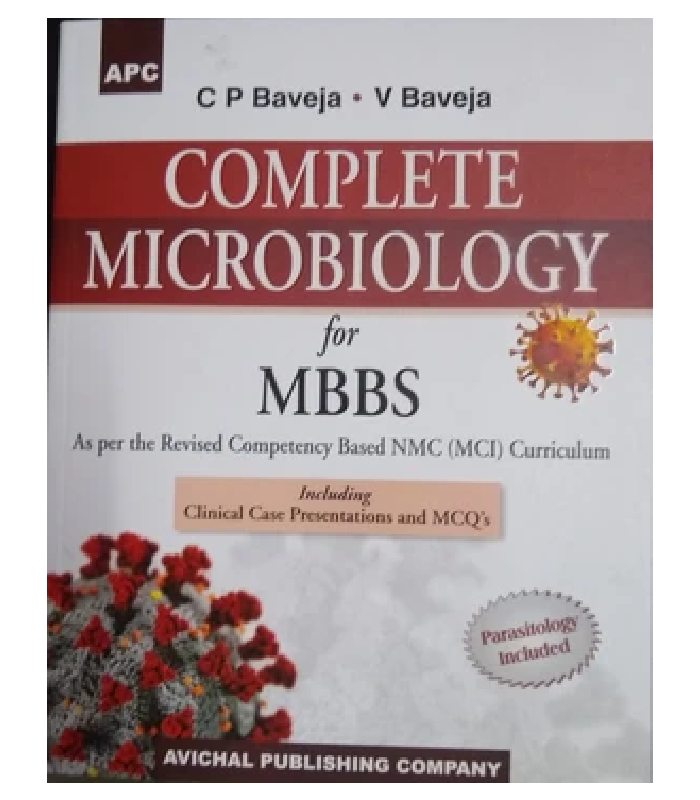
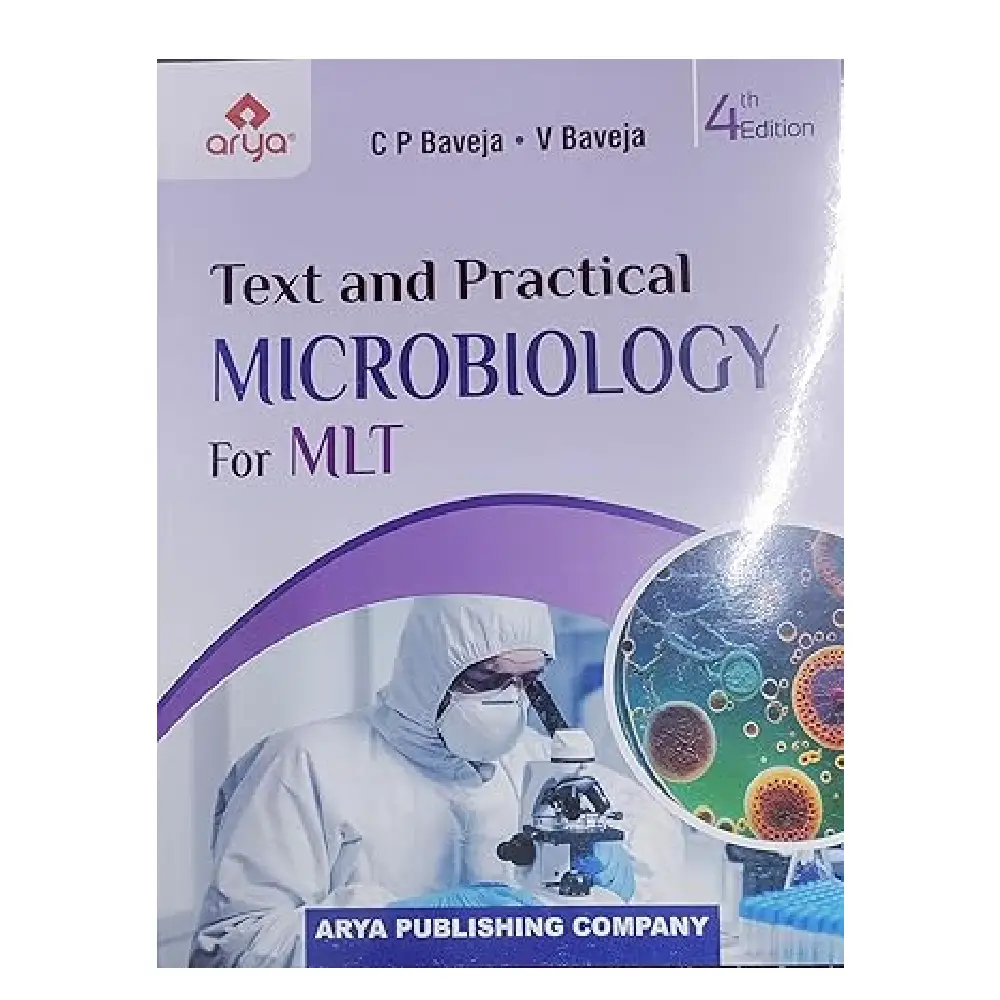
Textbook of Microbiology for Dental Students (7th Edition) by C. P. Baveja is a comprehensive and student-friendly textbook specifically designed for Bachelor of Dental Surgery (BDS) students. Published by Arya Publishing Company, this edition is carefully structured according to the Dental Council of India (DCI) syllabus and emphasizes the clinical relevance of microbiology in dental practice. The 7th edition reflects updated guidelines, enhanced illustrations, and revised content to align with modern dental education and infection control standards.
The book begins with general microbiology, introducing the history and scope of microbiology along with contributions of pioneers in the field. It explains the classification, morphology, physiology, and genetics of microorganisms in a simplified manner suitable for dental undergraduates. Topics such as bacterial cell structure, growth curves, metabolism, sterilization, and disinfection are discussed clearly. The section also includes detailed explanations of staining techniques like Gram staining and acid-fast staining, which are fundamental laboratory tools in diagnosing infections.
A significant portion of the text focuses on immunology, an essential subject for understanding host defense mechanisms in oral health. It covers innate and adaptive immunity, antigen-antibody reactions, hypersensitivity reactions, autoimmunity, and immunodeficiency disorders. Special attention is given to mucosal immunity in the oral cavity, including the protective role of saliva and gingival crevicular fluid. These concepts help dental students understand how the immune system interacts with oral pathogens and influences periodontal diseases.
The systematic bacteriology section is highly detailed and clinically oriented. It includes comprehensive coverage of gram-positive and gram-negative bacteria relevant to dental infections. Organisms such as Streptococcus mutans, Lactobacillus species, Actinomyces, and Porphyromonas gingivalis are discussed in the context of dental caries and periodontal disease. Each organism is presented under clear subheadings: morphology, cultural characteristics, pathogenesis, clinical features, laboratory diagnosis, prevention, and treatment. This systematic approach enables students to correlate theory with clinical scenarios encountered in dental clinics.
The book also includes well-structured chapters on virology, discussing viruses of dental importance such as Herpes simplex virus, Hepatitis B virus, Human papillomavirus (HPV), and Human immunodeficiency virus (HIV). The oral manifestations of these infections and cross-infection risks in dental settings are emphasized. The importance of vaccination, especially against Hepatitis B, is highlighted to promote occupational safety.
In the mycology section, fungal infections affecting the oral cavity are thoroughly described. Candida albicans, the most common cause of oral candidiasis, is discussed with emphasis on predisposing factors such as immunosuppression, diabetes mellitus, prolonged antibiotic therapy, and denture usage. Diagnosis and antifungal management strategies are explained in a clear and practical manner.
One of the most valuable sections for dental students is infection control and sterilization. Given the high exposure to blood, saliva, and aerosols in dental practice, strict infection control protocols are essential. The 7th edition includes updated guidelines on hand hygiene, sterilization techniques (autoclaving, dry heat sterilization, chemical disinfectants), biomedical waste management, and universal precautions. These topics are highly practical and directly applicable in clinical training.
The book also addresses antimicrobial therapy, discussing commonly used antibiotics in dentistry such as penicillins, cephalosporins, macrolides, and metronidazole. Mechanisms of action, indications, adverse effects, and antibiotic resistance patterns are explained concisely. This ensures rational prescription practices and awareness of emerging drug resistance issues.
Applied microbiology and laboratory diagnosis form another important part of the textbook. Students learn about specimen collection from oral lesions, transport media, culture methods, sensitivity testing, and interpretation of laboratory reports. This knowledge helps in understanding how microbiological investigations support clinical decision-making.
A unique feature of the 7th edition is the inclusion of revision aids such as summary boxes, key points at the end of each chapter, flowcharts, tables, and multiple-choice questions. Many chapters include viva-voce questions and short-answer formats tailored for university examinations. The addition of a chapter like “Essentials of Microbiology at a Glance” provides quick revision material before exams.
Overall, Textbook of Microbiology for Dental Students (7th Edition) is a well-structured, exam-oriented, and clinically relevant resource. It bridges the gap between theoretical microbiology and practical dental applications. By integrating foundational science with oral health relevance, the book prepares dental students to understand infectious diseases, maintain strict infection control, prescribe antimicrobials responsibly, and deliver safe patient care.

Reviews
There are no reviews yet