
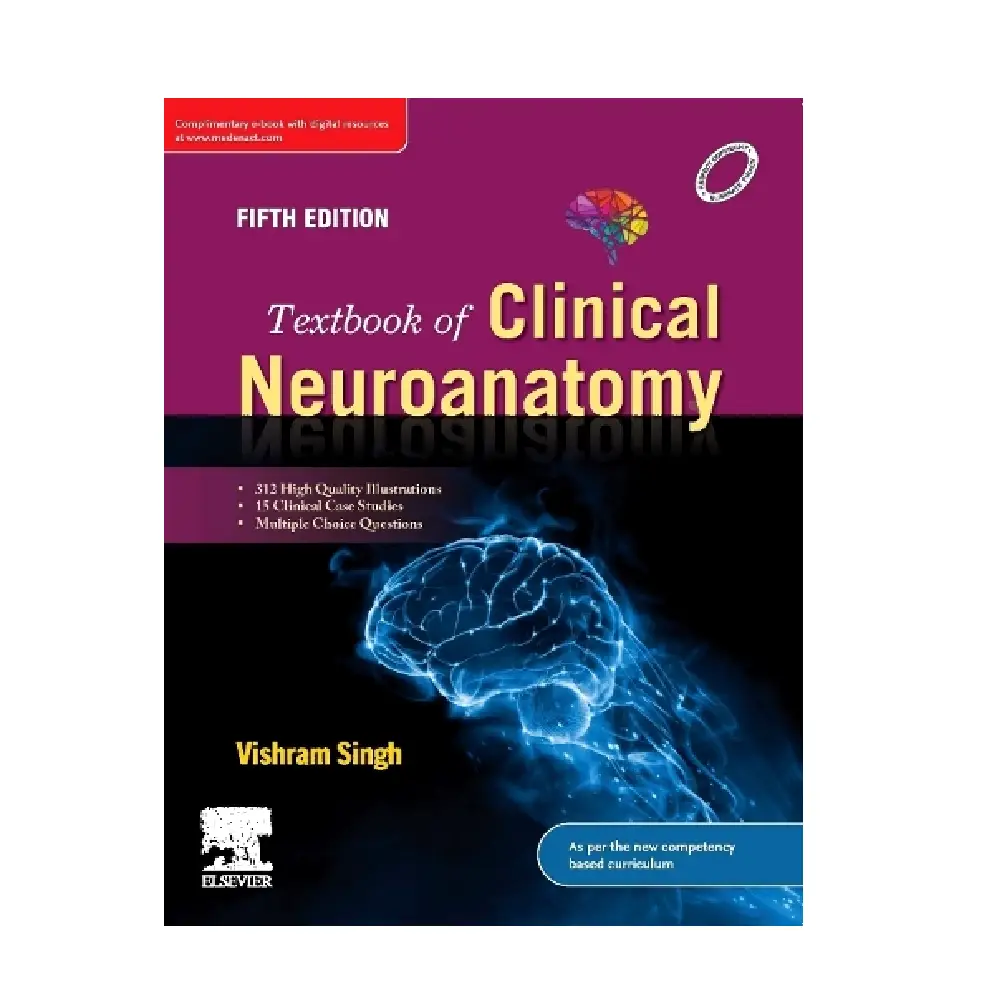


Textbook of Clinical Neuroanatomy — A Gateway Between Structure and Clinical Practice
The Textbook of Clinical Neuroanatomy is a cornerstone resource in medical education that bridges the complex anatomical details of the nervous system with their clinical relevance. Unlike standard anatomy texts that emphasize structure alone, this book focuses on how neuroanatomy underpins neurological function, diagnosis, and disease—making it essential for medical students, residents, and health professionals preparing for clinical rotations and exams.
Purpose and Audience
Clinical neuroanatomy is often regarded as one of the most challenging subjects in the medical curriculum because it requires integration of detailed structural knowledge with physiology and pathology. The Textbook of Clinical Neuroanatomy is designed to:
-
Teach functional anatomy in a clinically relevant context
-
Help students understand how lesions affect neural pathways
-
Support problem-solving in neurology, neurosurgery, radiology, ophthalmology, and rehabilitation medicine
-
Prepare learners for practical exams, viva voce, and clinical case discussions
This textbook is used widely by MBBS, BDS, and allied health students, and often recommended for postgraduate training in neurology, neuroscience, and critical care.
Core Content and Organization
The book is usually structured to move from basic concepts to complex clinical correlations in a logical and learner-friendly way.
1. Introduction to the Nervous System
The initial chapters cover:
-
Developmental anatomy of the nervous system
-
Histological organization of neurons and glial cells
-
Classification of central and peripheral nervous systems
This foundation helps learners appreciate how the nervous system arises embryologically and how structure relates to function.
2. Spinal Cord and Brainstem
The next section focuses on:
-
Spinal cord levels and tracts: motor (corticospinal), sensory (spinothalamic, dorsal columns)
-
Reflex arcs and clinical reflexes
-
Brainstem nuclei and pathways: cranial nerve nuclei, ascending and descending fibers
Clinical correlations include understanding Brown-Sequard syndrome, tabes dorsalis, and brainstem stroke syndromes.
3. Cerebellum and Basal Ganglia
These areas are essential for motor control and coordination. Topics include:
-
Functional anatomy of the cerebellar circuits
-
Basal ganglia loops and movement regulation
-
Extrapyramidal system and disorders (e.g., parkinsonism, Huntington’s disease)
By connecting neuroanatomy to movement disorders, students learn to interpret clinical signs like tremors, ataxia, and rigidity.
4. Cerebral Cortex and Functional Systems
Key systems covered include:
-
Somatosensory cortex
-
Motor cortex and corticospinal pathways
-
Language centers (Broca’s and Wernicke’s areas)
-
Visual and auditory pathways
Clinical examples—such as aphasia types and visual field defects—help students link lesions to symptoms.
5. Cranial Nerves
Each cranial nerve is studied in terms of:
-
Nucleus and course
-
Function (motor, sensory, or both)
-
Clinical testing
-
Common lesion syndromes
Examples include facial nerve palsy, trigeminal neuralgia, and oculomotor nerve palsies.
6. Autonomic Nervous System
This section details:
-
Sympathetic and parasympathetic pathways
-
Neurotransmitters and receptors
-
Clinical implications in disorders like Horner’s syndrome and dysautonomia
Understanding ANS organization is critical for interpreting cardiovascular, gastrointestinal, and genitourinary signs.
7. Ventricular System and Cerebrospinal Fluid
Topics include:
-
Anatomy of ventricles and CSF circulation
-
Blood–brain barrier and choroid plexus
-
Hydrocephalus and intracranial pressure dynamics
Knowledge of CSF flow is crucial for lumbar puncture procedures and interpreting CSF analyses.
8. Neuroimaging Correlations
A notable strength of clinical neuroanatomy texts is the integration of radiology:
-
CT and MRI images annotated with corresponding anatomical structures
-
Interpretation of common pathology (stroke, tumor, hemorrhage)
-
Localization strategies using imaging
This prepares students for real-world clinical settings where imaging guides diagnosis and management.
Clinical Relevance and Case Integration
What sets a good clinical neuroanatomy textbook apart is its focus on applied learning. The book typically includes:
-
Case scenarios that present symptoms and ask students to localize lesions
-
Clinical pearls summarizing key diagnostic points
-
Examination checklists for quick revision before viva voce or practical exams
Clinical correlations transform rote memorization into problem-solving skills.
Strengths of the Textbook
A. Visual Aids
Neuroanatomy is inherently spatial, and the textbook uses:
-
Detailed diagrams
-
Flowcharts of pathways
-
Cross-sectional views
-
Radiologic images (MRI/CT)
These visuals enhance understanding of relationships between structures.
B. Logical Flow
Content is sequenced from simple to complex, reinforcing learning and reducing cognitive overload.
C. Clinical Focus
By linking structure to function and dysfunction, students learn to think like clinicians, not just anatomists.
Challenges for Students
Despite its strengths, neuroanatomy remains challenging:
-
Complex pathways require repeated review
-
Three-dimensional spatial reasoning can be difficult without models
-
Terminology overload (nuclei, tracts, reflexes) demands active learning strategies
Many students supplement the textbook with:
-
3D apps and atlases
-
Flashcards for pathways and tracts
-
Group discussions and clinical problem exercises
Learning Strategies
To master clinical neuroanatomy:
-
Use diagrams extensively—draw and redraw pathways.
-
Relate signs to structures—practice lesion localization.
-
Study with imaging—annotate CT/MRI images.
-
Test yourself—use clinical cases and quiz questions.
-
Teach peers—explaining concepts reinforces retention.
Conclusion
The Textbook of Clinical Neuroanatomy is indispensable for medical students because it transforms complex structural knowledge into clinical reasoning skills. By emphasizing function, pathology, and real case application, it prepares learners not just for exams, but for clinical practice where accurate localization and interpretation of neurological signs are fundamental. Whether in early medical years or in neurology specialties, this textbook remains a trusted guide in navigating the intricate landscape of the human nervous system.



Reviews
There are no reviews yet