
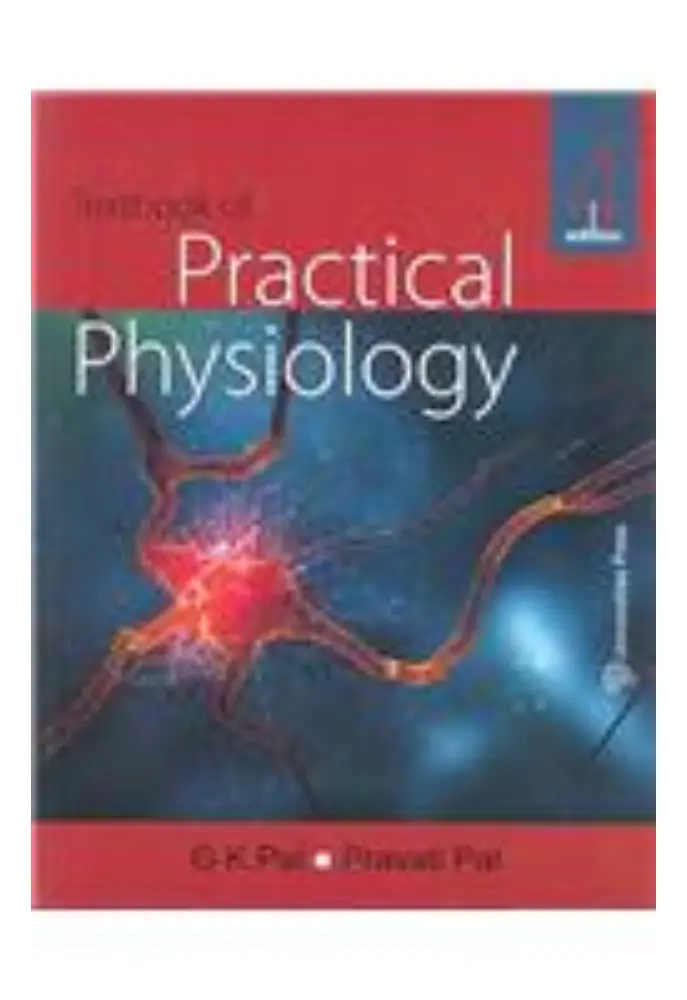
Text Book of Practical Physiology
Text Book of Practical Physiology is a comprehensive and essential guide designed primarily for students in medical, dental, nursing, and allied health sciences. The book focuses on bridging the gap between theoretical knowledge and laboratory practice, making it an indispensable resource for understanding human physiology through hands-on experimentation. It is especially valuable for first- and second-year students who are introduced to physiological concepts alongside practical demonstrations.
The content of the book is systematically organized to cover all major areas of practical physiology, including hematology, clinical examination, neurophysiology, and basic experimental procedures. Each chapter is structured in a clear and student-friendly manner, beginning with the objective of the experiment, followed by the required materials, step-by-step procedures, observations, and interpretations. This logical format helps students not only perform experiments accurately but also understand the underlying physiological principles.
One of the key highlights of this textbook is its strong emphasis on hematology experiments. It provides detailed explanations of procedures such as hemoglobin estimation, red and white blood cell counts, differential leukocyte count, and blood grouping. These experiments are explained with clarity, ensuring that students can perform them confidently in laboratory settings. The inclusion of normal values and clinical significance further enhances the learning experience by connecting practical results with real-life medical applications.
In addition to hematology, the book extensively covers clinical examination techniques. It guides students through the examination of vital signs such as pulse, blood pressure, and respiration, along with sensory and motor system assessments. These sections are particularly useful for developing clinical skills early in medical education. The explanations are simple yet thorough, allowing students to grasp both the procedure and its diagnostic importance.
The neurophysiology section introduces students to reflexes and sensory functions, explaining how to test and interpret them. These experiments help in understanding the functioning of the nervous system in a practical and interactive way. The book also includes charts, diagrams, and illustrations that make complex concepts easier to visualize and remember.
Another important feature of this textbook is the inclusion of viva voce questions and frequently asked exam questions at the end of each chapter. These questions are designed to prepare students for practical examinations and oral assessments. They encourage critical thinking and help reinforce key concepts learned during experiments. This makes the book not only a laboratory manual but also a useful revision tool.
The language used throughout the book is simple, clear, and concise, making it accessible even for beginners. The step-by-step instructions reduce confusion and errors during experiments, while the explanations ensure conceptual clarity. The book also emphasizes safety precautions and proper handling of laboratory equipment, which is crucial for maintaining a safe learning environment.
Overall, Text Book of Practical Physiology serves as a reliable and student-oriented resource that enhances both practical skills and theoretical understanding. Its well-structured approach, detailed explanations, and exam-oriented content make it a preferred choice among students and educators alike. Whether used in the laboratory or for exam preparation, this book plays a vital role in building a strong foundation in physiology.




Reviews
There are no reviews yet