
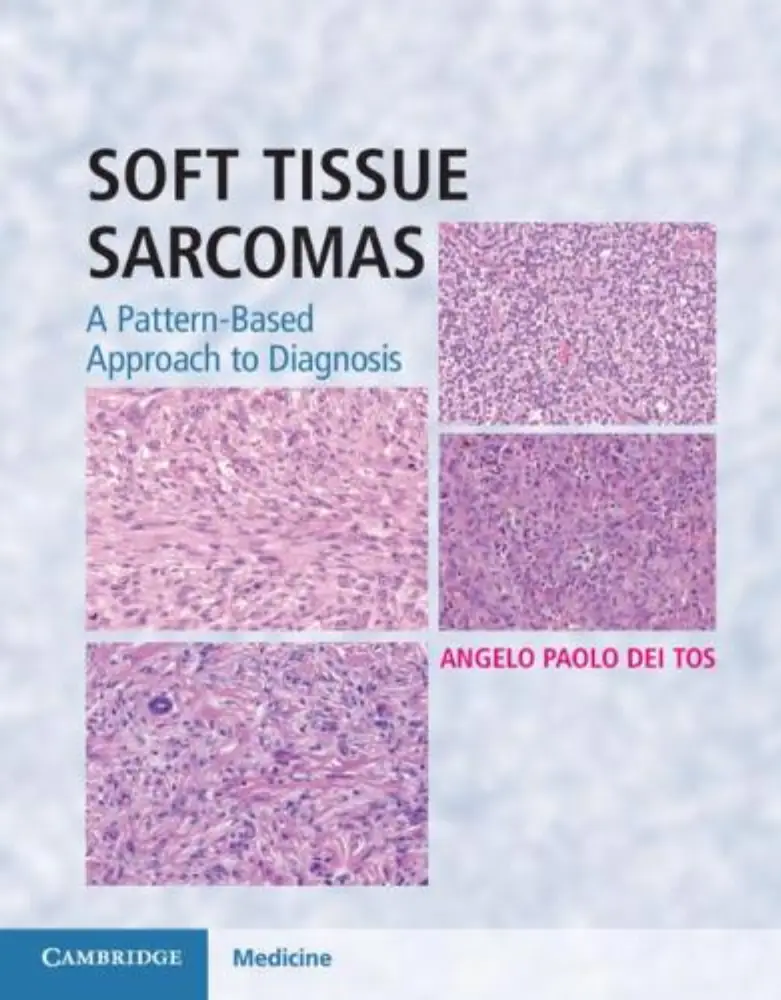


Soft Tissue Sarcomas: A Pattern‑Based Approach to Diagnosis (1st Ed)
Soft tissue sarcomas are a diverse and complex group of malignant tumors arising from mesenchymal tissues — including muscle, fat, fibrous tissue, blood vessels, and peripheral nerve sheaths. Their rarity and histologic variability make diagnosis especially challenging even for experienced pathologists. Soft Tissue Sarcomas: A Pattern‑Based Approach to Diagnosis provides a practical, visually rich, and clinically focused framework for diagnosing these tumors accurately and efficiently.
Unlike traditional textbooks that may organize content solely by tumor type, this book emphasizes a pattern‑based strategy—guiding practitioners to recognize morphological patterns first, then narrow the differential diagnosis based on key histologic and immunophenotypic features. This approach mirrors the real‑world diagnostic process in surgical pathology, improving both speed and accuracy.
Why a Pattern‑Based Approach Matters
Soft tissue sarcomas are a heterogeneous group with over 50 distinct subtypes recognized by the WHO classification. Many share overlapping cytologic and architectural features, and ancillary testing (immunohistochemistry, molecular studies) is often essential to reach a definitive diagnosis.
Standard diagnostic approaches may be overwhelming due to the sheer number of entities, varied nomenclature, and complex immunoprofiles. A pattern‑based method simplifies this by:
- Prioritizing morphologic architecture and cell type
- Dividing tumors into broad patterns (e.g., spindle cell, round cell, epithelioid, pleomorphic)
- Guiding use of targeted immunostains and molecular tests
- Integrating clinical context and imaging features
This makes the book extremely useful for trainees and practicing pathologists alike.
Core Structure and Content
The book is organized into major sections aligned with histologic patterns and diagnostic pathways:
1. General Principles of Soft Tissue Pathology
Early chapters introduce:
- Normal soft tissues and mesenchymal differentiation
- Tumor biology and grading systems
- Clinical presentation and radiologic‑pathologic correlation
- Specimen handling and biopsy techniques
Understanding tumor grade, margins, and sampling is vital since sarcomas are surgical diseases in which management decisions heavily depend on accurate pathology interpretation.
2. Pattern‑Based Diagnostic Sections
Each subsequent section focuses on one of the major morphological patterns:
- Spindle Cell Tumors
- Round Cell Tumors
- Epithelioid Tumors
- Pleomorphic Tumors
- Myxoid/Hyalinized Tumors
Within each pattern group, the text systematically:
- Describes characteristic microscopic features
- Lists key differential diagnoses
- Recommends essential immunohistochemical panels
- Highlights useful molecular/genetic markers
- Discusses diagnosis‑driven clinical implications
For example, the spindle cell section guides differentiation between leiomyosarcoma, malignant peripheral nerve sheath tumors (MPNST), and solitary fibrous tumor based on morphology and marker panels like SMA, S100, and STAT6.
3. Ancillary Techniques and Molecular Diagnostics
Modern soft tissue pathology increasingly integrates molecular testing:
- Translocation‑associated sarcomas (e.g., Ewing sarcoma, synovial sarcoma)
- Kinase fusion‑positive tumors
- Clonality and gene expression profiling
The text outlines when and how to use these tests effectively — helping avoid unnecessary studies while ensuring critical diagnoses are not missed.
4. Clinical Correlation and Reporting
Accurate pathology reporting has direct therapeutic implications:
- Grading systems (e.g., FNCLCC)
- Margin assessment
- Staging and prognostic factors
- Recommendations for multidisciplinary discussion
The book emphasizes clear, clinically relevant reporting that aids oncologists and surgeons.
Educational and Practical Value
Soft Tissue Sarcomas: A Pattern‑Based Approach to Diagnosis stands out for:
- Clinical applicability: Aligns diagnostic thinking with real‑world practice.
- Visual learning: High‑quality photomicrographs, algorithms, and tables.
- Diagnostic efficiency: Pattern‑driven workflow simplifies complex differentials.
- Online resource: Additional cases, images, and possibly digital tools supporting learning and reference.
This makes it an excellent resource for:
- Pathology residents and fellows
- Practicing general surgical pathologists
- Oncology clinicians seeking deeper understanding of tumor pathology
- Multidisciplinary sarcoma teams
Conclusion
Soft tissue sarcomas present one of the greatest diagnostic challenges in surgical pathology due to their histologic diversity and rarity. A pattern‑based diagnostic approach — as presented in this textbook — equips readers with practical frameworks that mirror the real diagnostic workflow, integrating morphology with targeted immunostains and molecular tests to reach accurate, clinically actionable diagnoses.
The book’s emphasis on clarity, diagnostic logic, and clinical correlation makes it an indispensable reference for both trainees and experienced practitioners confronting the complexities of soft tissue tumors.







Reviews
There are no reviews yet