
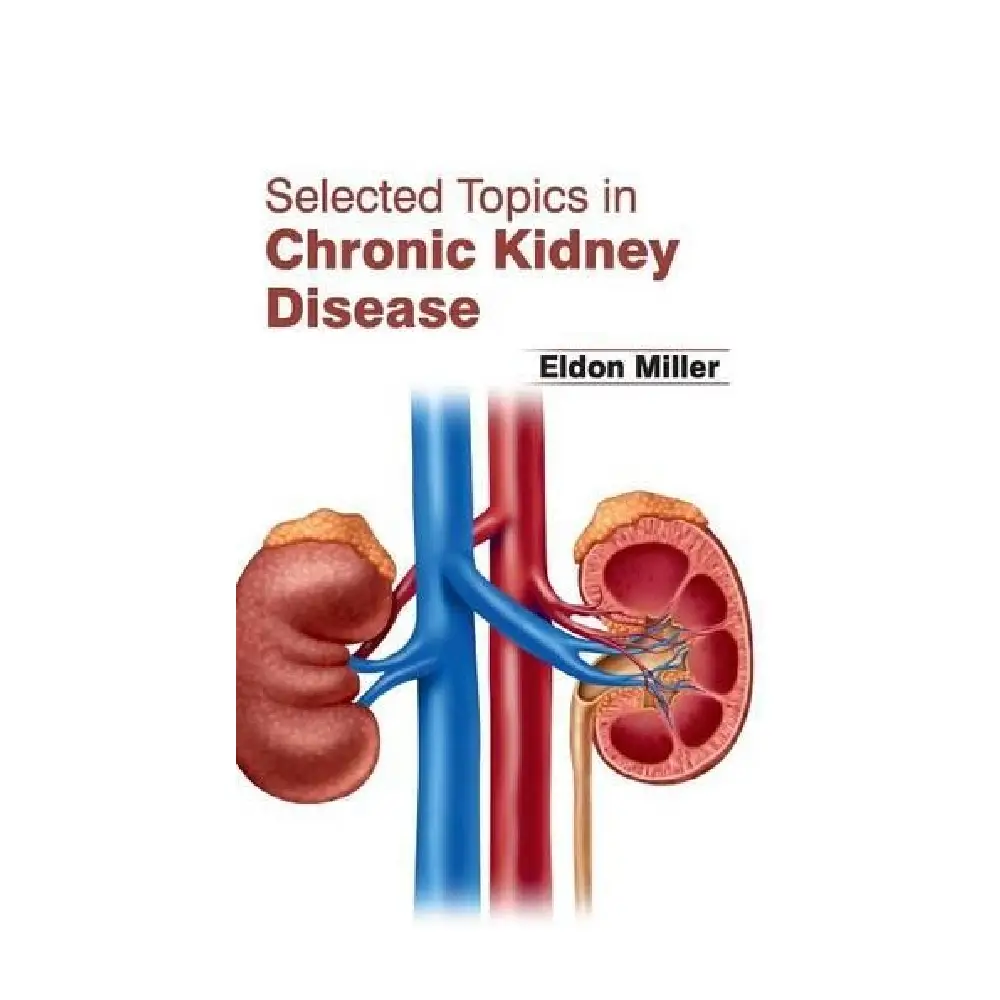
Selected Topics in Chronic Kidney Disease
Selected Topics in Chronic Kidney Disease (CKD) is a comprehensive medical text that synthesizes current knowledge on the pathophysiology, diagnosis, and management of chronic kidney disease. CKD is a global public health challenge, affecting hundreds of millions of people across diverse populations. The condition represents a progressive loss of renal function over months to years and is associated with significant morbidity, mortality, and healthcare costs. This book is designed to serve as both a practical clinical guide for physicians and an academic reference for medical students, residents, and nephrology fellows.
Understanding Chronic Kidney Disease
Chronic kidney disease is defined by abnormalities in kidney structure or function that persist for more than three months. These changes are most commonly reflected as a reduced estimated glomerular filtration rate (eGFR) or markers of kidney damage such as albuminuria. The book begins by framing CKD as a syndrome rather than a single disease, highlighting how various etiologies—including diabetic nephropathy, hypertensive nephrosclerosis, glomerulonephritis, and hereditary disorders—contribute to the CKD spectrum.
A foundational section explores kidney physiology and how progressive nephron loss leads to compensatory adaptations. These include hyperfiltration in residual nephrons and increased glomerular capillary pressure, which initially maintain renal function but eventually contribute to further injury. Understanding these mechanisms is essential because they underpin many of the therapeutic strategies that aim to slow disease progression.
Epidemiology and Risk Factors
CKD prevalence increases with age and is higher among people with diabetes, hypertension, cardiovascular disease, and a family history of kidney disease. Ethnic and socioeconomic disparities in CKD incidence and outcomes are examined, underscoring the importance of both biological and social determinants of health in shaping disease trajectories. Screening recommendations—especially for high-risk groups—are outlined as essential to early detection.
Diagnosis and Staging
The book provides a clear summary of CKD diagnosis and staging based on the Kidney Disease: Improving Global Outcomes (KDIGO) guidelines. These include the use of eGFR and albuminuria categories to stratify disease severity and predict prognosis. Detailed tables help clinicians interpret laboratory values and integrate them into clinical decision-making.
Renal imaging and histopathologic evaluation through renal biopsy are discussed as tools to clarify etiology and guide specific therapies. For example, in suspected glomerulonephritides or interstitial nephritis, biopsy findings can be pivotal in choosing immunosuppressive regimens.
Pathophysiologic Mechanisms and Targets
One of the strengths of this book is its emphasis on mechanistic insights that translate into therapeutic strategies. CKD progression involves interlinked pathways—including inflammation, oxidative stress, fibrosis, endothelial dysfunction, and derangements in mineral metabolism. The text explains how these processes contribute to nephron loss, cardiovascular complications, and metabolic disturbances.
The chapter on fibrosis, for example, details how cytokines such as transforming growth factor-β (TGF-β) drive extracellular matrix deposition and scarring. Understanding these pathways has therapeutic implications; agents that modulate inflammation and fibrosis are discussed as emerging areas of interest.
Cardiovascular Disease in CKD
Cardiovascular disease (CVD) is the leading cause of death in patients with CKD. Traditional risk factors such as hypertension, diabetes, and dyslipidemia are compounded by uremia-specific factors including endothelial dysfunction, vascular calcification, and anemia. The book highlights the importance of aggressive cardiovascular risk management—blood pressure control, lipid lowering, and smoking cessation—as integral to CKD care.
Metabolic Complications and Bone Disease
CKD disrupts mineral metabolism, leading to disorders collectively known as chronic kidney disease–mineral and bone disorder (CKD-MBD). The text discusses how declining renal excretion of phosphate, reduced calcitriol production, and secondary hyperparathyroidism contribute to bone fragility and vascular calcification. Treatment principles—such as phosphate binders, vitamin D analogs, and parathyroid hormone modulation—are presented with clinical context.
Other metabolic complications covered include anemia of CKD, insulin resistance, and protein-energy wasting. Practical guidance on erythropoiesis-stimulating agents and iron therapy is included, along with considerations for individualized patient care.
Slowing Progression: Therapeutic Strategies
One of the central themes of Selected Topics in Chronic Kidney Disease is how to slow CKD progression and delay the onset of end-stage renal disease (ESRD). A substantial portion of the book focuses on evidence-based interventions:
-
Blood Pressure Control: Targeting optimal blood pressure using renin-angiotensin system blockers (ACE inhibitors or ARBs) remains foundational for slowing CKD progression, especially in proteinuric disease.
-
Glycemic Control: For patients with diabetic CKD, maintaining HbA1c within individualized targets reduces microvascular and macrovascular complications.
-
Sodium and Protein Management: Dietary sodium restriction and moderated protein intake are discussed as supportive measures that can reduce hyperfiltration and proteinuria.
-
Novel Therapeutics: Recent advances such as sodium-glucose cotransporter-2 (SGLT2) inhibitors and nonsteroidal mineralocorticoid receptor antagonists (MRAs) are covered, including mechanisms of action and clinical trial data demonstrating renal and cardiovascular benefits.
Renal Replacement Therapy and Transplantation
The book transitions into a thoughtful discussion of when to initiate renal replacement therapy (RRT), options for dialysis (both hemodialysis and peritoneal dialysis), and preparation for access creation. Kidney transplantation is presented as the treatment of choice for eligible patients, with discussion on donor selection, immunosuppression, and long-term graft monitoring.
Patient-Centered Care and Quality of Life
Importantly, the text emphasizes patient-centered care—shared decision-making, advance care planning, and attention to quality of life. Psychological support, palliative care considerations, and strategies for coping with chronic illness are incorporated to reflect holistic CKD management.
Conclusion
Selected Topics in Chronic Kidney Disease bridges foundational nephrology principles with current clinical practice. It integrates epidemiology, pathophysiology, diagnostics, therapeutic strategies, and patient-focused care into a cohesive narrative that is both informative and practical. For clinicians, trainees, and allied health professionals involved in kidney care, this book offers a valuable and up-to-date resource to enhance understanding and improve outcomes for patients living with CKD.

Reviews
There are no reviews yet