
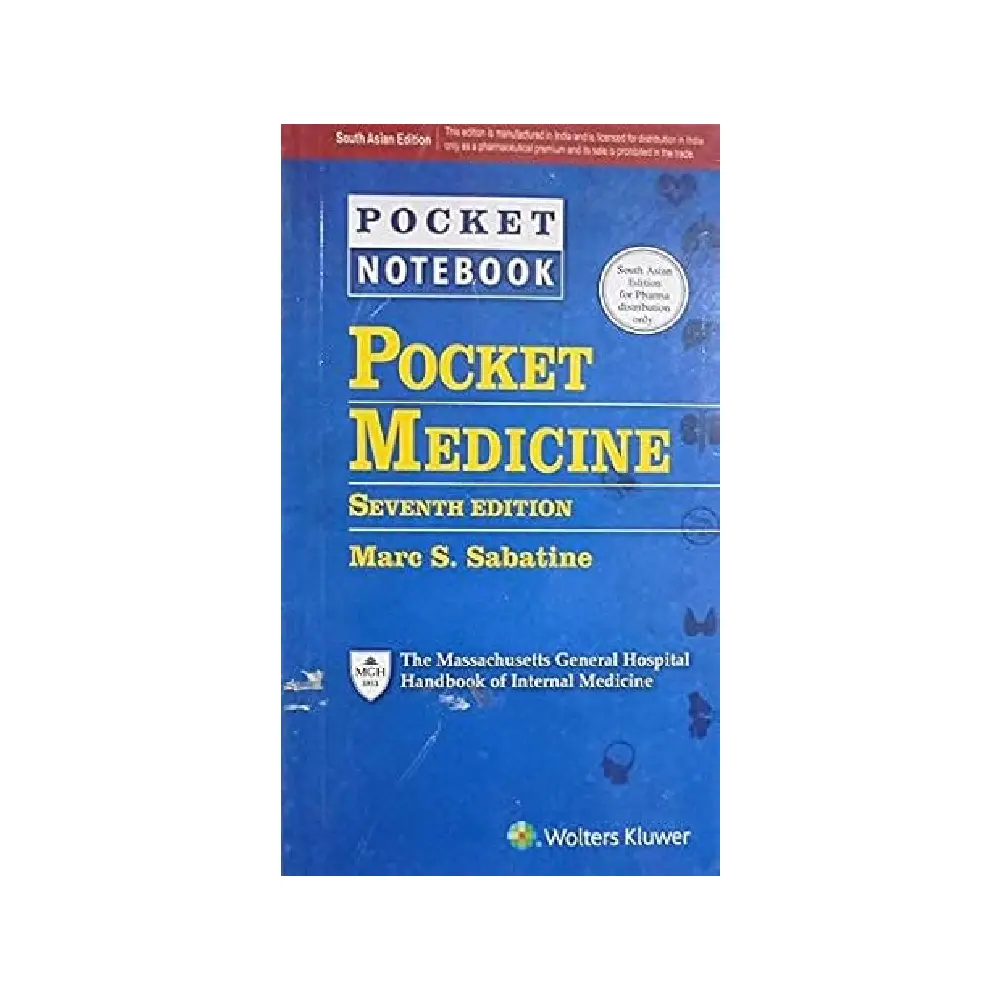

Pocket Medicine, 7th Edition is a concise yet comprehensive clinical handbook designed for medical students, interns, residents, and practicing physicians who require quick access to essential medical information during patient care. Widely regarded as a trusted ward companion, this portable reference distills core concepts of internal medicine into a highly practical, bullet-point format that facilitates rapid decision-making in busy clinical environments.
Authored by leading clinicians from Harvard Medical School and affiliated teaching hospitals, Pocket Medicine reflects evidence-based practice aligned with contemporary standards of care. The book is commonly associated with the teaching tradition of Massachusetts General Hospital, ensuring its recommendations are grounded in real-world clinical expertise. Its structured outline format emphasizes diagnostic approaches, differential diagnoses, pathophysiology, and management strategies in a streamlined manner.
The 7th edition builds upon the strengths of earlier versions by incorporating updated clinical guidelines, revised therapeutic recommendations, and new evidence from recent landmark trials. It covers all major subspecialties of internal medicine, including cardiology, pulmonology, nephrology, gastroenterology, hematology-oncology, infectious diseases, endocrinology, rheumatology, neurology, and critical care. Each chapter is organized logically, typically beginning with common presenting problems, followed by differential diagnosis frameworks and concise management algorithms.
One of the defining features of Pocket Medicine is its practical orientation. Rather than lengthy theoretical discussions, the text presents information in high-yield bullet points and quick-reference tables. This makes it particularly useful during ward rounds, emergency consultations, and examination preparation. The content focuses on “what to do” in specific clinical situations—covering diagnostic tests, interpretation of laboratory values, imaging strategies, first-line pharmacologic treatments, dosing considerations, and escalation plans.
The cardiology section includes guidance on managing acute coronary syndromes, heart failure, arrhythmias, valvular heart disease, and hypertension. Pulmonary chapters address asthma, chronic obstructive pulmonary disease, pneumonia, pulmonary embolism, and respiratory failure. The infectious disease section outlines empiric antibiotic choices, sepsis management, and common inpatient infections. Endocrinology chapters provide practical algorithms for diabetes management, thyroid disorders, adrenal crises, and electrolyte disturbances.
In addition to disease-specific content, the book includes essential information on inpatient medicine, such as fluid management, acid–base disorders, electrolyte imbalances, anticoagulation, pain control, and perioperative care. Its emphasis on systematic clinical reasoning helps trainees develop structured approaches to complex cases. Differential diagnosis lists are organized by pathophysiologic mechanisms, which aids in both bedside thinking and examination revision.
The 7th edition also integrates updated recommendations from major professional societies and incorporates current standards of care in areas such as heart failure therapy, anticoagulation strategies, antimicrobial stewardship, and management of chronic diseases. Medication dosing is clearly presented, and cautions regarding contraindications and adverse effects are highlighted for safety.
Physically, Pocket Medicine is designed for portability. Its compact size allows it to fit into a white coat pocket, making it easily accessible during clinical duties. Despite its small format, the text remains densely informative without sacrificing clarity. Abbreviations are standardized, and indexing is efficient for quick topic retrieval.
The book is published by Wolters Kluwer under the Lippincott imprint, a well-known name in medical education publishing. Over multiple editions, Pocket Medicine has earned a reputation as one of the most practical and reliable quick-reference guides in internal medicine.
Ideal for USMLE preparation, postgraduate entrance examinations, and daily hospital practice, Pocket Medicine, 7th Edition serves as both a rapid review tool and a bedside clinical aid. Its concise yet authoritative style makes it particularly valuable for those transitioning from theoretical learning to hands-on patient management.
In summary, Pocket Medicine, 7th Edition remains a trusted, high-yield clinical companion. By combining evidence-based guidance, logical organization, and practical applicability, it continues to support healthcare professionals in delivering safe, effective, and efficient patient care across diverse clinical settings.





Reviews
There are no reviews yet