
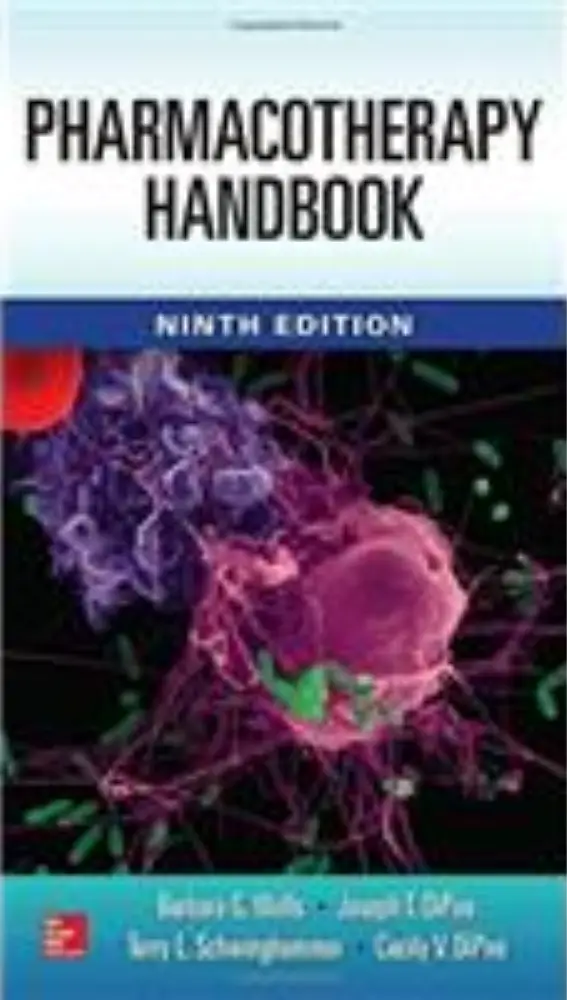
Pharmacotherapy Handbook, 9th Edition is a widely respected, clinically focused resource designed to support healthcare students and professionals in the practical application of pharmacotherapy. Edited by Barbara G. Wells, Joseph T. DiPiro, Terry L. Schwinghammer, and Cecily V. DiPiro, this handbook serves as a concise companion to the larger Pharmacotherapy: A Pathophysiologic Approach. It distills essential therapeutic information into a portable, easy-to-use format, making it particularly valuable for quick reference in clinical settings.
The 9th edition emphasizes evidence-based practice and patient-centered care, aligning with modern standards in medicine and pharmacy. It organizes content by disease states, providing structured guidance on the selection, initiation, monitoring, and modification of drug therapy. Each chapter is carefully designed to help readers understand not just what medications to use, but why and how they should be used in specific clinical scenarios.
One of the most notable features of this handbook is its consistent chapter format. Each disease-focused section typically includes a brief overview of the condition, followed by a clear presentation of therapeutic goals. This is complemented by detailed treatment algorithms and tables that summarize drug classes, mechanisms of action, dosing recommendations, adverse effects, contraindications, and monitoring parameters. This structured approach allows users to quickly locate critical information during patient care.
The handbook covers a wide range of medical specialties, including cardiology, infectious diseases, endocrinology, neurology, psychiatry, oncology, and more. Common conditions such as hypertension, diabetes mellitus, asthma, and heart failure are discussed alongside more complex or less frequently encountered disorders. This breadth ensures that the book is relevant across multiple healthcare disciplines.
Another key strength of the 9th edition is its focus on clinical decision-making. It integrates guidelines from authoritative bodies and incorporates current research findings to support therapeutic recommendations. For example, treatment strategies are often aligned with updates from organizations such as the American Heart Association (AHA), American Diabetes Association (ADA), and Infectious Diseases Society of America (IDSA). This ensures that readers are equipped with up-to-date, clinically relevant information.
The handbook also highlights patient-specific considerations, including age, comorbidities, renal and hepatic function, and potential drug interactions. Special populations—such as pediatric, geriatric, and pregnant patients—are given appropriate attention, helping clinicians tailor therapy safely and effectively. Additionally, practical tips and clinical pearls are included throughout the text to enhance understanding and application.
In terms of usability, the Pharmacotherapy Handbook is designed for quick access. Bullet points, tables, and concise text reduce the need for lengthy reading, making it ideal for use during ward rounds or while preparing for clinical exams. The compact size further enhances its portability, allowing students and practitioners to carry it easily.
The 9th edition also incorporates updates in pharmacologic therapy, including newer drug classes and evolving treatment paradigms. For instance, advancements in anticoagulation, biologic therapies, and targeted cancer treatments are reflected in the content. These updates ensure that the handbook remains relevant in a rapidly changing healthcare landscape.
Students, particularly those in pharmacy, medicine, and nursing, will find this handbook invaluable for both academic study and clinical rotations. It bridges the gap between theoretical knowledge and real-world application, helping learners develop confidence in therapeutic decision-making. For practicing clinicians, it serves as a reliable point-of-care reference that supports safe and effective medication use.
In summary, the Pharmacotherapy Handbook, 9th Edition is a practical, well-organized, and clinically oriented resource that excels in delivering concise yet comprehensive pharmacotherapy guidance. Its emphasis on evidence-based medicine, structured presentation, and real-world applicability makes it an essential tool for anyone involved in patient care. Whether used as a study aid or a quick clinical reference, it continues to be a trusted companion in the field of pharmacotherapy.


Reviews
There are no reviews yet