
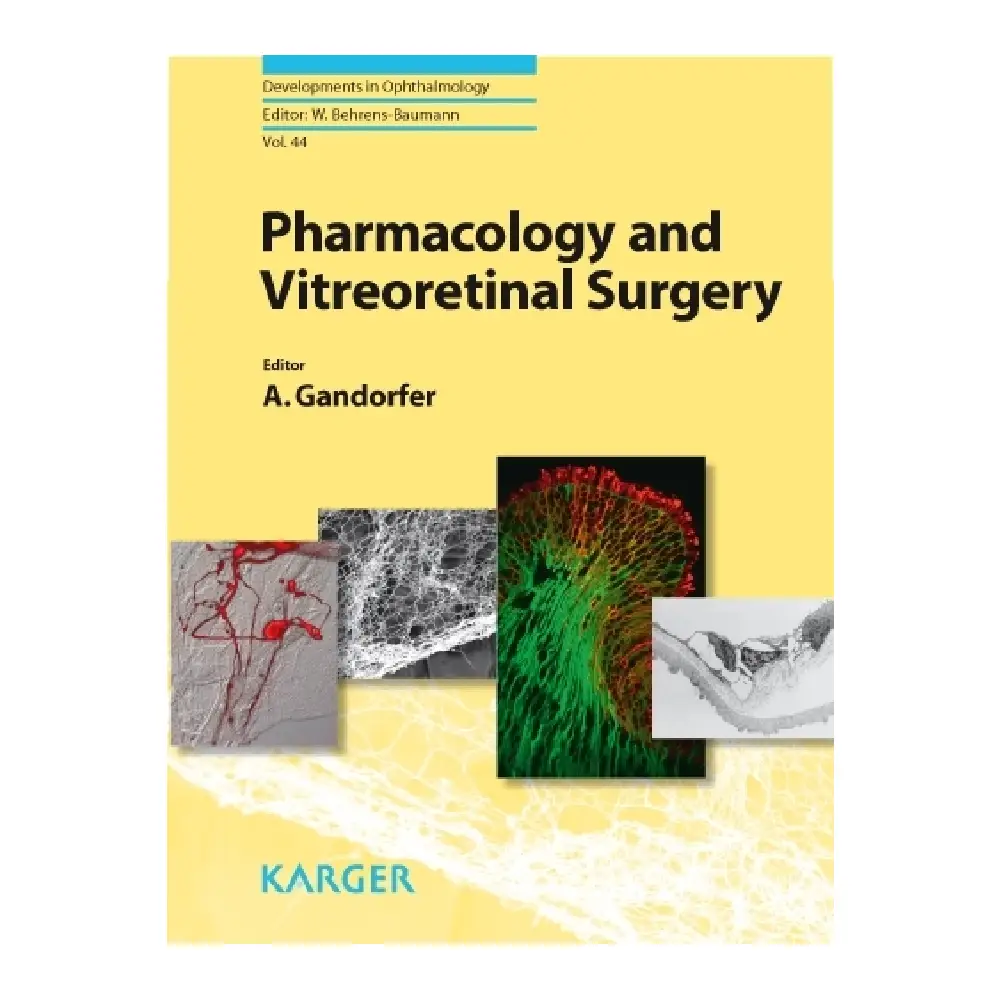

Pharmacology and Vitreoretinal Surgery
Vitreoretinal surgery represents one of the most advanced subspecialties in ophthalmology, addressing complex disorders of the vitreous, retina, and macula. Over the past few decades, significant progress in ocular pharmacology has transformed both the perioperative management and long-term outcomes of vitreoretinal surgical procedures. Pharmacologic agents are now integral at every stage of vitreoretinal care, including preoperative preparation, intraoperative assistance, and postoperative recovery.
Preoperative Pharmacology
Preoperative pharmacologic management aims to optimize ocular conditions and reduce surgical risks. Topical antibiotics are routinely used before surgery to decrease the conjunctival bacterial load and minimize the risk of postoperative endophthalmitis. Broad-spectrum agents such as fluoroquinolones are commonly preferred due to their excellent ocular penetration and wide antimicrobial coverage.
Mydriatic and cycloplegic agents, including tropicamide, phenylephrine, and cyclopentolate, are essential to achieve adequate pupillary dilation, allowing better visualization of the posterior segment. In patients with uveitis or proliferative diabetic retinopathy, topical or systemic corticosteroids may be administered preoperatively to control inflammation and reduce vitreous haze.
In recent years, intravitreal anti-vascular endothelial growth factor (anti-VEGF) agents have gained importance in the preoperative setting, particularly in conditions such as proliferative diabetic retinopathy and retinal vein occlusion. Preoperative anti-VEGF injections reduce neovascularization and intraoperative bleeding, facilitating safer membrane dissection.
Intraoperative Pharmacology
During vitreoretinal surgery, pharmacologic agents play a critical role in improving surgical precision and outcomes. Local anesthetics, such as lidocaine and bupivacaine, are widely used in peribulbar, retrobulbar, or sub-Tenon anesthesia to provide analgesia and akinesia. In selected cases, general anesthesia may be combined with adjunctive medications to ensure patient comfort and ocular stability.
Intraocular dyes represent a major pharmacologic advancement in vitreoretinal surgery. Agents such as trypan blue, indocyanine green (ICG), and brilliant blue G are used to stain transparent intraocular structures like the internal limiting membrane (ILM) and epiretinal membranes. These dyes enhance visualization, allowing more complete and atraumatic membrane peeling, particularly in macular hole surgery.
Pharmacologic vitreolysis agents have also been explored to assist in posterior vitreous detachment induction. Although enzymatic agents such as ocriplasmin have limited intraoperative use, they represent an important concept in pharmacologic assistance to surgical manipulation.
Intraocular tamponade agents, while not traditional drugs, are pharmacologically relevant substances used to stabilize the retina post-surgery. Gases such as sulfur hexafluoride (SF₆) and perfluoropropane (C₃F₈), as well as silicone oil, are employed to maintain retinal attachment and promote healing.
Postoperative Pharmacology
Postoperative pharmacologic therapy is essential for inflammation control, infection prevention, and retinal healing. Topical corticosteroids, including prednisolone acetate or dexamethasone, are routinely prescribed to suppress postoperative inflammation and prevent complications such as cystoid macular edema.
Topical antibiotics are continued in the early postoperative period to protect against infection. In selected cases, nonsteroidal anti-inflammatory drugs (NSAIDs) may be added to enhance anti-inflammatory control and improve visual recovery.
In eyes at high risk of postoperative inflammation or proliferative vitreoretinopathy, intravitreal corticosteroids such as triamcinolone acetonide may be used. These agents reduce inflammatory cytokines, stabilize the blood–retinal barrier, and improve macular edema.
The continued use of intravitreal anti-VEGF therapy following vitreoretinal surgery has become increasingly common, especially in diabetic retinopathy and neovascular age-related macular degeneration. Pharmacologic therapy complements surgical intervention by addressing the underlying disease process.
Emerging Pharmacologic Advances
Ongoing research in pharmacology continues to expand the therapeutic options available to vitreoretinal surgeons. Sustained-release drug delivery systems, including intravitreal implants, aim to provide long-term therapeutic effects while reducing injection frequency. Advances in gene therapy and biologics may further integrate pharmacologic treatment with surgical care in the future.
Additionally, the development of safer dyes, less toxic tamponade agents, and targeted anti-inflammatory therapies continues to refine surgical outcomes and reduce complications.
Conclusion
Pharmacology is inseparably linked to modern vitreoretinal surgery. From preoperative optimization and intraoperative visualization to postoperative healing and disease control, pharmacologic agents significantly enhance surgical safety and effectiveness. As innovations in ocular pharmacology continue, the synergy between drug therapy and vitreoretinal surgery will further improve visual outcomes and quality of life for patients with complex retinal disorders.



Reviews
There are no reviews yet