
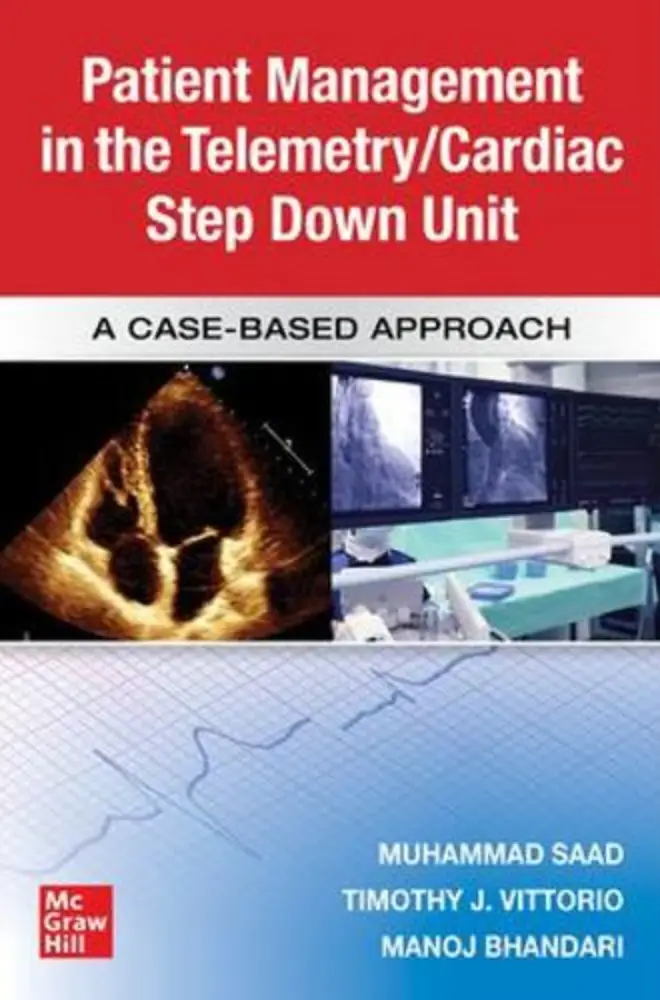
Patient Management in the Cardiac Step Down/Telemetry Unit: A Case-Based Approach
Patient Management in the Cardiac Step Down/Telemetry Unit: A Case-Based Approach is a practical and clinically focused resource designed to guide healthcare professionals in managing patients requiring continuous cardiac monitoring but not intensive care. The telemetry or step-down unit serves as a critical bridge between the intensive care unit (ICU) and general wards, where patients are stable yet still at risk for cardiac complications. This book emphasizes real-world clinical scenarios to enhance diagnostic reasoning, patient assessment, and decision-making skills.
The core strength of this approach lies in its case-based format. Each case typically begins with a patient presentation—such as chest pain, palpitations, syncope, or shortness of breath—followed by vital signs, electrocardiogram (ECG) findings, and laboratory results. Clinicians are encouraged to interpret this data systematically and prioritize interventions based on patient acuity. This mirrors real clinical practice, where timely recognition of deterioration can significantly impact outcomes.
A major focus of telemetry care is the identification and management of cardiac arrhythmias. Continuous ECG monitoring allows for early detection of conditions such as atrial fibrillation, ventricular tachycardia, and heart blocks. Case discussions highlight how subtle rhythm changes can संकेत serious underlying issues. For instance, recognizing premature ventricular complexes in a post-myocardial infarction patient may prompt closer monitoring and preventive treatment to avoid life-threatening arrhythmias.
Another important area covered is acute coronary syndromes (ACS). Patients recovering from myocardial infarction or unstable angina are commonly managed in telemetry units. The book illustrates how to monitor for recurrent ischemia, interpret ECG changes, and manage medications such as antiplatelets, anticoagulants, and beta-blockers. Rapid escalation of care is emphasized when signs of reinfarction or complications arise.
Heart failure management is also extensively discussed. Patients often require careful monitoring of fluid balance, weight, and symptoms such as dyspnea and edema. Case-based learning demonstrates how early signs of decompensation—such as rising jugular venous pressure or decreasing oxygen saturation—should prompt timely interventions. Adjustments in diuretics, vasodilators, and other medications are guided by clinical findings and laboratory values.
Medication management in the telemetry unit is complex and requires careful attention. Patients are often on multiple cardiovascular drugs with potential interactions and side effects. The case-based approach helps clinicians understand pharmacological principles, monitor therapeutic responses, and पहचान adverse effects such as electrolyte imbalances or bleeding complications. This ensures safe and effective treatment.
Interdisciplinary teamwork is a key component of patient care in this setting. Nurses, physicians, pharmacists, and allied health professionals collaborate to deliver comprehensive care. Communication is essential, especially when rapid changes in patient condition occur. The book emphasizes structured communication tools and clear documentation to enhance patient safety.
Patient education and discharge planning are integral to successful outcomes. Case scenarios demonstrate how educating patients about medication adherence, lifestyle changes, and follow-up care can reduce readmissions. Topics such as diet modification, physical activity, and recognition of warning symptoms are addressed in a practical manner.
Technology plays a supportive role in telemetry units, providing real-time monitoring and alerts. However, the book stresses that clinical judgment must guide interpretation of data.
In conclusion, Patient Management in the Cardiac Step Down/Telemetry Unit: A Case-Based Approach offers a comprehensive and practical guide for managing cardiac patients in a monitored care environment. By focusing on realistic clinical cases, it bridges the gap between theoretical knowledge and bedside practice. This approach enhances critical thinking, improves patient safety, and equips healthcare professionals with the skills needed to manage complex cardiovascular conditions effectively.




Reviews
There are no reviews yet