
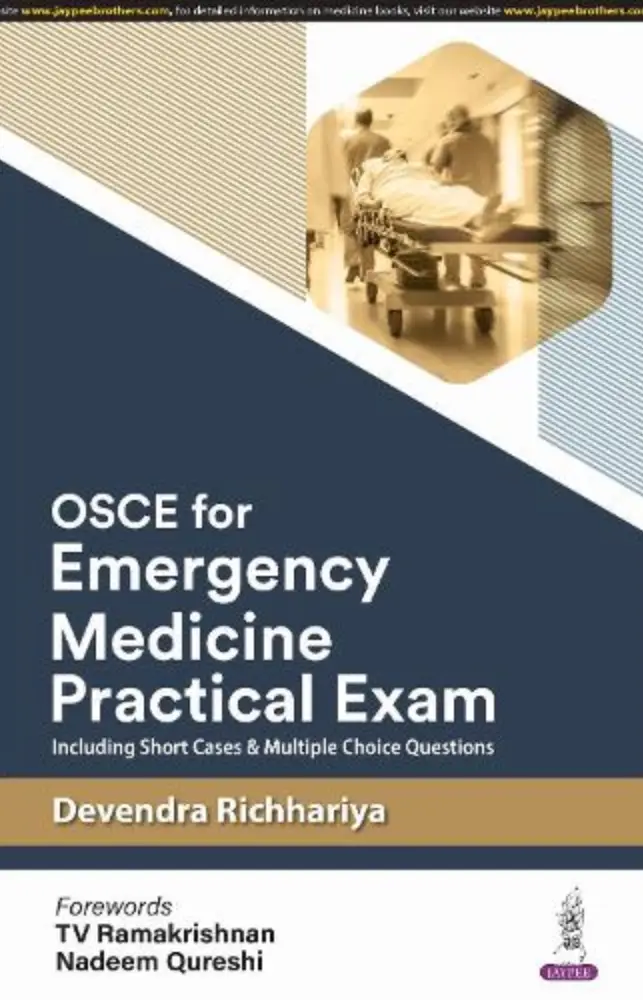
OSCE for Emergency Medicine Practical Exam
OSCE for Emergency Medicine Practical Exam, 1st Edition is a focused and practical guide designed to help medical students, interns, and emergency medicine trainees prepare effectively for Objective Structured Clinical Examinations (OSCEs). The book emphasizes a hands-on, scenario-based approach to learning, reflecting the real-life demands of emergency departments where rapid assessment, decision-making, and procedural skills are essential.
The book begins with an introduction to the OSCE format, explaining its structure, purpose, and evaluation criteria. It outlines how OSCE stations are designed to test clinical competence across multiple domains, including history taking, physical examination, communication skills, clinical reasoning, and procedural abilities. Understanding this format helps candidates approach exams with clarity and confidence. The authors also provide general strategies for time management, organization, and maintaining composure under pressure.
A key strength of the book is its systematic coverage of common emergency scenarios. These include life-threatening conditions such as cardiac arrest, acute coronary syndrome, stroke, trauma, shock, and respiratory distress. Each scenario is presented in a structured OSCE format, typically including candidate instructions, examiner checklists, and key points for assessment. This approach allows learners to understand exactly what is expected in an exam setting while also reinforcing clinical priorities in real practice.
The book places strong emphasis on the ABCDE approach (Airway, Breathing, Circulation, Disability, Exposure), which is central to emergency medicine. Candidates are trained to assess and manage patients in a logical and prioritized manner, ensuring that life-threatening conditions are identified and treated promptly. The consistent use of this framework across scenarios helps build a reliable and reproducible method for clinical assessment.
Communication skills are another major focus of the text. The book includes scenarios that test the ability to interact effectively with patients, relatives, and healthcare team members. These include breaking bad news, obtaining informed consent, explaining procedures, and managing difficult conversations. The importance of empathy, clarity, and professionalism is emphasized, as these skills are critical both for exam success and for patient care.
Procedural skills are also extensively covered. The book provides step-by-step guidance for common emergency procedures such as airway management, intravenous access, defibrillation, suturing, and immobilization techniques. Clear instructions, along with practical tips, help learners perform these procedures safely and confidently. The inclusion of checklists ensures that candidates can systematically practice and refine their skills.
Another important feature is the inclusion of clinical reasoning and decision-making. The book encourages candidates to think critically about differential diagnoses, investigations, and management plans. It highlights the importance of justifying clinical decisions and demonstrating an understanding of underlying principles. This not only prepares candidates for OSCEs but also enhances their overall clinical competence.
The text also addresses less acute but commonly tested scenarios, such as abdominal pain, headache, fever, and minor injuries. These cases help broaden the learner’s exposure and ensure comprehensive exam preparation. Additionally, the book includes stations on interpretation of investigations, such as ECGs, X-rays, and laboratory results, which are frequently assessed in emergency medicine OSCEs.
Designed for ease of use, the book features concise explanations, bullet points, and structured formats that facilitate quick revision. It is particularly useful for last-minute preparation, allowing candidates to review key concepts and practice scenarios efficiently. The practical orientation of the book makes it suitable not only for exam preparation but also for improving day-to-day clinical skills in emergency settings.
In conclusion, OSCE for Emergency Medicine Practical Exam, 1st Edition is a valuable resource for anyone preparing for emergency medicine OSCEs. Its structured approach, emphasis on core clinical skills, and realistic scenarios make it an effective tool for building confidence and competence. By combining theoretical knowledge with practical application, the book helps learners excel in examinations while also preparing them for the challenges of real-world emergency care.
Reviews
There are no reviews yet