
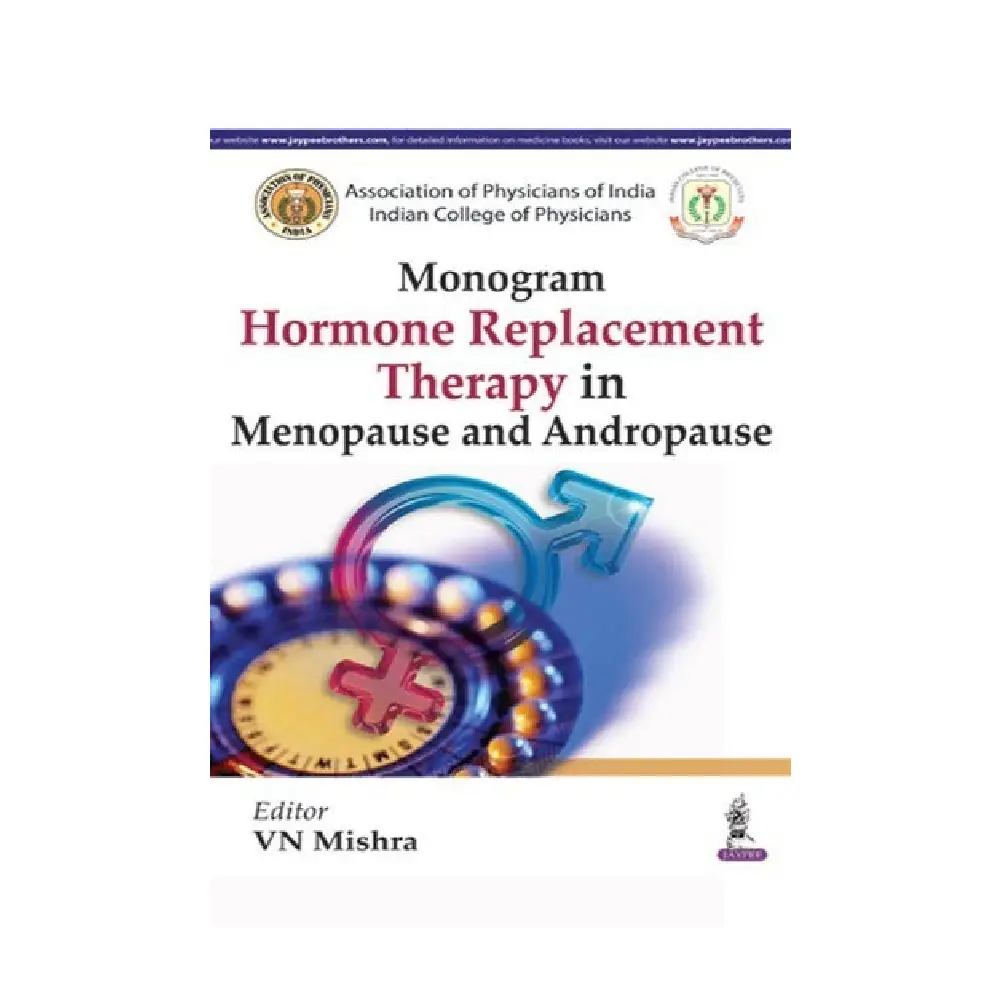

Monogram: Hormone Replacement Therapy in Menopause and Andropause
Hormone Replacement Therapy (HRT) plays a significant role in managing the physiological and symptomatic consequences of menopause in women and andropause in men. Both conditions are characterized by age-related decline in sex hormones—estrogen and progesterone in women, and testosterone in men—leading to systemic effects that impact physical, psychological, and sexual health. A clear understanding of indications, benefits, risks, and individualized treatment strategies is essential for safe and effective hormonal management.
Menopause is defined as the permanent cessation of menstruation resulting from loss of ovarian follicular activity, typically occurring between 45 and 55 years of age. The decline in estrogen levels results in vasomotor symptoms such as hot flashes, night sweats, palpitations, and sleep disturbances. Long-term consequences include urogenital atrophy, osteoporosis, cardiovascular changes, mood disturbances, and cognitive complaints. Hormone Replacement Therapy in menopause primarily involves estrogen therapy (ET) or combined estrogen-progestogen therapy (EPT), depending on whether the woman has an intact uterus. In women who have undergone hysterectomy, estrogen alone is sufficient, whereas those with an intact uterus require progestogen to prevent endometrial hyperplasia and carcinoma.
HRT effectively relieves vasomotor symptoms, improves vaginal dryness and dyspareunia, prevents bone loss, and reduces fracture risk. It also positively influences quality of life by improving sleep, mood, and sexual function. Local vaginal estrogen preparations are particularly useful for isolated genitourinary symptoms, minimizing systemic exposure. Systemic therapy may be administered orally, transdermally, or via implants, with transdermal routes associated with lower risk of thromboembolic events compared to oral formulations.
Despite its benefits, HRT carries potential risks that must be carefully weighed. Large studies such as the Women’s Health Initiative highlighted concerns regarding increased risk of breast cancer, venous thromboembolism, stroke, and cardiovascular disease, particularly when therapy is initiated late after menopause. However, subsequent analyses have clarified that timing, age, dose, and formulation significantly influence risk profiles. The “window of opportunity” concept suggests that initiating HRT in women younger than 60 years or within 10 years of menopause onset offers more benefits than risks. Individual risk assessment—including family history of breast cancer, cardiovascular risk factors, and thrombotic tendencies—is mandatory before prescribing therapy.
Non-hormonal alternatives such as selective serotonin reuptake inhibitors (SSRIs), gabapentin, clonidine, and lifestyle modifications may be considered in women with contraindications to HRT, including active breast cancer, unexplained vaginal bleeding, severe liver disease, or history of thromboembolic disorders. Phytoestrogens and herbal supplements are widely used but lack consistent scientific evidence and should be approached cautiously.
Andropause, also referred to as late-onset hypogonadism, involves a gradual decline in serum testosterone levels in aging men, typically after the age of 40. Unlike menopause, it is not a universal or abrupt event. Symptoms include reduced libido, erectile dysfunction, fatigue, depressed mood, decreased muscle mass, increased body fat, reduced bone density, and diminished vitality. Diagnosis requires both clinical symptoms and consistently low morning serum testosterone levels confirmed on repeated testing.
Testosterone Replacement Therapy (TRT) is the mainstay of treatment in symptomatic men with confirmed hypogonadism. TRT can be administered via intramuscular injections, transdermal patches, gels, buccal systems, or subcutaneous pellets. Benefits include improved sexual function, mood, energy levels, muscle mass, bone density, and overall well-being. However, therapy must be individualized and carefully monitored.
Potential risks of TRT include erythrocytosis, acne, fluid retention, worsening sleep apnea, and concerns regarding cardiovascular events and prostate health. Baseline and periodic monitoring of hematocrit, prostate-specific antigen (PSA), liver function, and lipid profile are recommended. TRT is contraindicated in men with prostate or breast cancer and should be used cautiously in those with severe cardiovascular disease. Shared decision-making and informed consent are critical components of management.
Both menopausal HRT and andropausal TRT require a holistic approach that incorporates lifestyle measures such as regular exercise, balanced diet, smoking cessation, stress reduction, and adequate sleep. Weight-bearing exercises help maintain bone density, while resistance training supports muscle mass in both sexes. Psychological counseling may benefit individuals experiencing mood disturbances or body image concerns associated with hormonal aging.
In conclusion, Hormone Replacement Therapy in menopause and andropause can significantly improve quality of life when appropriately indicated and carefully monitored. The decision to initiate therapy must be individualized, balancing symptom severity with potential risks. Thorough evaluation, patient education, regular follow-up, and evidence-based prescribing practices ensure optimal outcomes. When used judiciously, hormone therapy remains a valuable tool in managing age-related hormonal decline in both women and men.






Reviews
There are no reviews yet