
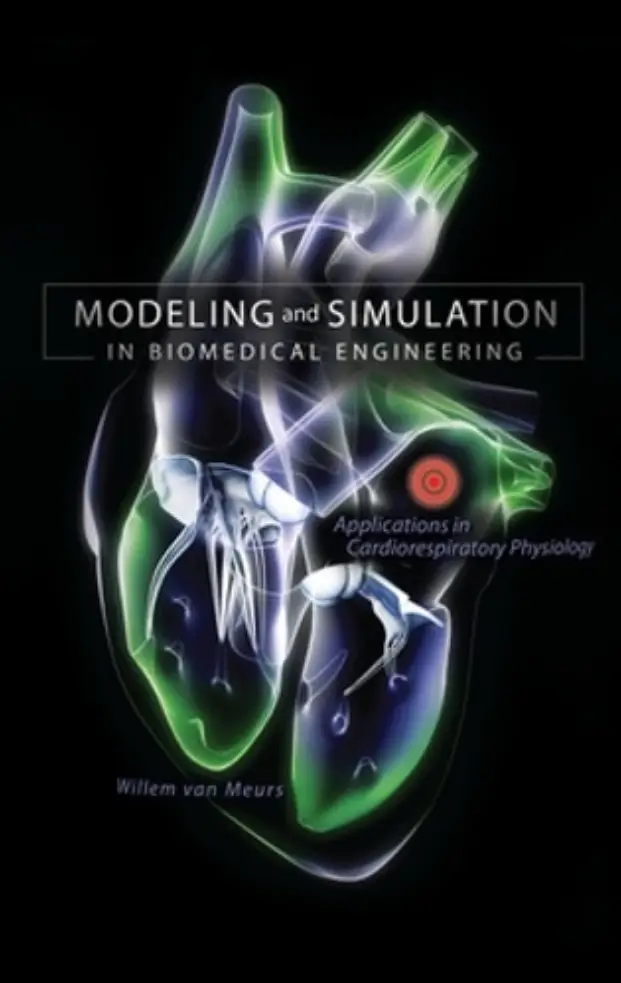

Modeling and Simulation in Biomedical Engineering
Modeling and Simulation in Biomedical Engineering is an essential resource that explores how mathematical models and computational simulations are used to understand complex biological systems and improve healthcare technologies. This field lies at the intersection of engineering, medicine, biology, and computer science, providing powerful tools to analyze physiological processes, design medical devices, and predict treatment outcomes.
The book typically begins by introducing the fundamental concepts of modeling, where real-world biological systems are represented using mathematical equations and computational frameworks. These models help simplify complex physiological phenomena, making them easier to study and analyze. Simulation, on the other hand, involves using these models to perform virtual experiments, allowing researchers and engineers to observe system behavior under different conditions without the need for physical trials.
A major focus of the text is on different types of models used in biomedical engineering. These include deterministic models, which use fixed parameters to produce predictable outcomes, and stochastic models, which incorporate randomness to account for variability in biological systems. The book also covers compartmental models, commonly used in pharmacokinetics to study drug absorption, distribution, metabolism, and excretion. Such models are crucial in optimizing drug dosage and delivery systems.
The application of modeling and simulation in physiology is extensively discussed. For example, cardiovascular models are used to study blood flow dynamics, heart function, and the effects of diseases such as hypertension and atherosclerosis. Similarly, respiratory models help in understanding lung mechanics and gas exchange processes. These simulations provide valuable insights that assist in diagnosis and treatment planning.
Another important area covered is medical device design. Engineers use simulation tools to design and test devices such as prosthetics, pacemakers, and imaging systems. By simulating how these devices interact with the human body, potential issues can be identified and resolved before manufacturing, reducing costs and improving safety. Finite element analysis (FEA) is often highlighted as a key technique used to study stress, strain, and mechanical behavior in biological tissues and implants.
The book also explores the role of imaging and signal processing in biomedical modeling. Techniques such as MRI, CT scans, and ultrasound generate large amounts of data that can be used to create detailed models of organs and tissues. These models are then used in simulations for surgical planning, disease progression analysis, and personalized medicine. Signal processing methods help in interpreting physiological data such as ECG and EEG signals, enabling accurate diagnosis and monitoring.
In recent years, the integration of artificial intelligence and machine learning with biomedical modeling has gained significant attention. The book discusses how these technologies enhance predictive modeling, enabling more accurate and efficient simulations. Machine learning algorithms can analyze large datasets to identify patterns and improve model accuracy, making them valuable tools in modern biomedical research.
The importance of validation and verification of models is also emphasized. Since biomedical models are used in critical applications, it is essential to ensure their accuracy and reliability. The book explains methods for testing models against experimental data and refining them to improve performance.
Additionally, ethical considerations are addressed, particularly when simulations are used in clinical decision-making. Issues such as patient data privacy, model transparency, and the limitations of simulations are discussed to ensure responsible use of technology.
In conclusion, Modeling and Simulation in Biomedical Engineering provides a comprehensive overview of how computational tools are transforming the field of healthcare. By combining theoretical knowledge with practical applications, the book equips students, researchers, and professionals with the skills needed to tackle complex biomedical challenges. Its interdisciplinary approach makes it a valuable resource for advancing innovation in medical science and improving patient care through technology-driven solutions.





Reviews
There are no reviews yet