
Mastering AETCOM: Attitude, Ethics, and Communication in Medical Education – 580 Words
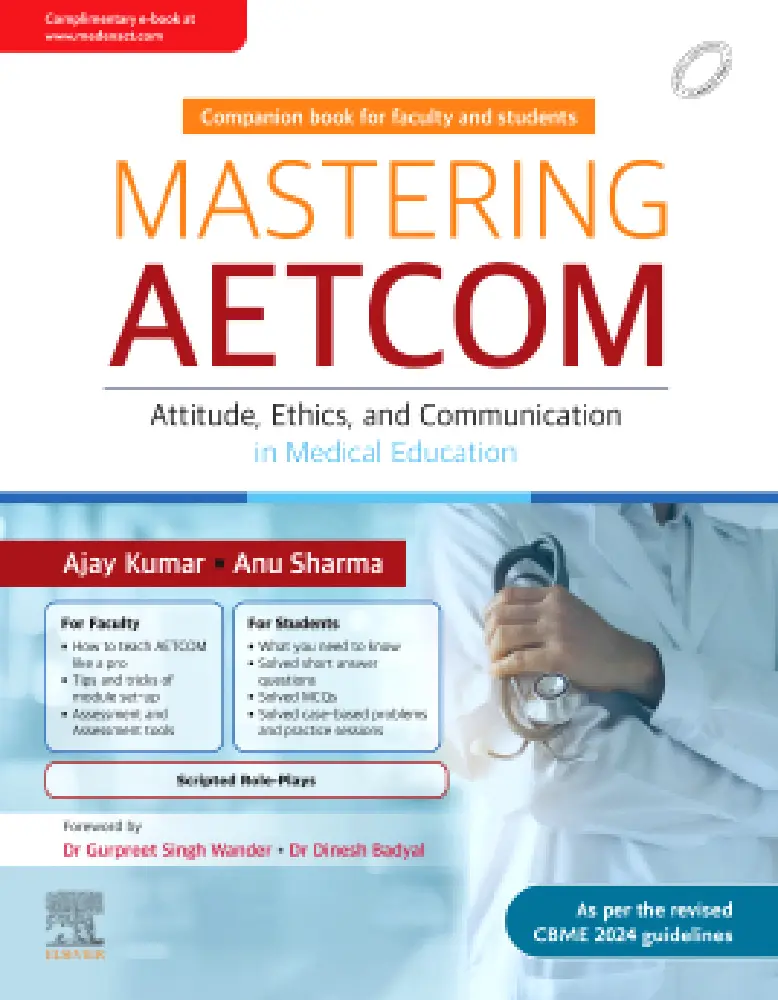
Mastering AETCOM: Attitude, Ethics, and Communication in Medical Education is a comprehensive and student-oriented textbook designed to meet the evolving needs of medical education, particularly under the competency-based medical education (CBME) framework. Authored by Ajay Kumar and Anu Sharma and published by Elsevier, the book is aligned with the AETCOM modules recommended by the National Medical Commission (NMC) for MBBS students. It aims to develop essential professional qualities such as ethical reasoning, effective communication, and a compassionate attitude in future healthcare professionals.
The book is structured to cover all phases of the MBBS curriculum, ensuring a gradual and integrated development of competencies. AETCOM is not limited to theoretical knowledge but emphasizes behavioral and professional skills that are crucial for patient care. The text begins by introducing the role of a doctor and the expectations from the medical profession, helping students understand their responsibilities toward patients and society.
A central theme of the book is attitude development, which focuses on empathy, compassion, respect, and professionalism. It highlights the importance of building trust in the doctor–patient relationship and maintaining ethical conduct in all clinical interactions. By incorporating real-life examples and reflective exercises, the book encourages students to introspect and develop a patient-centered approach.
Another key component is medical ethics, which forms the backbone of clinical decision-making. The book explains fundamental ethical principles such as autonomy, beneficence, non-maleficence, and justice. It also addresses complex ethical dilemmas encountered in clinical practice, including confidentiality, informed consent, end-of-life care, and medical negligence. Case-based discussions and scenarios help learners understand how to apply ethical principles in real-world situations.
Communication skills are extensively covered, recognizing their importance in effective healthcare delivery. The book provides guidance on verbal and non-verbal communication, breaking bad news, counseling patients, and working within a healthcare team. Structured role-plays and simulated scenarios allow students to practice these skills in a safe and controlled environment. This practical approach ensures that learners are better prepared for real clinical interactions.
One of the standout features of the book is its interactive and learner-centered approach. It includes scripted role-plays, case studies, and group discussion topics that actively engage students in the learning process. These activities not only enhance understanding but also promote teamwork and collaborative learning. Additionally, the book contains self-assessment tools such as multiple-choice questions, short-answer questions, and reflective writing exercises, enabling students to evaluate their progress.
The text also emphasizes ethical decision-making frameworks, providing structured methods to analyze and resolve clinical dilemmas. This systematic approach helps students develop critical thinking skills and make informed, patient-centered decisions. The inclusion of appendices on teaching methods and AETCOM module implementation further enhances its utility for educators as well.
Another important aspect of the book is its alignment with real-world clinical practice. It integrates theoretical knowledge with practical applications, ensuring that students can translate what they learn into everyday medical practice. Topics such as teamwork, patient rights, and dealing with difficult situations are presented in a realistic and relatable manner.
The language of the book is clear, concise, and easy to understand, making it accessible to undergraduate students. Its structured format, combined with summaries and highlighted key points, facilitates quick revision and exam preparation. Despite covering a wide range of topics, the book maintains a balance between depth and simplicity.
In conclusion, Mastering AETCOM: Attitude, Ethics, and Communication in Medical Education is an essential resource for modern medical training. By focusing on the humanistic and ethical dimensions of healthcare, it prepares students to become not only competent clinicians but also compassionate and responsible professionals. Its comprehensive coverage, interactive learning tools, and clinical relevance make it a valuable guide for both students and educators in the field of medicine.
Reviews
There are no reviews yet