
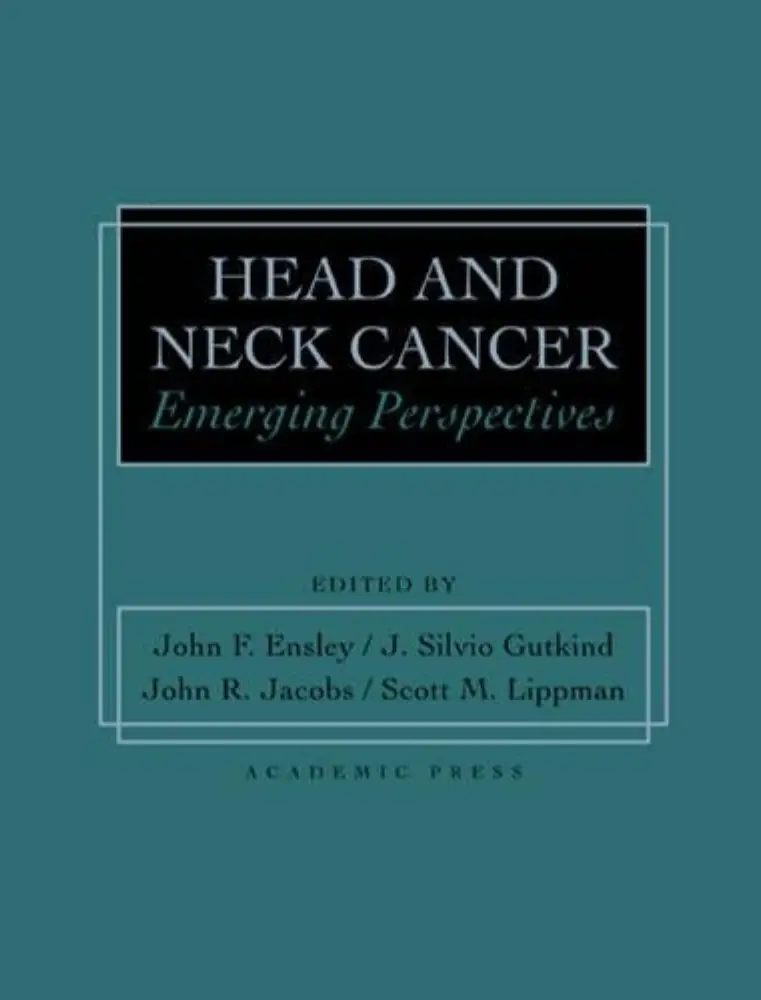

Head and Neck Cancer: Emerging Perspectives
Head and Neck Cancer: Emerging Perspectives is an advanced and research-oriented resource that provides a comprehensive exploration of the biological, clinical, and therapeutic dimensions of head and neck cancers. Designed for oncologists, researchers, postgraduate students, and healthcare professionals, the book focuses on evolving concepts and innovations that are shaping the future of diagnosis and treatment in this complex field.
Head and neck cancers represent a diverse group of malignancies arising in the oral cavity, pharynx, larynx, and related structures. These cancers are among the most common worldwide and are associated with significant morbidity and mortality. Major risk factors include tobacco use, alcohol consumption, and viral infections such as human papillomavirus (HPV). Despite advancements in healthcare, many cases are diagnosed at advanced stages, making effective management a significant challenge.
The book emphasizes the molecular and cellular basis of cancer development, Head and Neck Cancer providing detailed insights into carcinogenesis from premalignant lesions to invasive tumors. It explores genetic mutations, signaling pathways, and tumor microenvironment interactions that drive cancer progression. Understanding these mechanisms is essential for developing targeted therapies and improving patient outcomes. Research into tumor biology has revealed the role of various cellular components and immune interactions in promoting or inhibiting tumor growth, highlighting the complexity of the disease.
A key highlight of this text is its focus on emerging therapeutic strategies. Traditional treatments such as surgery, radiotherapy, and chemotherapy are discussed alongside newer approaches, including targeted therapies and immunotherapy. Recent advances have introduced novel agents like monoclonal antibodies, antibody-drug conjugates, and bispecific antibodies, which are being tested in clinical trials to improve survival rates and reduce treatment-related toxicity. These innovations represent a shift toward precision medicine, where treatment is tailored to the molecular profile of individual tumors.
The book also explores interdisciplinary approaches to cancer management. Effective treatment of head and neck cancer often requires collaboration among surgeons, oncologists, radiologists, pathologists, and rehabilitation specialists. By integrating perspectives from multiple disciplines, the text provides a holistic understanding of patient care, from diagnosis and staging to treatment planning and follow-up. This multidisciplinary approach is essential for addressing the functional and psychological impacts of the disease.
Another important aspect covered in the book is early detection and screening. Advances in diagnostic technologies, including imaging techniques and biomarker research, are transforming the way cancers are identified. Early detection significantly improves prognosis and allows for less aggressive treatment options. Emerging research is focused on identifying reliable biomarkers and developing non-invasive diagnostic tools that can detect cancer at its earliest stages.
The psychosocial and quality-of-life issues associated with head and neck cancer are also addressed. Patients often experience challenges related to speech, swallowing, appearance, and emotional well-being. The book highlights the importance of supportive care, rehabilitation, and patient-centered approaches to improve overall outcomes and quality of life.
In addition, the text discusses global trends and future directions in head and neck oncology. With the rise of HPV-associated cancers and advancements in technology such as artificial intelligence and personalized medicine, the field is rapidly evolving. Researchers are continually exploring new ways to enhance treatment efficacy while minimizing side effects.
Overall, Head and Neck Cancer: Emerging Perspectives serves as a vital resource that bridges basic science and clinical practice. Its focus on emerging research, innovative therapies, and multidisciplinary care makes it an essential guide for understanding the current landscape and future directions of head and neck cancer management.





Reviews
There are no reviews yet