
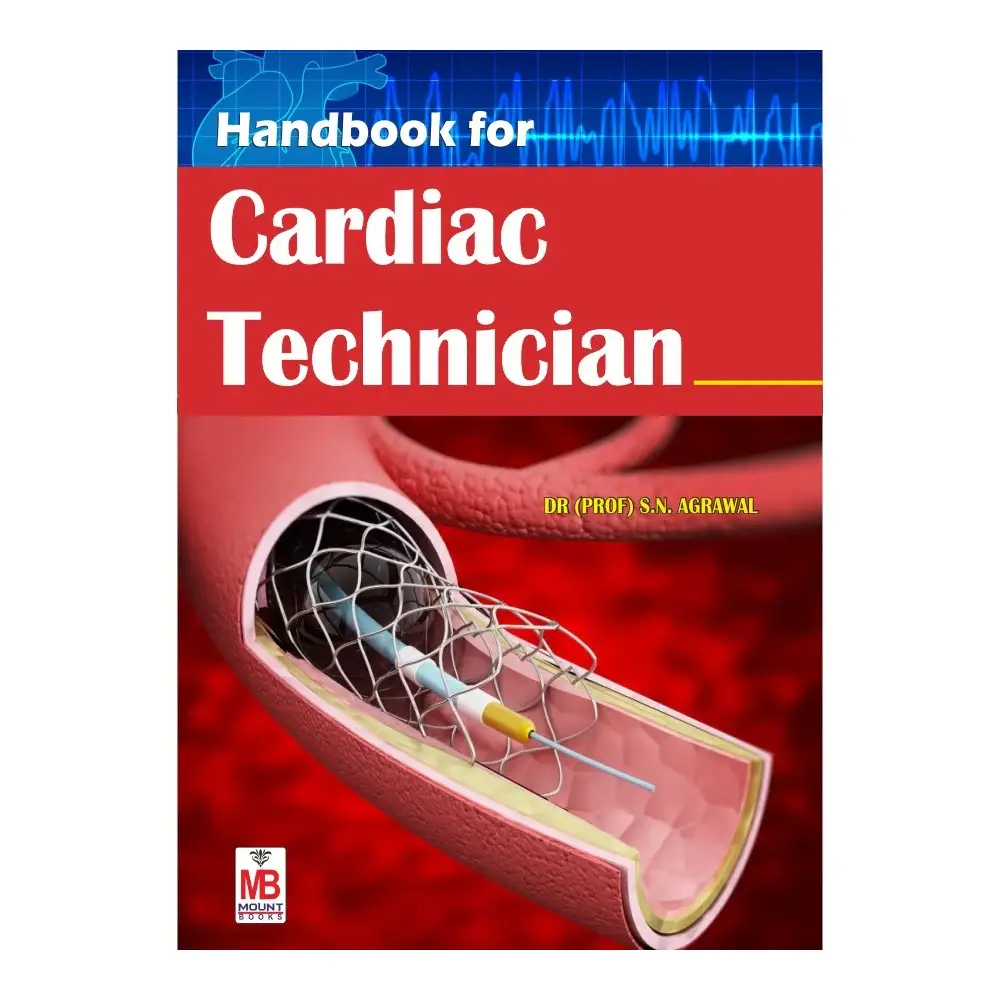
Handbook for Cardiac Technician — Comprehensive Overview
A Handbook for Cardiac Technician is a practical, student‑oriented guide designed to equip individuals training as cardiac technicians with the foundational knowledge, technical skills, and clinical understanding required to assist in the diagnosis, monitoring, and treatment of heart‑related conditions. Written in clear, accessible language — often supplemented with tables, diagrams, and self‑assessment questions — such a handbook is intended for paramedical, nursing, and medical students, as well as healthcare professionals preparing for roles in cardiology departments, diagnostic labs, or cardiac catheterization (cath) labs.
The cardiac technician profession bridges clinical care and advanced medical technology. Technicians work under the supervision of cardiologists and other specialists to carry out various cardiac diagnostic tests, operate sophisticated equipment, and provide essential patient support. Their role is central to early detection of cardiac disorders, treatment planning, and continuous monitoring of patients with cardiovascular diseases.
Purpose and Importance
The handbook serves several key educational and professional purposes:
-
Core Reference: It introduces students to the fundamental principles of cardiac physiology, anatomy, and pathology — the scientific basis underlying cardiovascular diagnostics.
-
Skill Development: Step‑by‑step descriptions of procedures help trainees learn how to prepare patients, operate equipment, and record data accurately.
-
Clinical Application: Real‑world scenarios and practical tips help bridge the gap between textbook knowledge and hands‑on practice in clinical environments such as hospitals, clinics, and diagnostic labs.
-
Self‑Assessment: Many handbooks include review questions at the end of chapters to reinforce learning and gauge understanding of key topics.
By consolidating theoretical knowledge and procedural guidelines in one volume, the handbook supports learners at multiple levels — from novices just beginning their training to technicians seeking to refine their clinical competence.
Core Content Areas
A well‑structured Handbook for Cardiac Technician generally includes the following major sections:
1. Cardiovascular Anatomy and Physiology
Understanding the structure and function of the heart and vascular system is fundamental. This section typically covers major heart chambers, valves, blood vessels, conduction pathways, and how electrical impulses coordinate heartbeats.
2. Introduction to Cardiac Technology
Here, students learn about the role and responsibilities of a cardiac technician, the healthcare team, and the settings in which technicians operate (such as cath labs, EKG suites, and stress labs). It emphasizes professional conduct, patient safety, and ethical practices.
3. Diagnostic Procedures
A large portion of the handbook focuses on diagnostic tests — helping technicians perform them safely and effectively. Key procedures include:
-
Electrocardiograms (ECG/EKG): Recording the heart’s electrical activity, electrode placement, troubleshooting, and basic rhythm interpretation.
-
Holter Monitoring: Applying and managing ambulatory ECG recording devices to capture long‑term cardiac rhythm data.
-
Stress Testing: Preparing patients for treadmill or exercise tests and monitoring physiological responses.
-
Echocardiography and Imaging: Assisting with heart imaging tests that use ultrasound to visualize structure and function.
-
Cardiac Catheterization Support: Preparing equipment and assisting during invasive procedures that involve threading catheters into heart chambers or vessels.
Illustrations, flow charts, and checklists are commonly used to make complex procedures easier to grasp.
Technical Skills and Equipment Operation
The handbook details how to operate key pieces of cardiac diagnostic equipment. This includes:
-
ECG/EKG Machines: Setting up leads, verifying signal quality, and ensuring accurate recordings.
-
Holter Monitors and Event Recorders: Attaching devices, instructing patients on usage, and preparing data for physician review.
-
Stress Testing Setups: Managing safety protocols, monitoring vitals during tests, and recognizing abnormal responses.
-
Cath Lab Support Tools: Handling sterile instruments, contrast media, and monitoring equipment during interventional procedures.
Equipment maintenance, calibration, and quality control are emphasized as part of ensuring reliable diagnostics and patient safety.
Patient Preparation and Care
Beyond technical operation, cardiac technicians play a vital role in patient preparation and comfort:
-
Explaining procedures in understandable terms to reduce patient anxiety.
-
Preparing skin sites for electrode or catheter placement.
-
Monitoring vital signs (e.g., heart rate, blood pressure) before, during, and after tests.
-
Providing post‑procedure instructions and basic patient education.
-
Maintaining strict infection control and adherence to safety protocols.
Patient‑focused care — including empathy, clear communication, and responsiveness — is essential, especially when working with individuals experiencing stress or discomfort related to cardiac conditions.
Documentation, Reporting, and Collaboration
Accurate record‑keeping is a critical part of the cardiac technician’s responsibilities. Technicians must document test results, communicate findings to supervising clinicians, and ensure all data is stored according to privacy and institutional guidelines. Teamwork with cardiologists, nurses, and other healthcare professionals is highlighted as essential to delivering comprehensive care.
Conclusion
A Handbook for Cardiac Technician is more than just a textbook — it’s a practical tool that blends scientific fundamentals with procedural know‑how and patient care strategies. For aspiring cardiac technicians, this handbook lays the groundwork for a career in cardiovascular care, enabling them to perform critical diagnostics, support physicians, and contribute to better patient outcomes. With its clear explanations, procedural guides, and focus on real‑world application, the handbook stands as a comprehensive resource for learning, reference, and professional growth.
Reviews
There are no reviews yet