
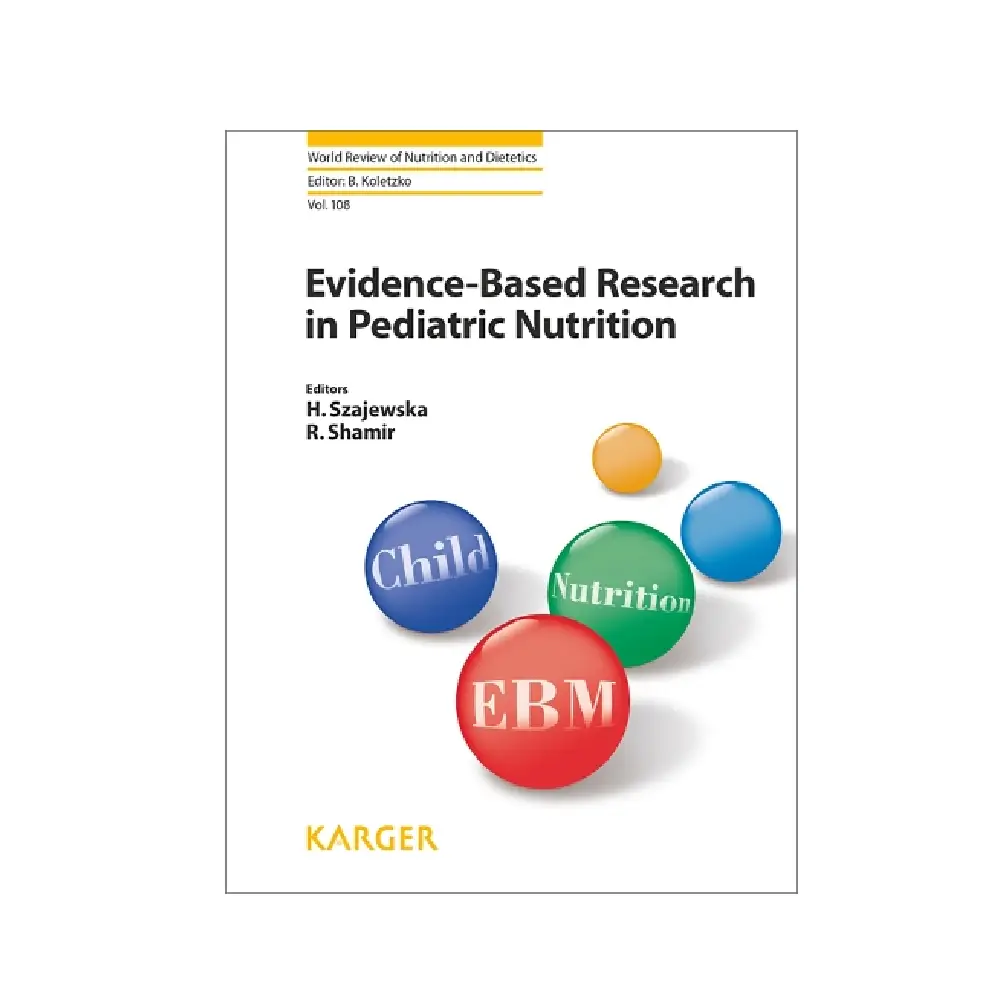
Evidence-Based Research in Pediatric Nutrition (Vol. 108, World Review of Nutrition and Dietetics)
Evidence-Based Research in Pediatric Nutrition is a concise yet rigorous scholarly volume edited by Hania Szajewska and Raanan Shamir, published in 2013 by S. Karger AG as part of the respected World Review of Nutrition and Dietetics series. The book brings together international experts to discuss current evidence, methodological issues, clinical findings, and gaps in knowledge related to the nutritional wellbeing of infants, children, and adolescents. Its core aim is to help clinicians and researchers make informed, research-based decisions in pediatric nutrition and child health care.
Purpose and Scope
The fundamental premise of this volume is that evidence-based medical research is central to improving pediatric nutrition practices. While nutritional science constantly evolves, translating research into clinical guidelines remains challenging — especially in childhood nutrition where growth, development, metabolic programming, and disease risk intersect. The editors emphasize the need to assess not just what studies show, but how reliable and applicable that evidence is in practice.
The book opens with discussions on methodological standards — such as systematic reviews, meta-analyses, clinical trials, and observational studies — and why understanding their strengths and limits is crucial for interpreting pediatric nutrition research.
Core Themes by Section
1. Methodological Foundations
A significant portion of the book addresses research methodology in pediatric nutrition:
-
Systematic Reviews and Meta-Analyses: The first chapter explores how these rigorous research methods synthesize evidence across multiple studies. This section highlights the importance of robust literature reviews to guide evidence-based recommendations for pediatric diets and interventions.
-
Observational Nutritional Studies: While observational research provides valuable real-world insights, it has inherent limitations regarding causation. The book helps clinicians understand when and how to weigh observational evidence.
-
Human Intervention Trials: Chapters on clinical trials underscore the scientific standards needed to evaluate nutritional interventions in infants, children, and adolescents — including design considerations, endpoint selection, and ethical issues.
This methodological grounding sets the stage for the evidence-based discussion of specific nutritional topics later in the book.
2. Nutrition and Developmental Outcomes
Early nutrition profoundly influences both short- and long-term health outcomes. One of the chapters focuses on early life nutrition and its impact on a child’s immediate growth, metabolic health, immune development, and later disease risk — including obesity and metabolic syndrome. These outcomes often reflect complex interactions between genetics, diet, and environmental influences.
3. Practical Dietary Topics in Childhood
After foundational research chapters, the book delves into specific clinical topics:
-
Functional Gastrointestinal Disorders: Evidence-based reviews discuss the role of dietary components such as prebiotics, probiotics, and dietary fiber in managing common gastrointestinal issues like colic, constipation, and irritable bowel symptoms in children. These interventions are evaluated based on clinical trial data and systematic reviews.
-
Milk and Alternative Milks: The book assesses evidence surrounding cow’s milk, goat’s milk, and other milk types — evaluating nutritional quality, tolerance, and when alternatives may be appropriate.
-
Complementary Feeding Practices: Timing of introducing solid foods and its influence on allergy risk, growth patterns, and nutrient adequacy is critically reviewed. Evidence on the appropriate sequence and variety of complementary foods is examined in light of both nutrition science and clinical outcomes.
-
Vitamin and Mineral Supplementation: There are chapters that assess whether routine supplementation (e.g., iron, vitamin D) is necessary or beneficial for term infants and children — highlighting when evidence supports intervention and when data remain inconclusive.
4. Disease Prevention and Management
The book also covers nutrition’s role in pediatric disease prevention and treatment:
-
Celiac Disease: Evidence on prevention strategies through early nutrition is reviewed, including the timing of gluten introduction and its impact on disease risk.
-
Childhood Obesity: One of the later chapters focuses on evidence-based interventions for treating obesity in children. These include dietary strategies, physical activity recommendations, behavioral interventions, and long-term lifestyle modifications grounded in clinical trials.
Key Takeaways
Evidence-Based Research in Pediatric Nutrition bridges the gap between research and practice by:
-
Providing clinicians with tools to critically appraise pediatric nutritional research.
-
Summarizing current evidence on key issues such as feeding practices, gastrointestinal health, milk choices, micronutrient supplementation, and obesity.
-
Highlighting areas with strong clinical evidence as well as gaps or uncertainties where more research is needed.
-
Framing nutrition not just as a set of dietary recommendations but as a dynamic field shaped by evolving clinical data and methodological rigor.
Overall, this volume serves as a concise but comprehensive guide for pediatricians, dietitians, nutrition scientists, and other health professionals committed to evidence-based care for infants and children.




Reviews
There are no reviews yet