
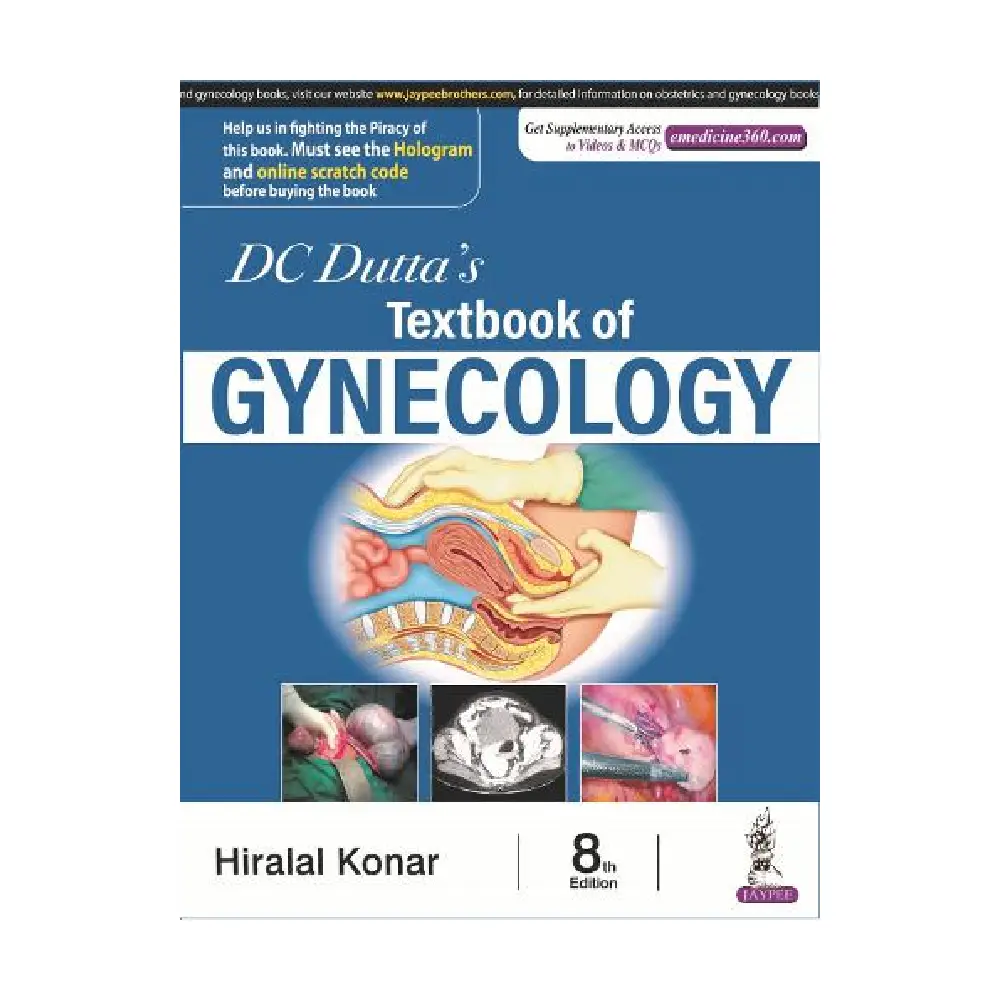
D C Dutta’s Textbook of Gynecology, 8th Edition
D C Dutta’s Textbook of Gynecology is one of the most widely used and authoritative clinical reference texts in the field of gynecology, especially in South Asia. Written by Dr. D. C. Dutta, an eminent gynecologist and educator, this textbook is designed for undergraduate and postgraduate medical students, residents, and practicing clinicians. Now in its 8th edition, the book incorporates contemporary developments in gynecologic practice while preserving a clear, systematic, and practical approach.
Overview and Purpose
The primary aim of Dutta’s Textbook is to provide a balanced and clinically relevant understanding of gynecologic conditions, their diagnosis, management, and surgical principles. The text bridges foundational anatomy and physiology with up-to-date clinical practice, focusing on patient-centered care appropriate to both low-resource and high-resource settings.
The book is structured logically, beginning with basic concepts and progressing through disorders of the reproductive tract, reproductive endocrinology, infertility, infections, neoplasia, and operative gynecology. Each chapter is written in a clear narrative style supported by tables, algorithms, clinical photographs, and illustrative diagrams.
Foundational Concepts and Anatomy
Early sections of the book review female reproductive anatomy and physiology, providing essential context for pathologic states. Topics include:
-
Embryology of the reproductive system
-
Normal menstrual physiology
-
Hormonal regulation and feedback mechanisms
These foundational chapters help readers understand how disruptions in anatomy or physiology lead to clinical disease.
Menstrual Disorders
One of the largest sections addresses the assessment and management of menstrual problems, which are among the most common complaints in gynecology:
-
Amenorrhea: Differentiation between primary and secondary amenorrhea with diagnostic flowcharts; evaluation includes pregnancy testing, hormonal assays (FSH, TSH, prolactin), imaging, and genetic workup when indicated.
-
Dysmenorrhea: Distinction between primary vs. secondary dysmenorrhea; management ranges from NSAIDs and hormonal therapy to surgical interventions for underlying pathology such as endometriosis.
-
Menorrhagia: Etiologies including fibroids, adenomyosis, bleeding disorders, and iatrogenic causes; treatment options include medical therapy, endometrial ablation, and hysterectomy.
This section emphasizes evidence-based approaches, patient counseling, and individualized management.
Infections of the Genital Tract
Dutta’s Textbook comprehensively reviews gynecologic infections, including:
-
Vaginitis and cervicitis: Microbiologic diagnosis (bacterial, fungal, and protozoal causes) and appropriate antimicrobial regimens.
-
Pelvic Inflammatory Disease (PID): Clinical features, diagnostic criteria, differential diagnosis, and both outpatient and inpatient antibiotic protocols.
Clear treatment algorithms and criteria for hospitalization, surgical intervention, and follow-up care are highlighted.
Reproductive Endocrinology and Infertility
The book includes an in-depth discussion of endocrine disorders and their impact on fertility:
-
Polycystic Ovarian Syndrome (PCOS): Diagnostic criteria (Rotterdam), metabolic implications, and fertility-focused management including ovulation induction.
-
Hyperprolactinemia and thyroid dysfunction: Endocrine evaluation and targeted therapies.
-
Ovulatory disorders and luteal phase defects: Interpretation of hormonal profiles and tailored treatments.
Infertility assessment is presented in structured protocols involving history, semen analysis, imaging, hormonal assays, and therapeutic options from ovulation induction to assisted reproductive techniques.
Gynecologic Tumors
A significant segment of the text is devoted to gynecologic oncology, covering benign and malignant tumors of the uterus, ovary, cervix, vulva, and vagina:
-
Cervical cancer: Screening strategies (Pap smear, HPV testing), staging, and multimodal management including surgery, radiotherapy, and chemoradiation.
-
Endometrial carcinoma: Risk factors, clinical features, staging, and surgical approach.
-
Ovarian tumors: Classification of epithelial, germ cell, and stromal tumors; emphasis on early detection and individualized treatment plans.
The book emphasizes a multidisciplinary approach to cancer care and explains national and international guideline standards.
Family Planning and Contraception
This edition includes updated guidance on contraceptive options, balancing effectiveness, side-effect profiles, and patient preference:
-
Hormonal methods: Combined oral contraceptives, progestin-only options, injectables, and implants.
-
Intrauterine devices: Copper IUDs and levonorgestrel-releasing systems; insertion protocols and management of complications.
-
Barrier methods: Efficacy and counseling strategies.
Clear tables compare methods by efficacy, reversibility, contraindications, and suitability for special populations.
Obstetric-Gynaecologic Intersections
Though primarily a gynecology textbook, Dutta’s includes sections on conditions that intersect with obstetrics:
-
Ectopic pregnancy: Diagnosis using clinical assessment and beta-hCG trends; medical vs. surgical management decisions.
-
Adnexal masses in pregnancy: Evaluation and safe intervention planning.
These chapters provide gynecologic surgeons with guidance on care in reproductive-aged patients.
Operative Gynecology
The final portion addresses surgical principles and procedures, emphasizing safety and anatomy:
-
Hysterectomy: Vaginal, abdominal, and laparoscopic techniques with indications and contraindications.
-
Myomectomy and adnexal surgery: Preoperative assessment, complications, and postoperative care.
-
Minimally invasive surgery: Laparoscopy techniques and instrumentation.
Illustrative diagrams and step-by-step outlines reinforce surgical learning.
Clinical Utility and Educational Value
Dutta’s Textbook is recognised for its clinical clarity, practical diagnostics, and step-wise management plans. It is especially useful for:
-
Medical students learning core gynecology
-
Residents preparing for exams and clinical rotations
-
Practicing gynecologists seeking quick reference
-
Clinicians working in resource-limited settings
Its strength lies in balancing academic depth with clinical practicality, supported by tables, summary boxes, and evidence-based algorithms.
Conclusion
D C Dutta’s Textbook of Gynecology, 8th Edition remains a foundational and highly practical reference in clinical gynecology. Its comprehensive coverage, clear explanations, and emphasis on evidence-based management make it indispensable for medical education and everyday obstetric-gynecologic practice worldwide.




Reviews
There are no reviews yet