
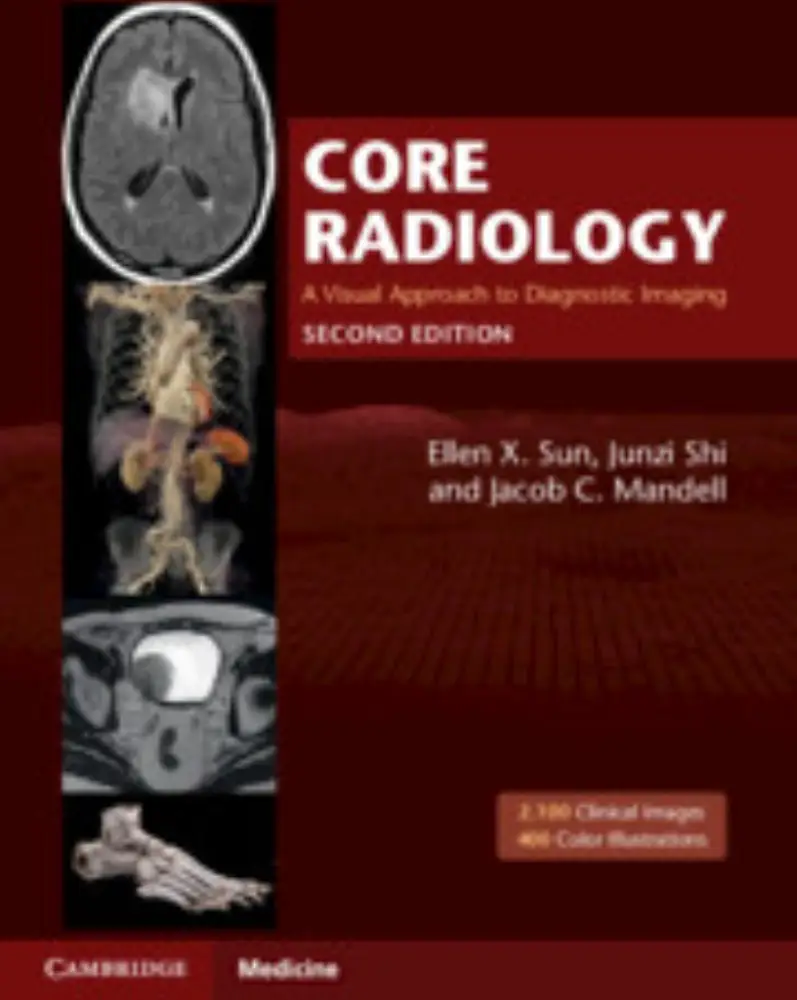
Core Radiology, 2nd Edition (Volume 1) is a comprehensive medical textbook designed to introduce the essential principles and practical applications of diagnostic imaging. Edited by Ellen X. Sun, Junzi Shi, and Jacob C. Mandell, the book is published by Cambridge University Press. It serves as an important educational resource for medical students, radiology residents, and healthcare professionals who wish to develop a strong foundation in radiologic interpretation and imaging techniques.
Radiology has become an indispensable component of modern medicine. Imaging modalities such as X-ray, computed tomography (CT), magnetic resonance imaging (MRI), ultrasound, and nuclear medicine allow clinicians to diagnose diseases, evaluate organ function, and guide treatment decisions. Core Radiology, 2nd Edition (Volume 1) focuses on helping learners understand how these imaging technologies are applied in clinical practice. The book emphasizes a systematic and visual approach, enabling readers to recognize common imaging patterns and correlate them with clinical findings.
Volume 1 of the second edition introduces several important areas of diagnostic imaging. The chapters are organized by body systems and imaging specialties, making it easier for readers to study radiology in a structured and clinically relevant way. Topics covered include thoracic imaging, gastrointestinal imaging, genitourinary imaging, breast imaging, cardiac imaging, vascular imaging, and nuclear medicine. Each section explains the anatomy, imaging techniques, and common diseases associated with the respective organ systems.
A major strength of the book is its strong visual orientation. Radiology is inherently image-based, and the textbook contains a large number of high-quality diagnostic images, including CT scans, MR images, radiographs, and ultrasound images. These illustrations demonstrate both normal anatomy and pathological conditions. Detailed captions accompany the images, guiding readers in identifying important radiologic features and understanding their clinical significance.
The authors emphasize pattern recognition and structured analysis, which are essential skills for interpreting medical images. Each chapter introduces common imaging findings associated with specific diseases and explains how radiologists differentiate between normal variations and pathological abnormalities. This practical approach helps readers learn how to interpret images logically rather than relying on memorization alone.
Another valuable aspect of Core Radiology is its integration of clinical context. The book connects imaging findings with patient symptoms, physical examination results, and laboratory data. By presenting radiology as part of the overall diagnostic process, the text helps readers understand how imaging contributes to clinical decision-making. Case examples and clinical correlations highlight the role of imaging in diagnosing conditions such as lung infections, gastrointestinal disorders, breast lesions, and cardiovascular diseases.
The second edition includes updated content reflecting advances in imaging technology and evolving clinical practices. Modern radiology continues to benefit from improved CT scanners, advanced MRI sequences, and new nuclear medicine techniques. The authors have incorporated these developments to ensure that readers receive current and relevant information about diagnostic imaging.
The layout of the textbook is designed to support efficient learning. Key points are summarized using tables, bullet points, and concise explanations, making the material easier to review during exam preparation. This format is particularly beneficial for radiology residents preparing for board examinations and for medical students studying during clinical rotations.
Overall, Core Radiology, 2nd Edition (Volume 1) provides a clear and structured introduction to diagnostic imaging. By combining high-quality images with concise explanations and clinically oriented discussions, the book helps readers develop the skills needed to interpret radiologic studies confidently. Its visual approach, comprehensive coverage, and practical focus make it a valuable reference for anyone interested in understanding the principles and applications of modern radiology.



Reviews
There are no reviews yet