
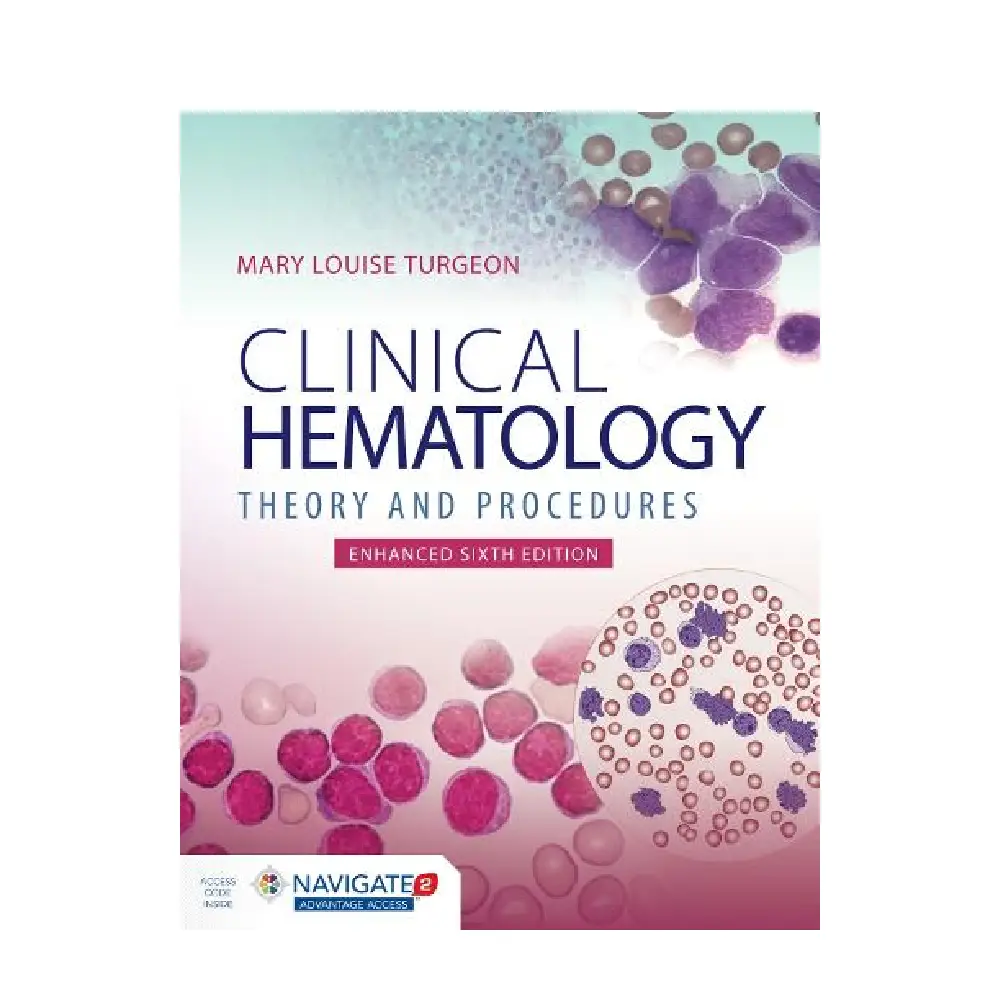
Clinical Hematology: Theory and Procedures, Sixth Edition — 700‑Word Overview
Clinical Hematology: Theory and Procedures (6th Edition) is a comprehensive and authoritative text that provides a thorough foundation in the science and practice of hematology. Designed for medical laboratory scientists, hematologists, pathology trainees, and clinicians, this edition emphasizes both the theoretical underpinnings and practical laboratory techniques essential for understanding blood disorders, performing hematologic tests, and interpreting results in a clinical context.
Purpose and Scope
The central purpose of Clinical Hematology is to equip readers with a strong conceptual and practical understanding of hematologic processes and laboratory procedures. This text bridges the gap between basic science and clinical application by discussing normal hematopoiesis (blood formation), mechanisms of disease, diagnostic strategies, and quality laboratory practice. It is widely used in academic programs, clinical laboratories, and professional review settings.
Organization and Approach
The book is structured into major sections that systematically explore:
-
Fundamentals of Hematology
-
Laboratory Techniques and Procedures
-
Hematologic Disorders and Their Diagnosis
-
Specialized Tests and Emerging Technologies
Each section seamlessly integrates scientific principles with clinical relevance, emphasizing how laboratory findings guide patient diagnosis and management.
1. Fundamentals of Hematology
The text begins with an introduction to blood composition and the physiology of hematopoiesis. It covers the cellular components of blood—erythrocytes, leukocytes, and platelets—detailing their development, structure, lifespan, and function.
-
Erythropoiesis: The production of red blood cells (RBCs) is controlled by erythropoietin, iron availability, and bone marrow regulation. Normal RBC morphology, hemoglobin synthesis, and oxygen transport physiology form the basis for understanding anemias and related disorders.
-
Leukopoiesis: White blood cells (WBCs) are explored by lineage (granulocytes, lymphocytes, monocytes), their role in immunity, and how quantitative and qualitative abnormalities reflect disease states such as infection, leukemia, and immunodeficiency.
-
Thrombopoiesis and Hemostasis: Platelet production and function are linked to clotting mechanisms. The book explains primary (platelet adhesion/aggregation) and secondary (coagulation cascade) hemostasis, providing a foundation for evaluating bleeding and thrombotic disorders.
2. Laboratory Techniques and Procedures
This section focuses on the practical skills and quality standards essential for hematology laboratories. It discusses specimen collection, handling, anticoagulants, and the importance of accurate timing and storage conditions—critical factors that can influence test outcomes.
-
Complete Blood Count (CBC): The CBC is the cornerstone of hematologic evaluation. The book details automated analyzers, manual counts, quality control, and interpretation of parameters such as hemoglobin, hematocrit, mean corpuscular volume (MCV), and differential counts.
-
Peripheral Blood Smear Examination: Microscopy remains crucial. Students learn how to prepare and stain smears, recognize normal versus abnormal cell morphology, and identify key features like anisocytosis, poikilocytosis, and inclusion bodies.
-
Bone Marrow Examination: Methods for bone marrow aspiration and biopsy are explained, with criteria for sample adequacy and interpretation of cellularity, lineage distribution, and abnormal infiltrates.
-
Coagulation Testing: Prothrombin time (PT), activated partial thromboplastin time (aPTT), fibrinogen levels, and D‑dimer assays are covered, along with clinical indications and interpretation in disorders like disseminated intravascular coagulation (DIC) and hemophilia.
3. Hematologic Disorders and Diagnosis
The text transitions to disease states, correlating laboratory findings with clinical presentations. Each disorder is approached by:
-
Pathophysiology — How the disease alters normal hematologic processes.
-
Clinical Features — Common symptoms and signs.
-
Laboratory Findings — Specific abnormalities in CBC, morphology, and specialized tests.
Key categories include:
-
Anemias: Divided by mechanism—nutritional (iron, B12/folate deficiency), hemolytic, aplastic, chronic disease. Morphologic clues (microcytic, macrocytic, normocytic) are connected to diagnostic strategies.
-
Leukemias and Lymphomas: Acute and chronic leukemias are defined by blast percentage, immunophenotyping, cytogenetics, and molecular markers. Lymphomas and plasma cell disorders are discussed with emphasis on flow cytometry and bone marrow findings.
-
Disorders of Hemostasis: Includes thrombocytopenia, von Willebrand disease, clotting factor deficiencies, and thrombophilias. The book highlights how mixing studies, factor assays, and platelet function tests contribute to diagnosis.
4. Specialized Tests and Emerging Technologies
Advances in hematology are addressed, including:
-
Flow Cytometry: Used for immunophenotyping hematologic malignancies and quantifying cell populations.
-
Molecular Diagnostics: PCR, FISH, and next‑generation sequencing for mutation detection (e.g., JAK2, BCR‑ABL).
-
Automated Morphology and Digital Imaging: Contemporary tools that enhance consistency and diagnostic accuracy.
Clinical Relevance and Application
Throughout the text, clinical case examples, tables, and algorithmic flowcharts reinforce decision‑making. For example, an algorithm may guide clinicians from a CBC with macrocytic anemia to a differential that includes B12 deficiency, liver disease, or myelodysplastic syndrome. These features help readers synthesize laboratory data with clinical context—an essential skill in practice and examination settings.
Quality Assurance and Laboratory Management
The book also emphasizes quality assurance, safety standards, and regulatory compliance. Topics such as proficiency testing, calibration, instrument maintenance, and documentation practices are discussed, ensuring laboratories produce reliable and reproducible results.
Educational Aids
Graphical elements such as color plates, cell morphology galleries, comparison tables, and review questions support learning and retention. High‑yield summaries at the end of chapters reinforce core concepts and assist with exam preparation.
Conclusion
Clinical Hematology: Theory and Procedures, Sixth Edition is a foundational text that integrates the science of blood biology with the practicalities of laboratory medicine. It teaches not just how to perform tests, but why they matter—and how to interpret them in real clinical scenarios. By combining detailed theoretical knowledge with hands‑on procedural instruction, the book prepares students, laboratory personnel, and clinicians to make accurate diagnoses, understand disease mechanisms, and contribute meaningfully to patient care. Its clear organization, clinical correlations, and emphasis on quality make it a vital resource in both academic and clinical hematology settings.
Reviews
There are no reviews yet