
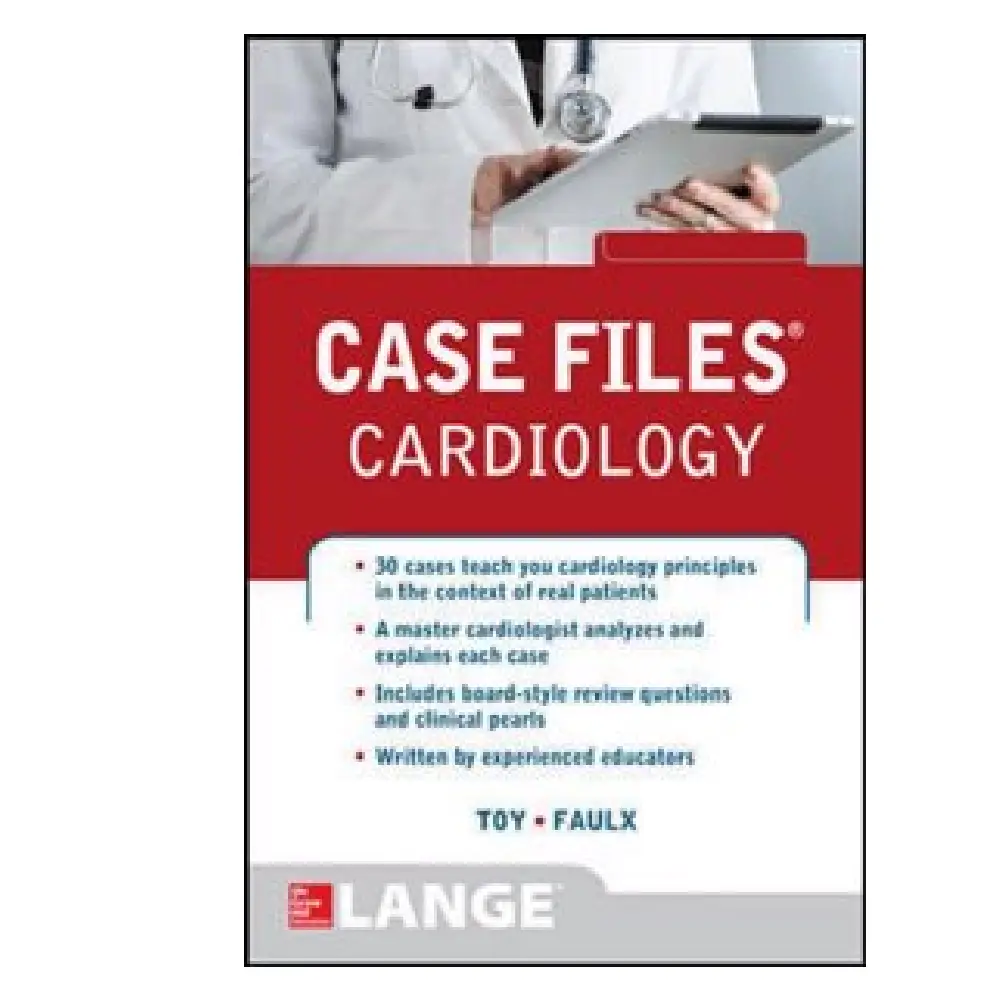
Case Files Cardiology
Case Files: Cardiology is a highly regarded case-based learning resource designed to strengthen clinical reasoning and practical decision-making in cardiovascular medicine. Part of the popular Case Files series, this book uses real-life clinical scenarios to teach core cardiology concepts in a way that mirrors everyday medical practice. Rather than presenting cardiology as isolated facts, it emphasizes problem-solving, diagnostic thinking, and application of knowledge, making it especially valuable for medical students, residents, and clinicians in training.
Case-Based Learning Approach
The defining feature of Case Files: Cardiology is its case-driven format. Each chapter typically begins with a patient vignette that reflects a common or important cardiology presentation. These cases are written to simulate realistic clinical encounters, including patient history, presenting symptoms, and relevant background information.
After the initial case presentation, readers are guided through a structured learning process that includes:
-
Clinical questions prompting analysis of symptoms and signs
-
Differential diagnosis development
-
Key diagnostic tests and their interpretation
-
Management strategies based on current clinical principles
This approach encourages active learning, requiring readers to think critically before reviewing the explanations. It closely replicates the diagnostic reasoning expected in ward rounds, clinics, emergency settings, and examinations.
Coverage of Core Cardiology Topics
The cases in Case Files: Cardiology span the full spectrum of cardiovascular disease. Commonly covered topics include:
-
Chest pain and ischemic heart disease, including stable angina and acute coronary syndromes
-
Heart failure, both reduced and preserved ejection fraction
-
Arrhythmias, such as atrial fibrillation, supraventricular tachycardia, and ventricular arrhythmias
-
Valvular heart disease, including aortic stenosis, mitral regurgitation, and mitral stenosis
-
Hypertension and hypertensive emergencies
-
Cardiomyopathies and myocarditis
-
Pericardial diseases, including pericarditis and cardiac tamponade
-
Congenital heart disease in adults
Each case focuses on high-yield clinical conditions that learners are likely to encounter in examinations and real practice.
Integration of Basic Science and Clinical Medicine
One of the strengths of Case Files: Cardiology is its ability to integrate basic science principles—such as cardiac physiology, pathophysiology, and pharmacology—directly into clinical scenarios. For example, a case of heart failure may include explanations of preload, afterload, and neurohormonal activation, while a case of arrhythmia may reinforce electrophysiologic mechanisms and ECG interpretation.
This integration helps learners understand not only what to do clinically, but why specific findings and treatments make sense physiologically. Such understanding is essential for long-term retention and confident clinical decision-making.
Clinical Pearls and Learning Aids
Each chapter includes clinical pearls—concise, high-yield points that summarize the most important lessons from the case. These pearls are particularly useful for revision and exam preparation, as they distill complex topics into memorable insights.
Many cases also include tables, algorithms, or brief summaries that outline diagnostic pathways or management strategies. These tools help learners quickly grasp standard approaches to common cardiology problems, such as evaluating chest pain or managing atrial fibrillation.
Diagnostic Reasoning and Investigations
A major emphasis of the book is the rational use of investigations. Readers are guided on when and why to order tests such as:
-
Electrocardiography (ECG)
-
Echocardiography
-
Cardiac biomarkers
-
Stress testing
-
Cardiac imaging
Rather than listing tests indiscriminately, the cases highlight how clinical findings guide investigation choices. This reinforces cost-effective, patient-centered care and helps learners avoid unnecessary testing.
Management and Therapeutic Principles
Treatment strategies discussed in Case Files: Cardiology reflect standard, evidence-based clinical practice. These include lifestyle modification, pharmacotherapy, interventional procedures, and long-term management plans.
For example, cases on acute coronary syndrome emphasize timely diagnosis, antiplatelet therapy, and reperfusion strategies. Heart failure cases focus on guideline-directed medical therapy, while arrhythmia cases explore rate versus rhythm control and anticoagulation decisions.
Although the book is not a detailed guideline manual, it provides a strong foundation upon which more advanced knowledge can be built.
Target Audience
Case Files: Cardiology is particularly well suited for:
-
Undergraduate medical students
-
Students preparing for USMLE or similar examinations
-
Internal medicine residents
-
Junior doctors rotating through cardiology
-
Clinicians seeking a refresher in clinical cardiology
Its accessible language and structured format make it useful even for those early in their medical training.
Educational Value
The major educational advantage of Case Files: Cardiology lies in its ability to train the mind to think like a clinician. By repeatedly working through cases, readers develop pattern recognition, logical reasoning, and confidence in approaching cardiovascular problems.
Conclusion
Case Files: Cardiology is an effective and engaging learning resource that transforms cardiology from a complex theoretical subject into a series of understandable clinical problems. Through realistic cases, integrated explanations, and practical clinical pearls, it equips learners with the skills needed to diagnose and manage cardiovascular disease confidently. Its case-based approach makes it an excellent companion for exams, clinical rotations, and everyday medical practice.

Reviews
There are no reviews yet