
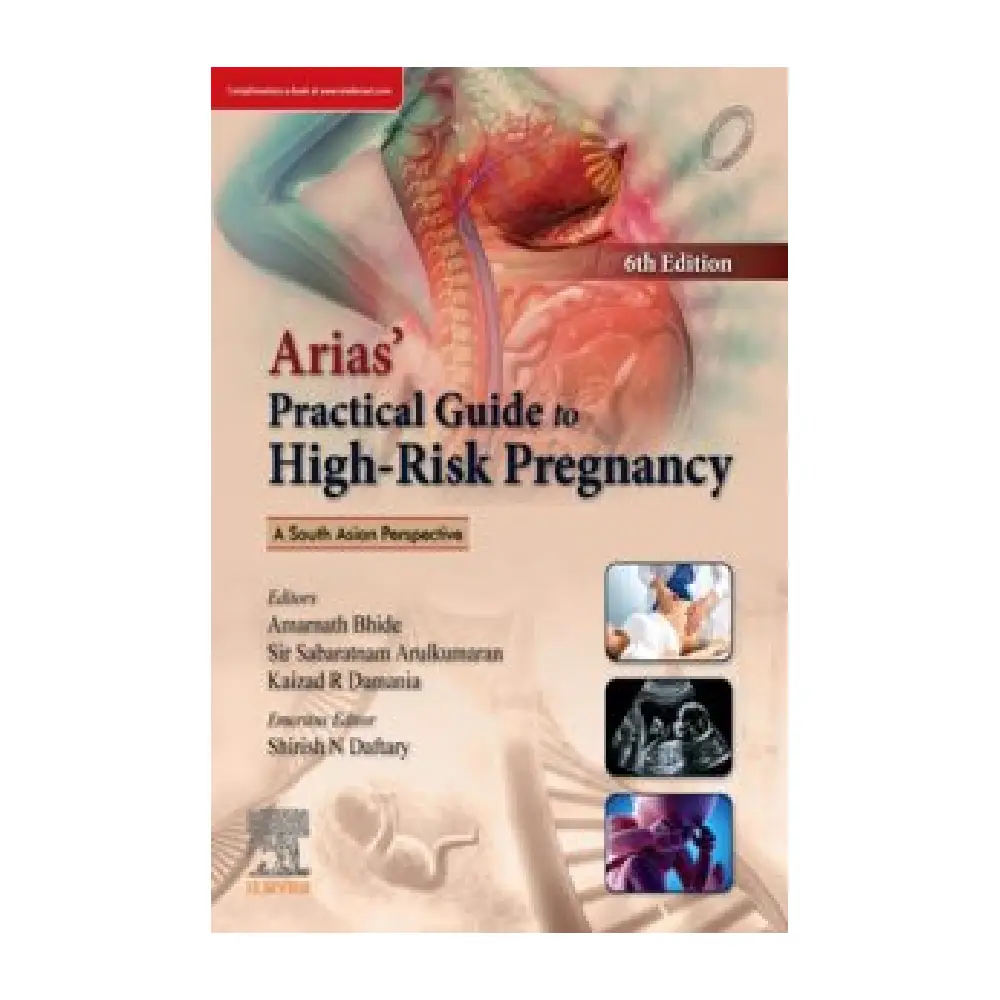

ARIAS’ Practical Guide to High-Risk Pregnancy (6th Edition)
ARIAS’ Practical Guide to High-Risk Pregnancy is a globally respected clinical reference that guides healthcare professionals through the complex care of women with high-risk obstetric conditions. Now in its 6th edition, this book remains a cornerstone in obstetrics education, valued for its practical approach, evidence-based recommendations, and focus on safe maternal-fetal outcomes. It is widely used by obstetricians, maternal-fetal medicine specialists, residents, and allied health professionals involved in pregnancy care.
Purpose and Scope
The central goal of ARIAS’ Practical Guide is to support clinicians in recognizing, evaluating, and managing the wide range of complications that can arise during pregnancy. “High-risk pregnancy” refers to situations in which the health of the mother, fetus, or both is jeopardized due to underlying medical conditions, obstetric anomalies, or pregnancy-related complications. The book blends clinical judgment with current scientific evidence, making it both a learning resource and a practical daily reference.
Unlike purely academic textbooks, this guide prioritizes clinical applicability and decision-making. Content is organized to allow rapid access to essential information, with clear summaries, management algorithms, and practical tips that help clinicians deliver effective and timely care.
Structure and Organization
The book is structured into distinct sections that reflect the chronological and clinical progression of pregnancy: preconception counseling, antenatal care, labor and delivery considerations, postpartum care, and special conditions affecting pregnancy. Key sections include:
-
Preconception and Early Pregnancy
This section discusses factors that increase obstetric risk before conception, including chronic illnesses like diabetes, hypertension, and autoimmune disorders. It emphasizes optimizing maternal health before pregnancy and early risk stratification. -
Medical Conditions in Pregnancy
A significant portion of the book is dedicated to medical disorders that complicate pregnancy. Topics such as cardiovascular disease, renal disorders, endocrinopathies (e.g., diabetes mellitus and thyroid disease), hematologic disorders, and infectious diseases are covered. For each condition, the book outlines how pregnancy alters disease expression and management considerations. -
Obstetric Complications
Conditions unique to pregnancy are explored in depth. These include hypertensive disorders of pregnancy (e.g., preeclampsia), placental abnormalities (placenta previa, accreta), preterm labor, fetal growth restriction, multiple gestations, and antepartum hemorrhage. Each chapter provides risk assessment criteria, diagnostic modalities, and evidence-based management pathways. -
Fetal Assessment and Surveillance
Fetal well-being is a core focus. The book discusses contemporary tools such as fetal ultrasonography, biophysical profiles, non-stress testing, and Doppler studies. It guides clinicians in interpreting findings and making decisions about timing of delivery in compromised pregnancies. -
Labor and Delivery in High-Risk Patients
Management during labor requires special vigilance. This section includes strategies for induction, cesarean delivery considerations, anesthesia planning, and emergency interventions. Critical topics like shoulder dystocia, cord prolapse, and uterine rupture are detailed with stepwise management advice. -
Postpartum Care and Complications
Postpartum care for high-risk patients extends beyond routine observation. Issues such as postpartum hemorrhage, thromboembolism prevention, lactation concerns, and mental health considerations are reviewed. There is also guidance on long-term follow-up of conditions that are exacerbated or unmasked by pregnancy.
Key Features that Enhance Clinical Use
Practical Algorithms and Flowcharts
One of the strength points of ARIAS’ is its use of diagnostic and treatment algorithms that help clinicians make real-time decisions. These tools break down complex clinical pathways into clear, stepwise approaches that aid consistency and reduce errors.
Evidence-Based Recommendations
While the book is grounded in clinical experience, it is extensively supported by current research and international guidelines. Key evidence summaries are included, and management suggestions are continually updated to reflect evolving standards of care.
Case Scenarios and Clinical Pearls
Clinical pearls—concise points highlighting best practices—are interspersed throughout the text. Case examples illustrate real-life applications of theory, helping readers translate knowledge into patient care.
Multidisciplinary Perspectives
High-risk pregnancy often requires collaboration across specialties. The guide includes guidance on coordinating care with endocrinologists, cardiologists, anesthesiologists, neonatologists, and social support services, emphasizing a team-based approach.
Why This Guide Matters
High-risk obstetrics is inherently complex because it involves balancing maternal and fetal interests, often under time-sensitive conditions. Conditions such as preexisting diabetes, hypertension, autoimmune disease, and advanced maternal age have become more common as societal trends shift. Moreover, pregnancy can amplify underlying disease processes and introduce new challenges that require rapid adaptation.
ARIAS’ Practical Guide serves not just as a textbook, but as a mentor in print. It helps clinicians anticipate complications, recognize early warning signs, and implement management strategies that improve outcomes. Its organization allows both structured learning and targeted reference when urgent clinical questions arise.
Conclusion
The 6th edition of ARIAS’ Practical Guide to High-Risk Pregnancy distills complex obstetric knowledge into a usable, evidence-based clinical tool. Its emphasis on practical solutions, current recommendations, and multidisciplinary care makes it indispensable for clinicians managing high-risk pregnancies. Whether preparing for exams, updating clinical practice, or navigating challenging cases, this guide equips healthcare professionals to deliver safer, smarter, and more confident care to mothers and babies alike.

Reviews
There are no reviews yet