
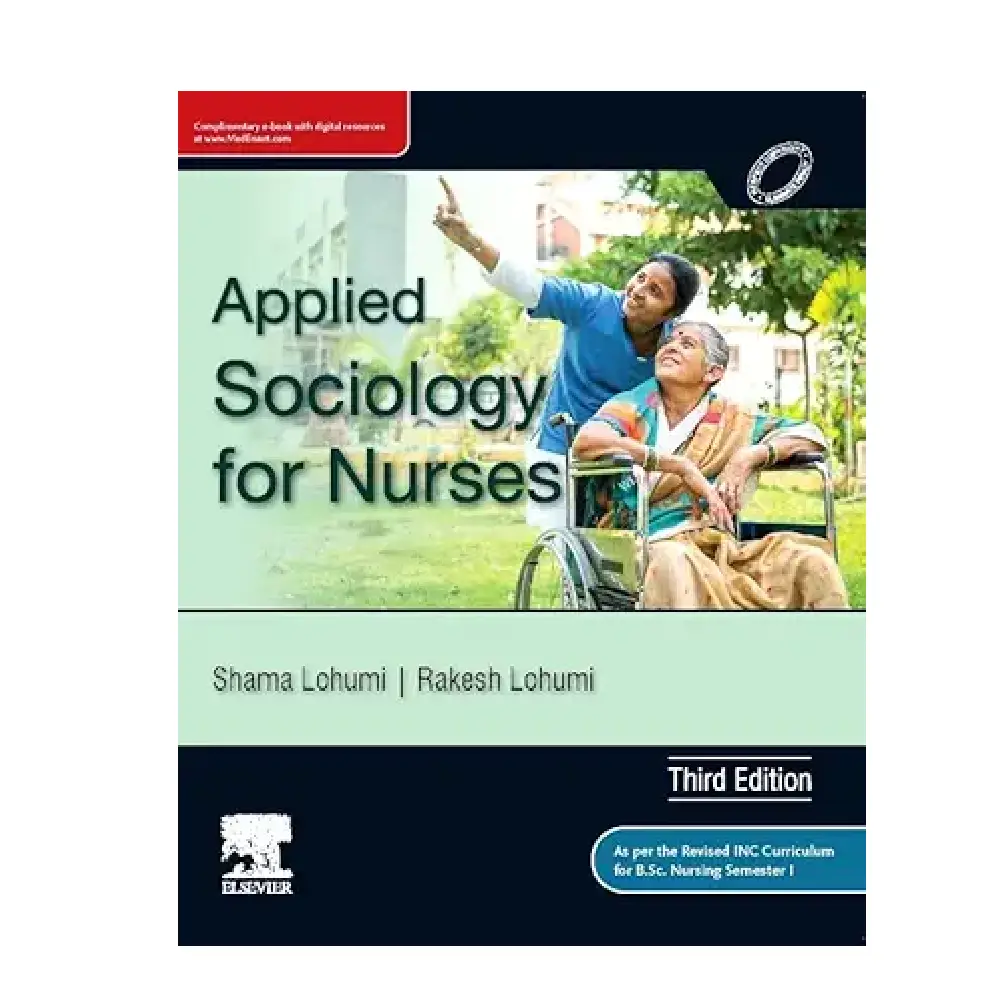


Applied Sociology for Nurses, 3rd Edition
Applied Sociology for Nurses, 3rd Edition is a foundational and highly practical textbook designed to bridge the gap between sociological theory and everyday nursing practice. Written specifically for nursing students, practicing nurses, and other health care professionals, the book situates sociology not as an abstract academic subject but as a real-world tool that can be actively used to understand patients, families, health care systems, and broader social forces influencing health and well-being.
At a time when health care is increasingly shaped by multicultural societies, resource-stratified systems, and diverse patient needs, understanding social context isn’t optional — it’s essential. This third edition continues the tradition of its predecessors, integrating classic sociological concepts with contemporary issues that resonate directly with nursing practice and health-care delivery.
Purpose and Scope
The central purpose of Applied Sociology for Nurses is to make sociological principles accessible, relevant, and actionable for nurses. Rather than presenting sociology as mere academic theory, the book connects core sociological concepts — such as culture, social structure, socialization, inequality, and group behavior — to nursing phenomena like patient education, health inequalities, communication with families, and community health promotion.
The scope of the book encompasses both individual-level social interactions (e.g., patient-provider communication, family dynamics, cultural norms) and larger societal forces (e.g., socioeconomic status, health policy, demographic change). By doing so, it equips nurses with tools to interpret and respond to the social determinants of health — factors that often have a more profound influence on outcomes than biological ones.
Structure and Organization
The third edition is thoughtfully organized into chapters that progressively build the reader’s understanding of sociology as it applies to nursing:
-
Introduction to Sociology and its Relevance to Nursing
The book opens by situating sociology within the health professions, explaining why understanding social life matters for caring, assessment, and evidence-based interventions. It typically clarifies key sociological terms and frames how nurses act as mediators between individual patients and larger social systems. -
Society, Culture, and Health Behavior
This section examines how cultural beliefs, norms, and social expectations shape health beliefs and behaviors. Nurses are encouraged to understand not only what patients do but why they do it — considering cultural traditions, stigma, and social scripts. -
Socialization, Identity, and Self-Concept
Chapters on socialization explore how people learn roles, behaviors, and expectations — including roles related to health and caregiving. These concepts help nurses understand how patients, families, and even nurses themselves internalize health-related expectations. -
Social Structure and Inequality
A major focus is on how society’s structural forces — class, race, gender, and power relations — influence health access, outcomes, and experiences. This prepares nurses to recognize structural barriers that patients face and advocate for equity in care. -
Groups, Organizations, and Health Systems
Nursing rarely happens in isolation. This section explores how groups and institutions function — from families and support networks to hospitals and community agencies — and how these structures shape health care delivery. -
Deviance, Illness Behavior, and Stigma
Sociological perspectives on deviance help nurses understand how society labels and responds to illness, particularly for stigmatized conditions like mental illness or HIV. This understanding fosters empathy and more effective, patient-centered care. -
Social Change, Globalization, and Health Policy
The final sections often extend one’s view to societal trends — such as aging populations, migration, technology, and policy reforms — highlighting how these forces impact health systems and nursing practice at macro and micro levels.
Each chapter typically combines theoretical exposition with case studies, real-world examples from health care settings, thought questions, and reflective activities that encourage application of sociological insights to nursing scenarios.
Strengths of the Book
Applicability to Practice:
One of the key strengths of Applied Sociology for Nurses is its relentless focus on practical application. Unlike purely theoretical texts, this book explains how sociological knowledge directly enhances clinical communication, patient assessment, care planning, and health promotion.
Contextual Understanding:
It emphasizes understanding patients within their social contexts — something increasingly recognized as central to effective nursing. This includes appreciating cultural diversity, socioeconomic influences, family roles, support systems, and community networks.
Bridging Theory and Practice:
The authors do an excellent job of demystifying foundational sociological concepts and tying them explicitly to nursing cases or scenarios. This makes the content relevant even for students who may initially question sociology’s value in a clinical discipline.
Engaging and Reflective:
The presence of reflective questions, case scenarios, and practical examples encourages active engagement with content rather than passive reading. This helps learners transfer classroom knowledge to clinical reasoning.
Limitations
Depth vs. Breadth:
While the emphasis on applied content is a strength, some readers — particularly those seeking in-depth sociological theory — may find the treatment of core sociological frameworks somewhat simplified. The book prioritizes breadth and clinical translation over deep theoretical exploration.
Edition-Specific Updates:
In rapidly changing social and health care contexts, some examples or policy discussions may age quickly. While the third edition has updated content, continual revisions are needed to remain current with emerging issues like telehealth, pandemic responses, and digital health inequities.
Clinical Relevance and Educational Value
For nursing education, this book is a valuable complement to clinical texts. It reinforces the idea that understanding human behavior, social patterns, and societal context is integral to effective assessment, culturally sensitive care, and health education. For practicing nurses, it provides a framework for interpreting patient behavior, navigating complex social dynamics, and advocating for patient needs within health systems.
By fostering sociological literacy, the book enhances skills such as:
-
Effective communication with patients and families
-
Recognition of social determinants influencing health
-
Ethical and culturally competent care
-
Critical thinking and systems-level awareness
-
Collaboration with interdisciplinary teams
Conclusion
Applied Sociology for Nurses, 3rd Edition is an essential resource that bridges the theoretical world of sociology with the practical demands of nursing. Its clear, applied approach makes it especially suited for students and practitioners who want to deepen their understanding of social forces shaping health and health care. By centering sociology as a tool for insight and action, the book empowers nurses to provide holistic, socially informed, and compassionate care in a world defined by complexity and diversity.

Reviews
There are no reviews yet