
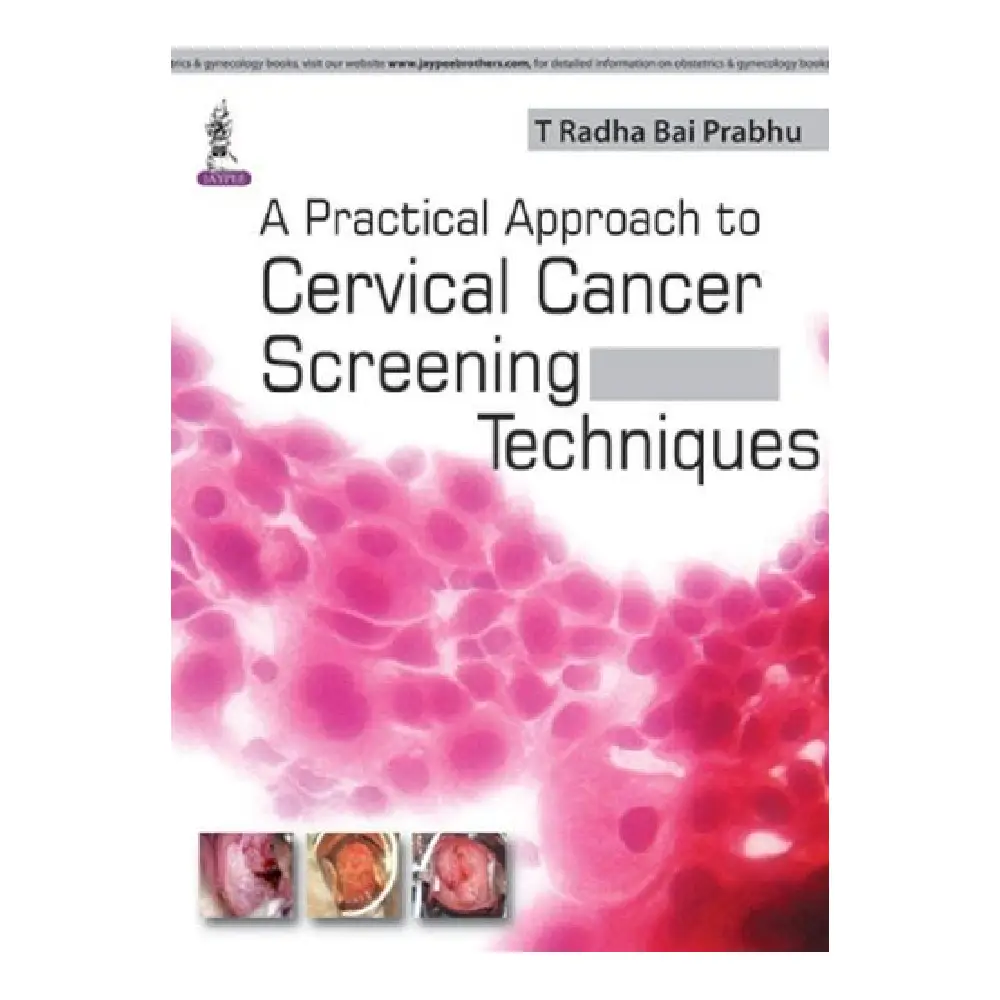

A Practical Approach to Cervical Cancer Screening Techniques
A Practical Approach to Cervical Cancer Screening Techniques is a clinically oriented resource designed to guide healthcare professionals in the effective prevention and early detection of cervical cancer. The book emphasizes practical strategies, step-by-step screening procedures, and implementation methods suitable for both resource-rich and low-resource settings. It serves as a valuable guide for gynecologists, primary care physicians, nurses, public health professionals, and postgraduate trainees involved in women’s health services.
The foundation of cervical cancer screening lies in understanding the natural history of cervical cancer. The book begins by explaining the role of persistent infection with high-risk human papillomavirus (HPV) types in the development of cervical intraepithelial neoplasia (CIN) and invasive cervical carcinoma. By outlining the progression from HPV infection to precancerous lesions and eventually invasive disease, the text highlights the critical importance of early detection and timely intervention.
One of the core sections focuses on various screening methods. The conventional Pap smear (cytology-based screening) is discussed in detail, including patient preparation, sample collection techniques, slide preparation, and interpretation of cytological findings. Emphasis is placed on correct sampling from the transformation zone, which is the most common site for precancerous changes. The book also explains liquid-based cytology and its advantages in improving specimen adequacy and diagnostic accuracy.
The growing role of HPV DNA testing in cervical cancer screening is another key topic. The text outlines indications for primary HPV screening, co-testing strategies, and triage protocols for women with abnormal results. It explains how HPV testing increases sensitivity for detecting high-grade lesions and how screening intervals may be extended when results are negative. The integration of HPV vaccination programs with screening initiatives is also discussed, reinforcing the preventive approach to cervical cancer.
In resource-limited settings, visual inspection methods play a significant role. The book provides practical guidance on Visual Inspection with Acetic Acid (VIA) and Visual Inspection with Lugol’s Iodine (VILI). Step-by-step procedural details are included, such as preparation of acetic acid solution, proper visualization of the cervix, identification of acetowhite areas, and interpretation of findings. These low-cost, point-of-care techniques are highlighted for their feasibility in community-based screening programs.
Colposcopy and biopsy techniques are thoroughly explained for cases requiring further evaluation. The book details colposcopic examination procedures, identification of abnormal vascular patterns, acetowhite changes, mosaicism, and punctation. It also discusses biopsy techniques, endocervical curettage, and histopathological assessment, which confirm the diagnosis and guide treatment planning.
Management protocols for abnormal screening results are clearly outlined. The book provides practical algorithms for handling atypical cytology, low-grade and high-grade lesions, and suspected invasive cancer. Treatment options such as cryotherapy, loop electrosurgical excision procedure (LEEP), and cold knife conization are described with indications, procedural steps, and follow-up recommendations. The “screen-and-treat” approach is emphasized in settings where loss to follow-up is common.
Quality assurance and program implementation are essential aspects of effective screening, and the book addresses these in detail. Topics include training of healthcare workers, standardization of procedures, maintaining screening registries, ensuring laboratory quality control, and monitoring outcomes. The importance of community awareness, patient counseling, and reducing stigma associated with gynecological examinations is also discussed.
Special populations receive dedicated attention, including screening recommendations for pregnant women, immunocompromised patients, postmenopausal women, and adolescents. Updated screening intervals and age-specific guidelines are explained to ensure evidence-based practice.
The book also highlights global and national screening recommendations, aligning with guidelines from major health organizations. It underscores the importance of integrating cervical cancer screening into broader reproductive health services and strengthening healthcare infrastructure to achieve population-level impact.
In conclusion, A Practical Approach to Cervical Cancer Screening Techniques is a comprehensive and practice-focused guide that equips healthcare professionals with the knowledge and skills necessary to implement effective cervical cancer screening programs. By combining scientific understanding with practical application, it supports early detection, reduces morbidity and mortality, and contributes significantly to women’s preventive healthcare.







Reviews
There are no reviews yet