
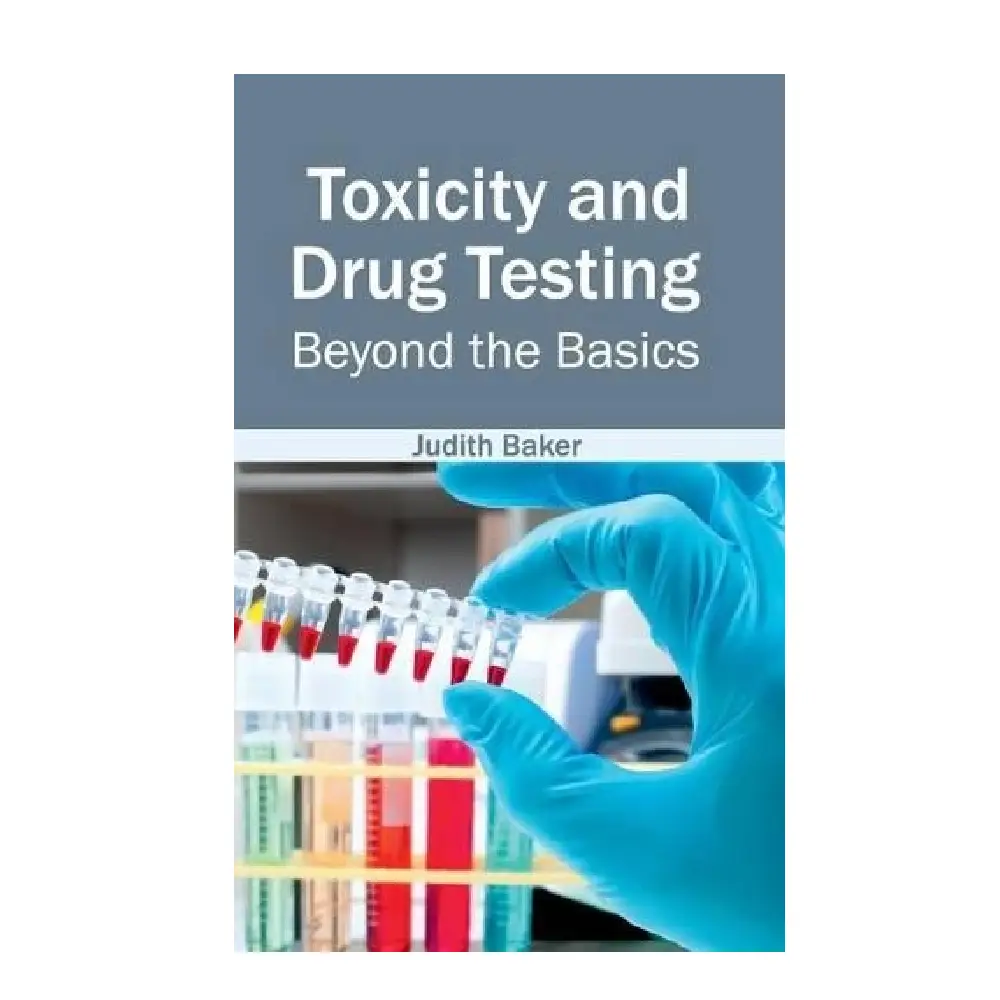
Toxicity and Drug Testing: Beyond the Basics
Toxicity and Drug Testing: Beyond the Basics is an advanced scientific reference that explores the principles, methodologies, and regulatory frameworks underlying modern toxicology and drug evaluation. Designed for researchers, pharmacologists, toxicologists, regulatory professionals, and graduate students, this comprehensive volume moves beyond introductory toxicology concepts to examine the evolving landscape of safety assessment, predictive modeling, and translational drug testing strategies.
The book begins by revisiting the foundational principles of toxicology, including dose–response relationships, toxicokinetics, and toxicodynamics. It emphasizes the importance of understanding how absorption, distribution, metabolism, and excretion (ADME) influence toxicity outcomes. By integrating molecular biology with classical toxicological models, the text demonstrates how cellular pathways, receptor interactions, and genetic variability contribute to differential toxic responses. The discussion extends to biomarkers of toxicity, highlighting how biochemical and molecular indicators are used to detect early organ damage before clinical symptoms appear.
A major focus of the volume is preclinical drug testing. The book provides an in-depth analysis of in vitro and in vivo models used to assess safety prior to human trials. It explores cell culture systems, organoids, stem cell–derived tissues, and high-throughput screening technologies that allow rapid toxicity profiling of large compound libraries. Animal testing models are critically evaluated, including rodent and non-rodent species used in acute, subchronic, and chronic toxicity studies. Ethical considerations and the principles of the 3Rs (Replacement, Reduction, and Refinement) are thoroughly discussed, reflecting the global shift toward alternative testing strategies.
The text also addresses specialized areas of toxicity testing such as genotoxicity, carcinogenicity, reproductive and developmental toxicity, immunotoxicity, and neurotoxicity. Advanced analytical techniques—including omics technologies (genomics, proteomics, metabolomics) and systems toxicology—are presented as powerful tools for understanding complex toxic responses. These approaches enable researchers to move from observational toxicology to mechanism-based risk assessment.
Another significant section examines clinical drug testing and pharmacovigilance. The book outlines the phased approach to clinical trials, from Phase I safety trials to post-marketing surveillance. It discusses adverse drug reaction monitoring, signal detection systems, and real-world evidence collection. Emphasis is placed on the importance of integrating preclinical findings with clinical outcomes to improve predictive accuracy and patient safety. Regulatory requirements from global agencies such as the U.S. FDA, EMA, and other international bodies are analyzed to provide readers with practical insight into compliance and documentation standards.
Emerging technologies receive considerable attention. The book explores artificial intelligence and computational toxicology, including quantitative structure–activity relationship (QSAR) models and in silico simulations used to predict toxic effects before laboratory testing. Microphysiological systems, commonly known as “organ-on-a-chip” technologies, are highlighted for their potential to replicate human physiological conditions more accurately than traditional models. These innovations are presented as transformative tools that may reduce reliance on animal studies while increasing predictive precision.
Risk assessment and regulatory toxicology form another cornerstone of the text. Readers are introduced to hazard identification, dose–response assessment, exposure assessment, and risk characterization frameworks. Case studies illustrate how toxicological data inform public health decisions, environmental policies, and pharmaceutical approvals. The book also discusses global harmonization efforts in toxicity testing guidelines and reporting standards.
Throughout its chapters, Toxicity and Drug Testing: Beyond the Basics maintains a balance between theoretical knowledge and practical application. Detailed figures, tables, and real-world examples enhance comprehension of complex concepts. The writing style is technical yet accessible, making it suitable for advanced learners while remaining useful as a reference for professionals.
In conclusion, this book serves as a forward-looking resource in the rapidly evolving field of toxicology. By integrating molecular science, advanced testing methodologies, computational modeling, and regulatory insight, it equips readers with a deeper understanding of modern drug safety evaluation. It not only builds upon foundational toxicology but also prepares scientists and healthcare professionals to navigate the challenges of developing safer and more effective therapeutic agents in an increasingly complex biomedical environment.

Reviews
There are no reviews yet