
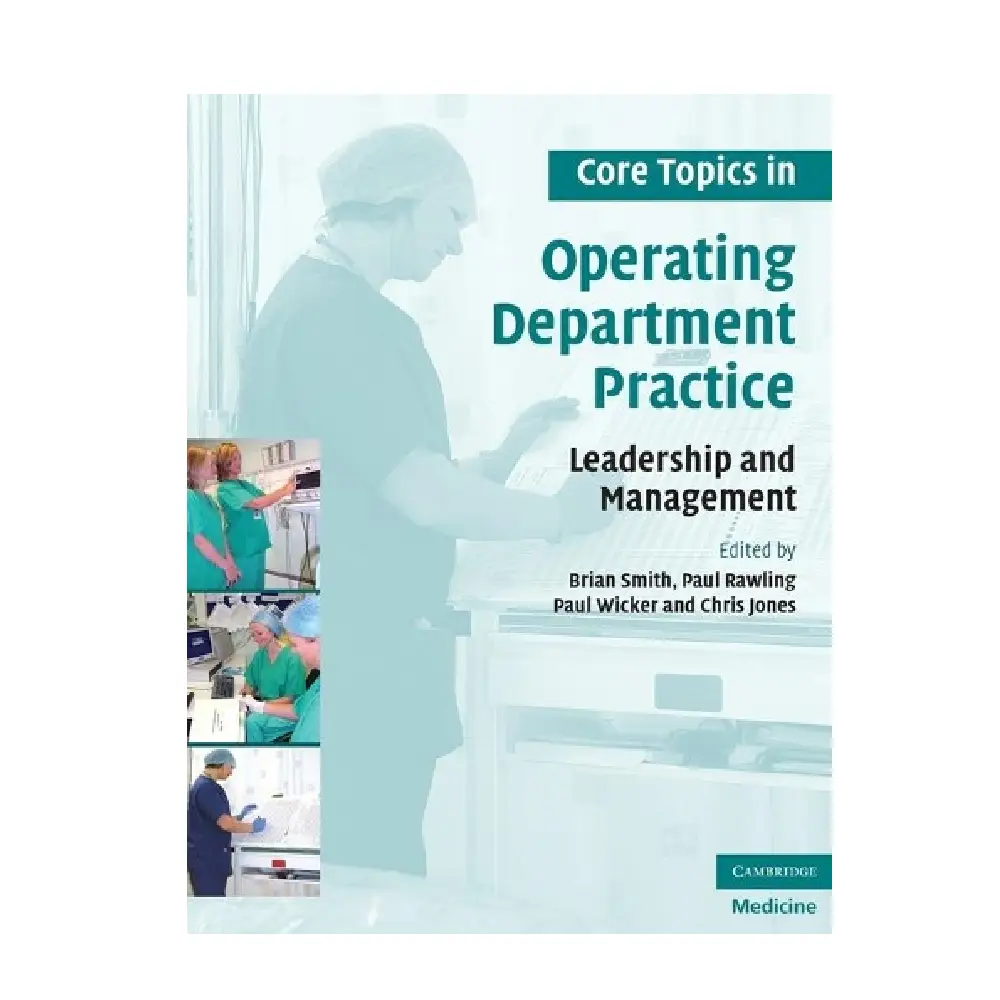
Core Topics in Operating Department Practice
Core Topics in Operating Department Practice is a clinical textbook and reference guide designed to support education and professional practice in perioperative care — the preparation, management, and recovery of patients undergoing surgery. The book addresses essential areas that Operating Department Practitioners (ODPs), surgical nurses, anesthesia associates, and allied health students must understand to deliver safe, effective, and evidence-based care within the operating theatre and perioperative environment.
It offers comprehensive yet accessible coverage of foundational principles, clinical practices, and professional competencies required in operating department settings. Unlike general nursing texts or basic anatomy books, this resource focuses specifically on perioperative roles, responsibilities, and interventions that are unique to the operating theatre.
Authorship and Authority
The authorship of Core Topics in Operating Department Practice typically involves experienced practitioners, educators, and clinical specialists in perioperative nursing and operating department practice. Contributors often include qualified ODPs, anesthetists, surgical educators, and academics with extensive experience in training and practice.
Their collective expertise ensures that the content is both clinically relevant and pedagogically sound — balancing evidence-based theory with real-world application.
The text is widely adopted in pre-registration ODP programs, perioperative nursing courses, and preparation for professional certification, including national qualifications such as the Operating Department Practice Diploma/degree in the UK and similar credentials internationally.
Purpose and Target Audience
The primary purpose of Core Topics in Operating Department Practice is to serve as a foundation textbook for students and practitioners who work in or are training to work in operating departments and perioperative services. It is particularly suited for:
-
Operating Department Practitioner (ODP) students
-
Perioperative nursing students
-
Anaesthesia associate trainees
-
Surgical care practitioners
-
Clinical educators and lecturers
-
Allied health professionals involved in theatre support roles
By structuring content around core clinical and professional themes, the book supports learning for both academic coursework and clinical placement training. It also functions as a reference guide during practice, offering explanations of procedures, physiology, pharmacology, and standards of care.
Structure and Content Overview
The book is organized into thematic chapters that explore major domains relevant to perioperative care. While exact chapter titles vary by edition, typical content areas include:
1. Professional and Legal Context
This section covers the role and responsibilities of the Operating Department Practitioner and perioperative team within healthcare systems. Topics include:
-
Scope of practice and professional standards
-
Legal and ethical principles in surgical care
-
Infection prevention and control
-
Health and safety in the operating theatre
The emphasis is placed on understanding accountability, teamwork, and patient rights as fundamental to safe practice.
2. Anatomy, Physiology, and Pathophysiology
Operating theatre professionals must understand relevant body systems to anticipate physiological responses during surgery. Sections cover:
-
Cardiovascular and respiratory systems
-
Neurological principles
-
Renal and metabolic considerations
-
Surgical implications of common disease processes
This foundation helps practitioners recognize and respond to intraoperative changes in vital functions.
3. Perioperative Care Pathways
These chapters focus on the patient journey before, during, and after surgery:
-
Preoperative assessment: risk stratification, consent processes, and preparation
-
Intraoperative care: aseptic practices, positioning, monitoring, and anaesthesia support
-
Post-operative care: recovery, pain management, and transfer of care
The section stresses continuity of care and interdisciplinary communication.
4. Anaesthesia and Analgesia
A detailed exploration of anaesthetic practice — essential knowledge for theatre practitioners — includes:
-
Types of anaesthesia (general, regional, local)
-
Pharmacology of anaesthetic agents
-
Monitoring requirements
-
Complications and emergency responses
Understanding anaesthetic principles allows ODPs to support anaesthetists and ensure patient safety during sedation and pain control.
5. Surgical Procedures and Specialities
This part introduces common surgical specialties and specific operating theatre considerations for each, such as:
-
Orthopaedics
-
Cardiothoracic surgery
-
Neurosurgery
-
Obstetrics and gynaecology
-
ENT and Maxillofacial surgery
Practitioners learn how different procedures impact positioning, equipment needs, sterility protocols, and perioperative risks.
6. Emergency Situations and Crisis Management
Perioperative care often involves managing unexpected events. Chapters include:
-
Recognition and response to collapse or cardiac arrest
-
Airway emergencies
-
Major haemorrhage protocols
-
Anaphylaxis and life-threatening complications
Emphasis is placed on team communication, rapid assessment, and algorithm-based responses.
7. Professional Development and Evidence-Based Practice
The final sections support practitioners in lifelong learning by covering:
-
Reflective practice and clinical audit
-
Research appraisal
-
Quality improvement initiatives
This fosters a culture of continuous improvement and evidence-based decision-making within perioperative practice.
Key Features and Educational Value
1. Clear Explanations and Illustrations
The book uses diagrams, clinical tables, and flowcharts to simplify complex concepts, which is especially helpful for students preparing for theatre placements and exams.
2. Clinical Relevance
Case examples, procedural summaries, and learning checkpoints reinforce real-world application rather than abstract theory.
3. Exam and Assessment Preparation
Many editions include end-of-chapter questions, reflective prompts, and practical checklists to help learners prepare for assessments and clinical competencies.
4. Interdisciplinary Perspective
Content reflects the team-based nature of perioperative care — integrating nursing, anaesthesia, surgical, and safety perspectives to promote holistic understanding.
Conclusion
Core Topics in Operating Department Practice is a foundational text that provides a comprehensive yet practical guide to perioperative care. Its focus on clinical utility, patient safety, professional standards, and evidence-based practice make it indispensable for students and practitioners working in operating department settings.
Whether used to support academic learning, prepare for clinical placements, or refresh theatre knowledge in practice, the book equips perioperative professionals with the necessary tools to contribute confidently and competently to surgical care. Its balanced coverage of theory and application helps bridge the gap between classroom learning and clinical competence in the dynamic environment of the operating theatre.



Reviews
There are no reviews yet