
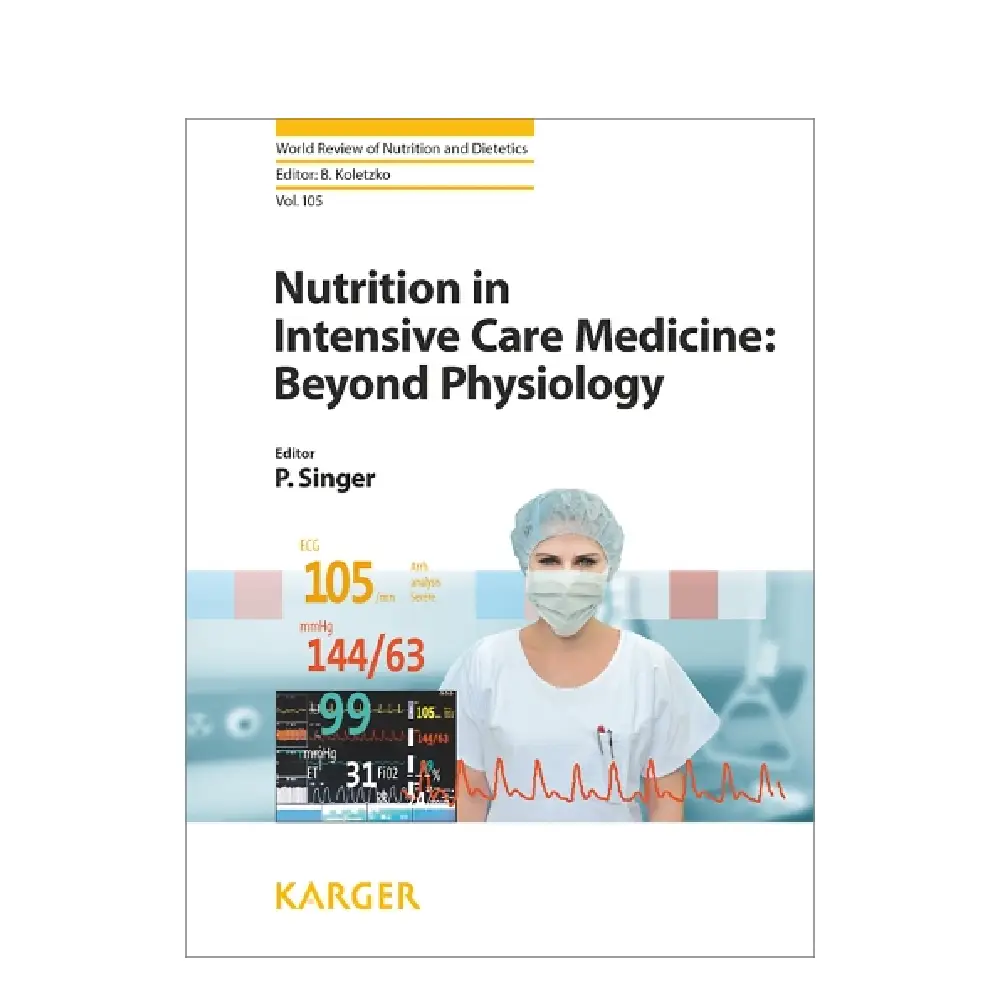

Nutrition in Intensive Care Medicine: Beyond Physiology (World Review of Nutrition and Dietetics, Volume 105)
Nutrition in Intensive Care Medicine: Beyond Physiology is a comprehensive and authoritative scientific volume in the World Review of Nutrition and Dietetics series (Volume 105). The book focuses on the unique and complex nutritional challenges encountered in patients admitted to intensive care units (ICUs), exploring not only the physiological basis of nutritional support but also practical strategies, clinical evidence, and emerging concepts that go beyond traditional textbook physiology. It is an essential resource for critical care physicians, dietitians, nurses, pharmacists, and researchers interested in optimizing nutrition for critically ill patients.
Introduction: Why Nutrition Matters in Critical Care
Nutrition in the critically ill is not simply about preventing starvation — it is a therapeutic intervention that influences immune function, wound healing, organ function, inflammation, and overall outcomes. Critically ill patients often experience a hypercatabolic state triggered by trauma, infection, surgery, or organ failure. This state accelerates protein breakdown, increases metabolic demands, and alters nutrient utilization. Without appropriate nutritional support, patients are at risk of muscle wasting, impaired immunity, delayed recovery, and increased mortality.
While traditional approaches to ICU nutrition emphasize energy requirements and avoidance of nutrient deficiencies, this book expands the discussion to include how nutrition interacts with organ systems, metabolic pathways, and cellular responses during critical illness.
Part I — Pathophysiology and Metabolic Responses in Critical Illness
The volume begins with an in-depth review of the metabolic responses characteristic of critical illness. Stress, injury, and systemic inflammation activate neuroendocrine pathways that lead to:
-
Increased catabolism of muscle protein
-
Insulin resistance
-
Altered glucose and lipid metabolism
-
Amplified oxidative stress
Hormones such as cortisol, catecholamines, and cytokines orchestrate these changes, pushing the body into a state where endogenous energy stores are mobilized rapidly but inefficiently. The book explains how these adaptive responses — once beneficial in acute short-term stress — become maladaptive in prolonged critical illness, contributing to endocrine dysfunction and impaired nutrition utilization.
Detailed discussions cover:
-
Mechanisms of insulin resistance in the ICU
-
Alterations in lipid metabolism and fatty acid oxidation
-
Protein metabolism and nitrogen balance
-
Impact of inflammation on nutrient transport and utilization
Understanding these mechanisms helps clinicians tailor nutrition to meet the unique metabolic demands of each patient rather than applying one-size-fits-all formulas.
Part II — Assessment of Nutritional Needs in ICU Patients
Accurate assessment of nutritional status in critically ill patients is challenging because classical measures (like weight change or serum protein levels) are often confounded by fluid shifts, inflammation, and organ dysfunction. This book discusses advanced techniques and clinical tools:
Indirect Calorimetry
Indirect calorimetry is the gold standard for measuring resting energy expenditure (REE). It provides personalized energy requirements, preventing underfeeding or overfeeding. The book covers practical considerations, interpretation of results, and limitations in the ICU setting.
Body Composition and Muscle Mass
Ultrasound, bioelectrical impedance, and computed tomography (CT) scans are explored as methods to assess muscle mass and body composition. Loss of lean body mass is a strong predictor of poor outcomes, and early detection allows for targeted interventions.
Biomarkers and Clinical Scoring Systems
Markers of inflammation, nitrogen balance, and metabolic stress are reviewed, as well as the role of scoring systems that integrate nutritional and clinical data.
Part III — Nutrition Delivery: Routes, Timing, and Composition
Once nutritional needs are assessed, the next critical question is how to deliver nutrition safely and effectively.
Enteral Nutrition (EN)
Enteral feeding is preferred when the gastrointestinal tract is functional. EN helps maintain gut integrity, reduces bacterial translocation, and supports immune function. Chapters in this section include:
-
Initiation and progression of enteral feeds
-
Selection of feeding formulas
-
Strategies to minimize gastrointestinal intolerance (e.g., prokinetics)
-
Techniques such as post-pyloric feeding
Parenteral Nutrition (PN)
In patients with dysfunctional or inaccessible gut, parenteral nutrition provides an alternative. The book outlines:
-
Indications for PN
-
Central vs. peripheral administration
-
Complications, including catheter-related infections and metabolic disturbances
Timing and Supplemental Strategies
Early vs. delayed nutrition, trophic feeding, and combined enteral/parenteral approaches are critically examined with supporting clinical evidence. Special considerations for patients with renal failure, liver dysfunction, or respiratory failure are also discussed.
Part IV — Macro- and Micronutrients in Critical Illness
This volume goes beyond total caloric delivery to examine specific macronutrient and micronutrient roles.
Protein and Amino Acids
Adequate protein intake is essential to minimize muscle loss. Discussion includes optimal protein dosing, amino acid profiles, and branched-chain amino acids.
Lipids and Fatty Acids
The role of essential fatty acids, omega-3 supplementation, and management of lipid intolerance are covered.
Glucose Control
Hyperglycemia is common in ICU patients. Nutrition strategies that interact with glucose metabolism are analyzed, balancing energy delivery with glycemic control.
Micronutrients and Antioxidants
Vitamins (A, D, E), trace elements (zinc, selenium), and antioxidants are reviewed for their roles in immune function and oxidative stress modulation.
Part V — Nutrition and Clinical Outcomes
The book places strong emphasis on evidence that nutrition affects measurable clinical outcomes, including:
-
Infection rates
-
Duration of mechanical ventilation
-
Length of ICU and hospital stay
-
Wound healing
-
Mortality
Randomized controlled trials and meta-analyses are discussed to clarify the impact of specific nutritional strategies on these outcomes.
Part VI — Special Populations and Emerging Concepts
Additional chapters address special populations (e.g., trauma patients, surgical ICU, elderly, patients with obesity) and emerging topics such as:
-
Immunonutrition with glutamine, arginine, and nucleotides
-
Microbiome-based nutrition
-
Personalized nutrition based on genomic and metabolomic profiles
-
Novel feeding technologies
Conclusion
Nutrition in Intensive Care Medicine: Beyond Physiology reframes nutrition in the ICU from basic metabolic support to a targeted, evidence-based therapeutic tool. By integrating cellular physiology, clinical assessment methods, advanced feeding strategies, and outcome-focused evidence, the book equips healthcare professionals with a deep understanding of how tailored nutrition can improve recovery, support immune function, and reduce complications in critically ill patients.
Reviews
There are no reviews yet