
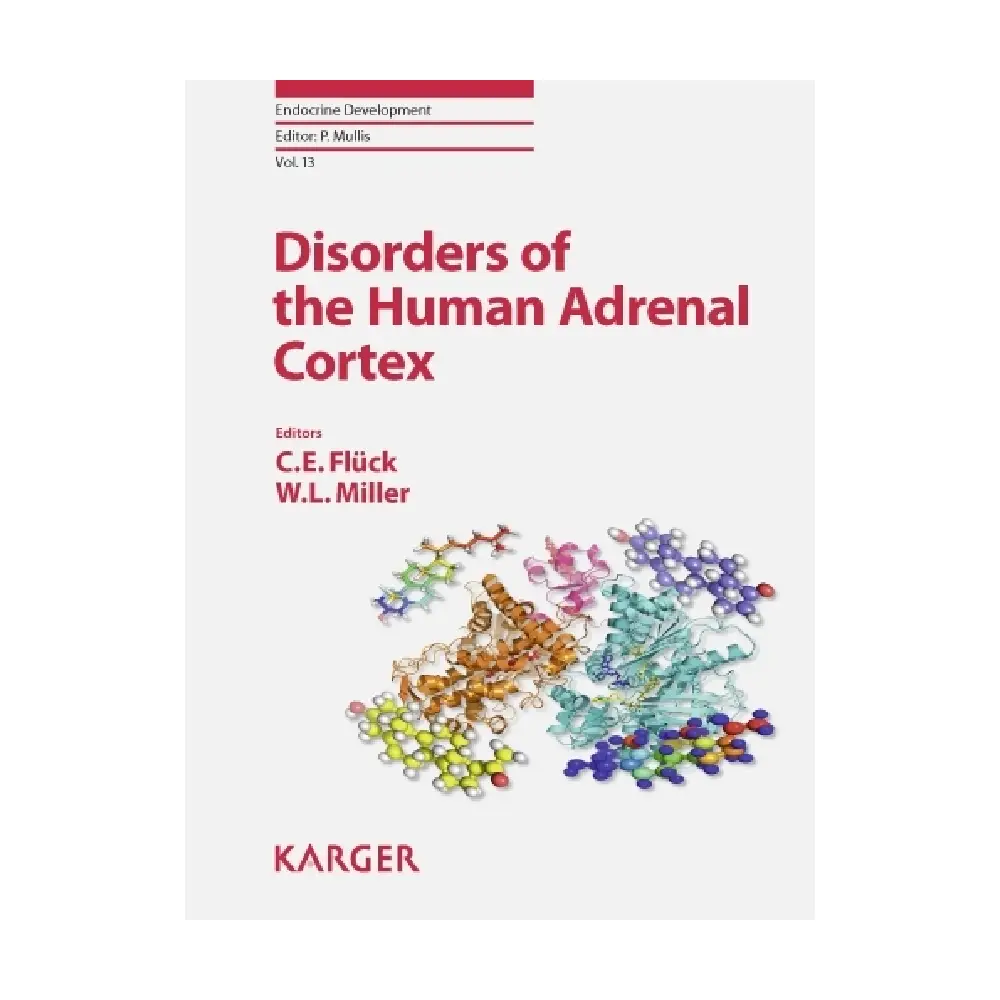


Disorders of the Human Adrenal Cortex (Endocrine Development, Volume 13)
Disorders of the Human Adrenal Cortex is a specialized medical reference work that forms part of the Endocrine Development series, focusing on the physiology, pathology, and clinical management of adrenal cortex disorders. This volume provides an in-depth scientific overview of adrenal cortical function, highlighting advances in endocrinology, molecular biology, and therapeutic strategies related to adrenal diseases. It is primarily intended for endocrinologists, researchers, medical students, and healthcare professionals who require a detailed understanding of adrenal gland disorders.
The adrenal cortex plays a crucial role in maintaining hormonal balance by producing glucocorticoids, mineralocorticoids, and androgens. These hormones regulate metabolism, immune response, blood pressure, electrolyte balance, and sexual development. Dysfunction of the adrenal cortex can lead to a wide range of clinical conditions that significantly affect human health. This volume explores both congenital and acquired disorders that impact adrenal hormone synthesis and regulation.
One of the major topics covered in the book is congenital adrenal hyperplasia, a genetic disorder caused by enzyme deficiencies involved in steroid biosynthesis. The text explains how mutations in genes responsible for cortisol production disrupt normal endocrine feedback mechanisms, leading to hormone imbalance. Detailed discussion is provided on diagnostic approaches, neonatal screening, and long-term treatment strategies. Emphasis is placed on early detection and management to prevent complications related to abnormal sexual development and metabolic dysfunction.
Cushing’s syndrome and hypercortisolism are also extensively analyzed in this volume. These conditions arise from prolonged exposure to excessive cortisol levels, either due to endogenous overproduction or exogenous steroid administration. The book describes clinical manifestations such as obesity, hypertension, glucose intolerance, and osteoporosis. It also reviews modern imaging techniques, biochemical testing, and surgical and pharmacological treatment options used in managing cortisol excess.
Primary adrenal insufficiency, commonly known as Addison’s disease, is another important subject. The volume explains autoimmune destruction of adrenal tissue, infectious causes, and genetic factors that contribute to adrenal failure. Symptoms such as chronic fatigue, hypotension, hyperpigmentation, and electrolyte disturbances are discussed in detail. Replacement therapy using glucocorticoids and mineralocorticoids is presented as the cornerstone of treatment.
The molecular biology of adrenal cortical tumors is also explored. Adrenocortical adenomas and carcinomas are rare but clinically significant due to their potential to secrete hormones abnormally. The book reviews tumor pathogenesis, genetic markers, and emerging therapeutic approaches. Advances in oncology and targeted therapy for malignant adrenal tumors are highlighted, reflecting progress in endocrine cancer research.
In addition to disease mechanisms, the book provides insights into steroid biosynthesis pathways. It explains enzymatic steps involved in cholesterol conversion to active adrenal hormones and how disruptions in these pathways result in endocrine disorders. The regulatory role of the hypothalamic-pituitary-adrenal axis is discussed to help readers understand systemic hormonal control.
Diagnostic methods form a significant portion of the text. Laboratory hormone assays, stimulation and suppression tests, and modern radiological imaging techniques are described. The importance of combining clinical evaluation with biochemical and genetic testing is emphasized for accurate diagnosis.
Therapeutic management strategies are presented comprehensively. Pharmacological treatments, hormone replacement protocols, and surgical interventions are reviewed. The book also addresses long-term monitoring of patients with chronic adrenal disorders and discusses lifestyle considerations and patient education.
Research advancements in adrenal endocrinology are a key feature of this volume. Emerging areas such as gene therapy, molecular diagnostics, and personalized medicine approaches are introduced. These topics reflect the rapid development of endocrine science and its application in clinical practice.
Overall, this volume serves as a valuable academic and clinical resource that bridges basic science and practical medicine. By combining pathophysiology, clinical features, diagnostic methods, and treatment strategies, it provides a comprehensive understanding of disorders affecting the human adrenal cortex. The detailed scientific content makes it suitable for advanced study and professional reference in endocrinology and related medical fields.


Reviews
There are no reviews yet