
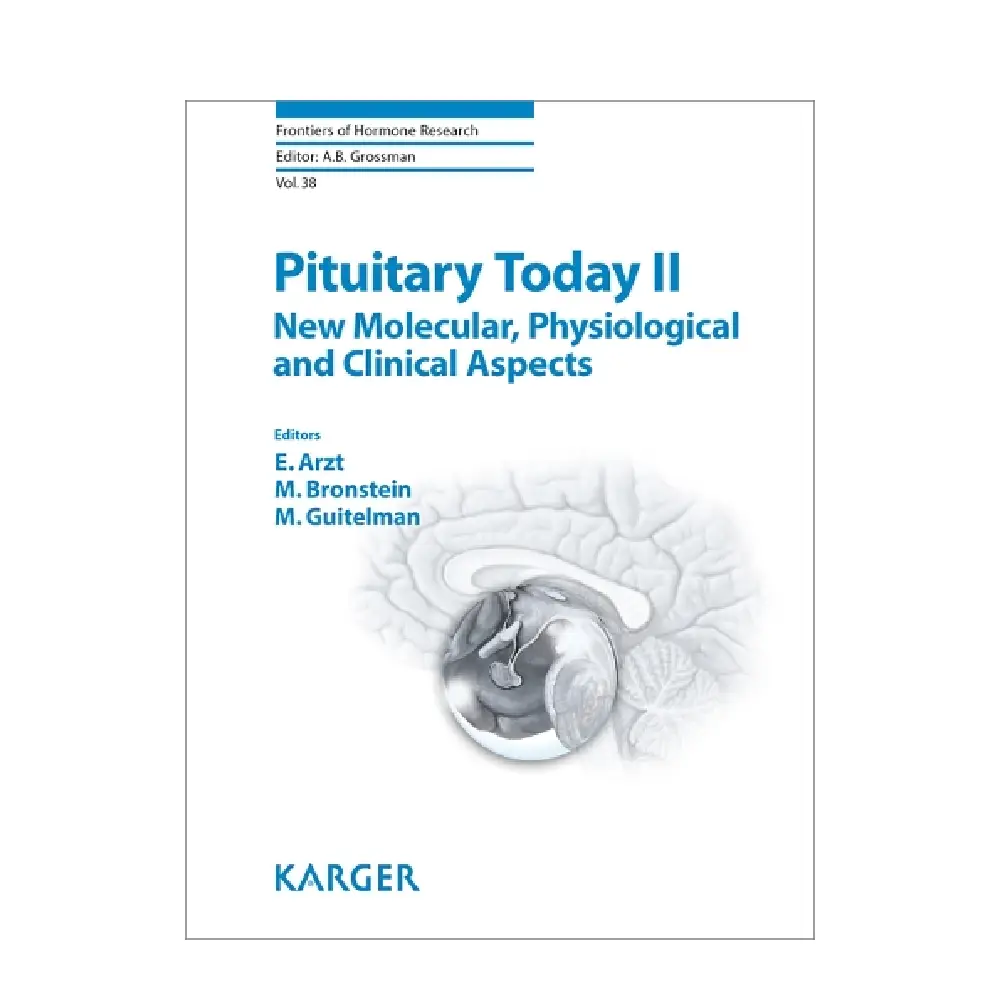


Pituitary Today II: New Molecular, Physiological and Clinical Aspects is a landmark scientific volume (Volume 38) in the Frontiers of Hormone Research series, published by S. Karger AG. Edited by renowned endocrinologists including Eduardo Arzt, Marcelo Bronstein, and M. Guitelman, the book represents a major update on pituitary gland biology and disease, integrating cutting-edge molecular insights with physiological understanding and clinical implications. It is based on presentations and discussions from an international scientific meeting held in Angra dos Reis, Brazil, bringing together specialists from Latin and North America, Europe, and Australia.
Overview and Scope
The pituitary gland plays a central role in endocrine regulation, acting as the master regulator of hormones that control growth, metabolism, reproduction, stress response, and more. Pituitary Today II reflects the dramatic advances in understanding this complex organ at the molecular, cellular, and clinical levels. The book comprises carefully peer-reviewed chapters authored by leading researchers, offering a broad survey of topics such as pituitary cell development, tumor formation, hormone regulation, and endocrinopathies.
With approximately 218 pages of scientific content, the volume is organized to bridge basic research and clinical practice. It is intended for endocrinologists, neuroendocrinologists, neurosurgeons, clinical researchers, and biomedical scientists seeking both foundational knowledge and current progress in pituitary science.
Key Scientific Themes and Content
⭐ Molecular and Cellular Mechanisms
A substantial portion of the book is devoted to understanding how the pituitary gland forms and functions at a molecular level. Early chapters discuss pituitary cell differentiation, the regulation of the cell cycle, and the molecular control of hormone-producing cell types. These insights stem from advances in molecular genetics and developmental biology, highlighting how gene expression and intracellular signaling dictate pituitary structure and function. Topics such as the role of cytokines and genes in tumorigenesis and cellular senescence provide a molecular framework for understanding both normal physiology and disease.
Another key area covered is the identification and role of novel regulatory proteins that influence pituitary tumorigenesis and growth hormone pathways. For example, discussions emphasize specific proteins like iASPP and RSUME that modulate cell growth and tumor behavior, linking complex signaling networks to pathological outcomes.
⭐ Endocrine Physiology
The pituitary gland’s interactions with the hypothalamus and peripheral endocrine organs are central to its physiological role. The book explores how neurotransmitters and hypothalamic hormones modulate axes such as the GHRH-GH (growth hormone) axis, providing insight into mechanisms of hormone secretion and feedback. In-depth chapters deal with hyperprolactinemia induced by alcohol, gender differences in macroprolactinoma features, and the role of ghrelin — a key appetite-regulating hormone — in anterior pituitary function. These discussions connect molecular biology with broader endocrine physiology.
⭐ Pituitary Disorders and Clinical Perspectives
A defining strength of Pituitary Today II is its integration of clinical endocrinology. Several chapters are dedicated to common and complex pituitary disorders — from prolactinomas and acromegaly to Cushing’s disease and pituitary carcinomas. These sections explore both disease pathogenesis and therapeutic approaches, reflecting cutting-edge research and clinical practice.
For example, detailed analyses of tumorigenesis provide valuable insight into how pituitary tumors arise, grow, and respond to treatment. Discussions of novel medical therapies show how advances in pharmacology and molecular targeting are influencing treatment strategies beyond traditional surgery and radiotherapy.
Chapters on diagnosis and monitoring emphasize contemporary criteria and long-term follow-up strategies. For instance, diagnosis of cure in Cushing’s syndrome — a complex endocrine disorder — is approached through lessons learned from longitudinal studies, offering clinicians evidence-based guidance on therapeutic decision-making.
⭐ Broad Implications and Future Directions
Although primarily scientific and clinical, the book frames its insights within the context of ongoing research and future challenges. Contributors highlight the interplay of basic mechanisms with clinical outcomes, suggesting that advances in molecular biology will continue guiding improved diagnostics and individualized therapies. Emerging topics such as receptor signaling, genetic heterogeneity in pituitary adenomas, and hormonal modulation across life stages show how multifaceted pituitary science has become.
The interdisciplinary nature of Pituitary Today II also illustrates the need for collaborative approaches that span endocrinology, neuroscience, oncology, and molecular genetics. This reflects how complex endocrine disorders require a synthesis of bench-side insights and bedside applications.
Conclusion
Pituitary Today II: New Molecular, Physiological and Clinical Aspects stands as an authoritative resource that captures a pivotal moment in pituitary research. By uniting molecular mechanisms with physiological understanding and clinical application, it bridges gaps between disciplines and offers a forward-looking perspective on pituitary science. Its comprehensive coverage makes it invaluable for specialists and researchers aiming to deepen their understanding of pituitary function and disorders, and it continues to be relevant for endocrinology education and clinical reference.


Reviews
There are no reviews yet