
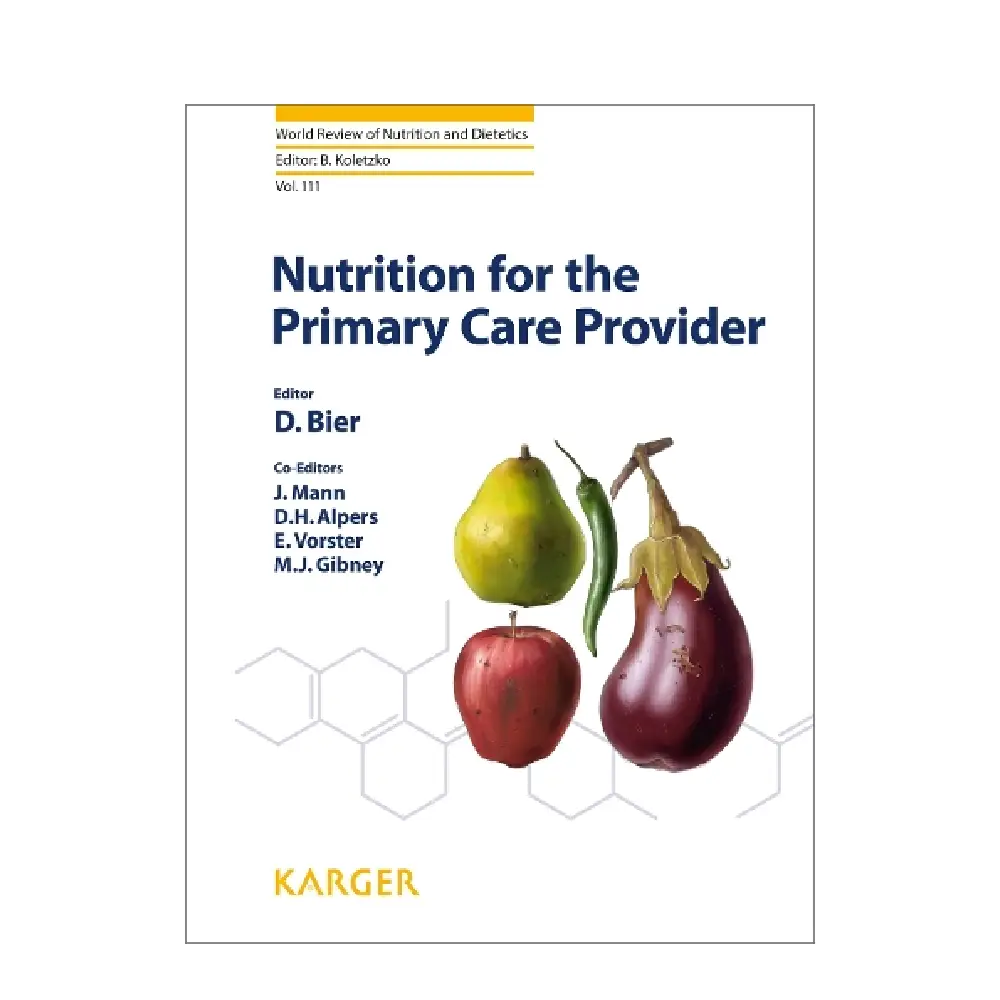

Nutrition for the Primary Care Provider is Volume 111 in the World Review of Nutrition and Dietetics series, edited by D. M. Bier, Jim Mann, David H. Alpers, H.H.E. Vorster, and M.J. Gibney and published by S. Karger AG in 2014. It serves as a comprehensive professional reference aimed at primary care physicians and related health practitioners who integrate nutritional knowledge into patient care. The book emphasizes how nutrition is central to preventing and managing common diseases, and guides clinicians on using nutritional strategies in everyday practice.
Unlike a basic diet handbook, this volume combines evidence-based science with clinical relevance, blending foundational nutritional principles with actionable insights for real-world medical settings.
Purpose and Audience
Primary care providers — including family physicians, general practitioners, internists, and nurse practitioners — are often the first contact for patients with chronic conditions such as cardiovascular disease, diabetes, obesity, and gastrointestinal disorders. The book’s purpose is to equip these clinicians with up-to-date nutritional knowledge so they can:
-
Understand how nutrition influences health outcomes
-
Advise patients on dietary strategies for disease prevention and management
-
Interpret nutrition science and apply it appropriately to diverse populations
-
Incorporate nutrition into clinical assessments and follow-up care
By framing nutrition as a therapeutic tool, the book moves beyond basic dietary guidelines to address how nutrition actually affects disease mechanisms and recovery.
Structure and Content
The book is organized into four major parts, reflecting a logical progression from basic science to clinical application and broader public health issues:
1. Basic Principles of Nutrition
The first section lays the groundwork with fundamental concepts every clinician should understand:
-
Body composition and energy balance — how energy intake and expenditure determine weight and metabolic health
-
Appetite regulation — biological and psychological factors influencing eating behavior
-
Macro- and micronutrients — roles, requirements, and clinical implications of proteins, fats, carbohydrates, vitamins, and minerals
This foundation helps clinicians recognize not only what nutrients do in the body but why they matter in clinical contexts like obesity, fatigue, or micronutrient deficiencies.
2. Nutrition in Special Circumstances
Nutrition needs vary widely between individuals and life stages. This section covers specific circumstances where personalized nutrition advice matters:
-
Pregnancy and lactation — ensuring maternal and fetal nutrient needs
-
Exercise and sports nutrition — optimizing performance and recovery
-
Food allergies and intolerances — diagnosis and management in clinical settings
-
Cultural and religious dietary practices — tailoring nutritional advice within cultural contexts
These chapters bridge basic nutrition and real-world patient care, emphasizing context-specific guidance.
3. Nutrition and Disease States
This is the strongest clinical section, where nutrition is directly connected to disease prevention and treatment. Topics include:
-
Cardiovascular disease — diet’s role in risk modulation, lipid profiles, and heart health
-
Hypertension — how sodium, potassium, and dietary patterns influence blood pressure control
-
Obesity and diabetes — nutritional approaches to weight management and glycemic control
Further discussions include:
-
Cancer — nutritional factors in prevention and therapy
-
HIV/AIDS nutrition — addressing metabolic changes and immune support
-
Osteoporosis — calcium, vitamin D, and lifespan bone health
-
Gastrointestinal diseases — dietary adaptations for conditions like Crohn’s, IBS, and liver disease
This part helps clinicians translate nutrition science into diagnoses and treatment plans, which is crucial given that many chronic diseases have strong diet-related components.
4. Food Policy and Public Health Perspectives
The final section takes a broader view, connecting clinical nutrition practice with systems-level forces:
-
Global sustainability — food systems, environmental impacts, and long-term food security
-
Malnutrition trends — changing nutritional landscapes as societies urbanize and diets globalize
-
Food industry influence — how food processing, marketing, and labeling affect public dietary patterns
-
Food safety, preparation, and consumer education — practical aspects of keeping populations healthy through better food environments
This section underscores the idea that clinical nutrition doesn’t occur in isolation — it is influenced by food policy, economic forces, and cultural trends.
Clinical Relevance and Practical Utility
What makes this book particularly useful is its focus on practical application. Rather than only describing nutrients in abstract terms, it connects them to clinical outcomes and patient care strategies. Physicians can use the book to:
-
Integrate nutritional assessment into routine health checks
-
Provide evidence-based dietary recommendations tailored to patient profiles
-
Understand how nutrition interacts with medications and comorbidities
-
Communicate effectively with dietitians and nutrition specialists
-
Stay informed about emerging nutrition research relevant to primary care
Additionally, the book’s clear structure — from core science to disease management to societal implications — ensures clinicians of all backgrounds can navigate topics relevant to their practice.
Conclusion
Nutrition for the Primary Care Provider is a comprehensive, clinically oriented resource that bridges nutrition science and everyday medical practice. By blending basic biological knowledge with disease-specific guidance and public health perspectives, it equips clinicians with the tools to use nutrition not just for prevention, but as a therapeutic intervention. Its clear structure and wide coverage make it valuable for primary care physicians, nutritionists, and other health professionals committed to holistic, evidence-based patient care.



Reviews
There are no reviews yet