


Overview
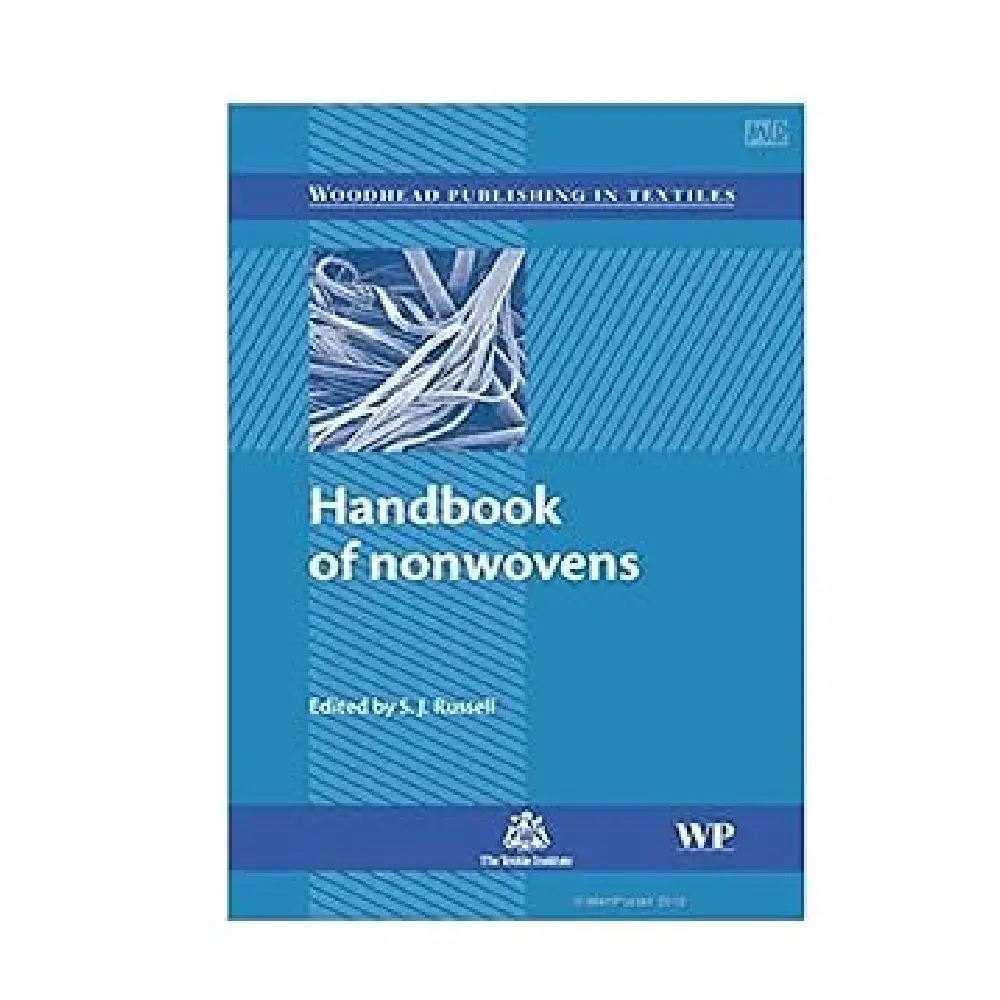
Handbook of Nonwovens (Second Edition), edited by S. J. Russell, is a detailed, interdisciplinary reference that covers the science, technology, manufacturing, and applications of nonwoven textile materials — fabrics made by bonding fibres together without weaving or knitting. Nonwovens are increasingly important in many industries because they combine high performance, cost-efficiency, and versatility for products ranging from medical disposables to automotive components.
The second edition updates and expands on the original edition with new material on characterization, modelling, emerging processes, and applications, making it a leading resource for engineers, scientists, designers, and researchers working in materials science, textile engineering, and industrial production.
What Are Nonwovens?
Nonwoven fabrics are structures of fibres or filaments that are bonded together through mechanical, thermal, or chemical means instead of traditional weaving or knitting. Because they are not interlaced like woven textiles, nonwovens can be produced rapidly and in a wide variety of formats and properties.
Unlike woven cloth, nonwovens start as raw fibres, which are processed into webs (thin layers) and then bonded to form coherent sheets. The manufacturing techniques, fibre types, and post-production processes determine the final properties of the fabric — such as strength, porosity, absorbency, softness, and durability.
Nonwovens are found in countless products, including hygiene items (e.g., diapers, wipes), medical supplies (e.g., surgical gowns, masks), automotive interiors, geotextiles, filtration media, home furnishings, and more.
Key Themes and Structure of the Handbook
The book is structured in comprehensive chapters that provide both theoretical foundations and practical engineering details. It begins with introductory material and industry context, then progresses to deep technical chapters on raw materials, web formation, bonding methods, finishing, characterization, and modelling.
1. Industry and Market Overview
The opening chapters discuss:
-
History and development of the nonwovens industry
-
Global market trends and commercial challenges
-
Classification of nonwoven materials
-
Emerging opportunities and future directions
This context helps readers understand why nonwovens have grown so rapidly and where future innovations are likely to occur.
2. Raw Materials and Polymer Science
Nonwovens originate from a broad spectrum of fibres, including:
-
Synthetic polymers (e.g., polypropylene, polyester)
-
Regenerated cellulosics (e.g., viscose)
-
Natural fibres (e.g., cotton, wool)
-
Inorganic fibres (e.g., glass, metal)
-
Recycled materials
This chapter explains how the polymer properties, fibre morphology, and chemistry influence web formation, bonding behaviour, and final product performance.
3. Web Formation Processes
Web formation — turning loose fibres into a web — is a core nonwoven process, with several major techniques:
-
Drylaid – fibres mechanically carded to form a web
-
Wetlaid – fibres suspended in water and deposited on screens
-
Spunlaid (spunbond & meltblown) – polymer melts extruded and laid into a web
-
Airlaid and other hybrid methods
Each process affects web uniformity, strength, and density differently, so engineers select methods based on desired product properties (e.g., absorbency for wipes vs. strength for geotextiles).
4. Bonding Methods
Once webs are formed, fibres must be bonded into a stable fabric. The book covers:
-
Mechanical bonding — needle punching, hydroentangling
-
Thermal bonding — melting and fusing fibres with heat
-
Chemical bonding — adhesives or binders
-
Finishing treatments — surface additions like coatings or functional chemicals
These bonding methods define the mechanical, thermal, and functional properties of the final fabric — for example, flexibility, softness, dimensional stability, and barrier protection.
5. Characterisation and Testing
A comprehensive section is devoted to testing methods and characterization techniques for nonwoven fabrics. This includes:
-
Mechanical property testing (tensile, tear, burst strength)
-
Microscopic imaging and 3D structural analysis
-
Porosity and filtration performance
-
Thermal and environmental behaviour
Accurate characterization is essential for quality control, product certification, and performance prediction in applications such as healthcare or automotive uses.
6. Modelling and Simulation
The final major theme is mathematical and computational modelling. This covers:
-
Predictive models of web structure
-
Simulations of material behaviour under load or stress
-
Use of modelling to optimize web formation and bonding
Modelling helps reduce experimental costs and speeds innovation by allowing designers to simulate new materials before production.
Why This Handbook Matters
This edition of Handbook of Nonwovens is widely regarded as an authoritative reference because it:
-
Combines industry insight with scientific depth
-
Covers both fundamentals and cutting-edge advances
-
Is suitable for professionals and advanced students
-
Addresses practical manufacturing, performance testing, and emerging applications
The book fills a crucial need for engineers and scientists who design, optimize, or apply nonwoven materials across multiple sectors — from medical to industrial and environmental technologies.
Reviews
There are no reviews yet