
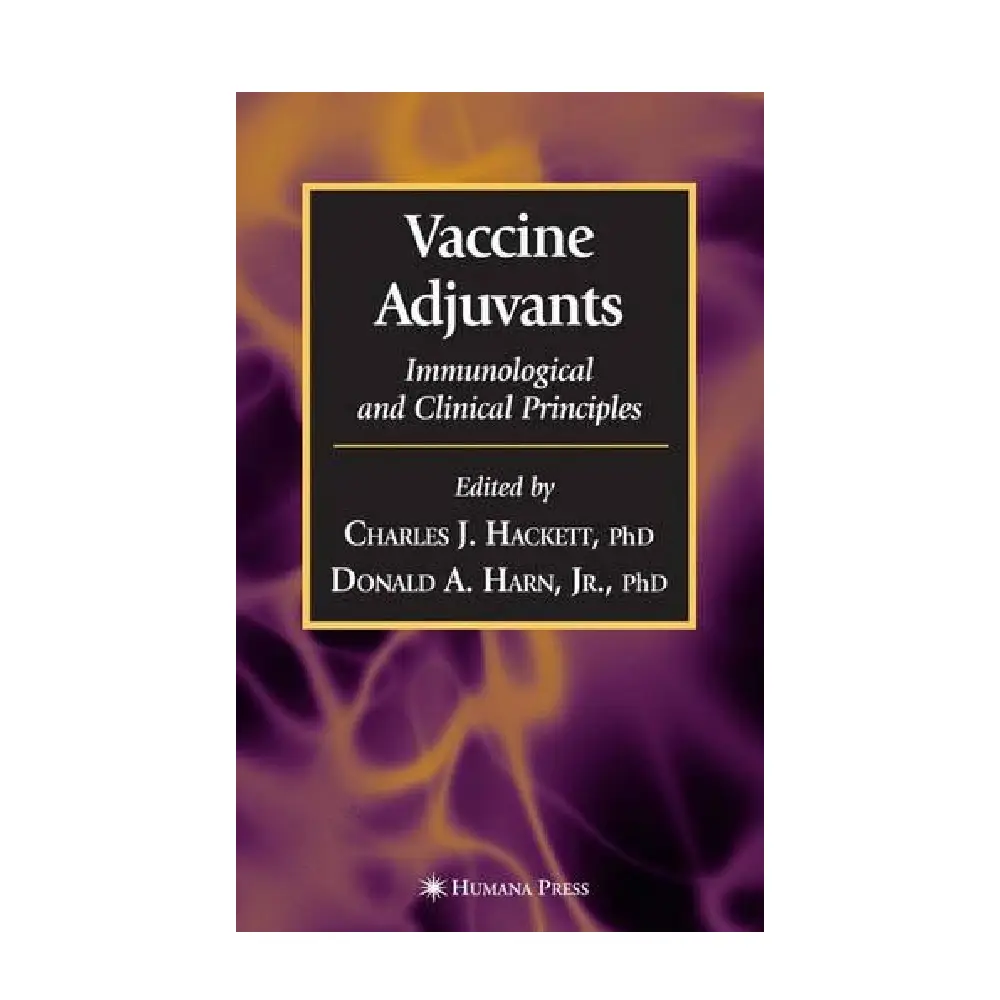


Vaccine Adjuvants (Infectious Disease Series)
Vaccine Adjuvants is a specialized scientific volume that explores one of the most critical components of modern vaccinology: adjuvants—substances added to vaccines to enhance and direct the immune response. Often published as part of an infectious disease or immunology series by major academic publishers such as Humana Press or Springer, this type of volume is typically aimed at researchers, immunologists, microbiologists, pharmaceutical scientists, and advanced students involved in vaccine development.
The book provides a comprehensive examination of the biological mechanisms, formulation strategies, safety considerations, and clinical applications of vaccine adjuvants in infectious diseases.
Purpose and Importance
Vaccines work by stimulating the immune system to recognize and respond to pathogens. However, many purified antigens—especially recombinant proteins and subunit vaccines—are poorly immunogenic on their own. Adjuvants enhance immune responses by:
-
Increasing antigen presentation
-
Activating innate immune pathways
-
Promoting cytokine production
-
Directing T-helper cell polarization (Th1 vs. Th2 responses)
-
Enhancing memory cell formation
This book addresses why adjuvants are necessary, how they function, and how they are selected for specific infectious disease targets.
Core Themes and Structure
1. Fundamentals of Immunology and Adjuvant Biology
The opening chapters usually review the immune system, focusing on:
-
Innate immune recognition (e.g., pattern recognition receptors)
-
Toll-like receptors (TLRs)
-
Dendritic cell activation
-
Cytokine signaling pathways
-
Antigen processing and presentation
This foundation is essential for understanding how adjuvants “prime” the immune system.
The book often discusses how adjuvants interact with innate immunity to bridge the gap toward adaptive responses, particularly in the context of viral, bacterial, and parasitic infections.
2. Classical and Modern Adjuvants
A major section is devoted to types of adjuvants used in vaccines:
Aluminum Salts (Alum)
Alum is the most widely used adjuvant in licensed human vaccines. It enhances antibody responses and promotes Th2 immunity. The book explores its mechanisms, including inflammasome activation.
Oil-in-Water Emulsions
Adjuvants such as MF59 have been used in influenza vaccines. These emulsions improve antigen uptake and immune cell recruitment.
TLR Agonists
Modern adjuvants often target innate immune receptors. Examples include:
-
Monophosphoryl lipid A (MPL)
-
CpG oligonucleotides
These help generate stronger cellular immunity, important for infections like tuberculosis or malaria.
Saponin-Based Adjuvants
Such as QS-21, known for inducing strong cytotoxic T-cell responses.
The book compares efficacy, safety profiles, immunological bias, and applications for each class.
3. Adjuvants in Specific Infectious Diseases
A key strength of this volume is its disease-focused approach. Chapters may examine adjuvant use in vaccines for:
-
Influenza
-
HIV
-
Tuberculosis
-
Malaria
-
Hepatitis
-
Emerging viral infections
Different pathogens require different immune strategies. For example:
-
Intracellular pathogens may require strong cell-mediated immunity.
-
Extracellular bacteria may benefit more from antibody-driven responses.
The book emphasizes how adjuvants are tailored to disease-specific immune requirements.
4. Formulation and Delivery Systems
Beyond immunology, the book covers pharmaceutical aspects:
-
Liposomes
-
Nanoparticles
-
Virus-like particles
-
Depot effects
-
Combination adjuvant systems
These delivery technologies improve antigen stability, targeting, and sustained immune stimulation.
The integration of materials science and immunology reflects the interdisciplinary nature of modern vaccine development.
5. Safety, Regulation, and Clinical Considerations
Adjuvants must meet strict safety standards. The book discusses:
-
Preclinical toxicology studies
-
Clinical trial evaluation
-
Regulatory guidelines
-
Risk-benefit analysis
Public perception and vaccine safety communication are sometimes addressed, especially given the scrutiny surrounding adjuvant components.
6. Emerging Trends and Future Directions
Recent developments highlighted in such volumes often include:
-
Systems biology approaches to vaccine design
-
Personalized vaccinology
-
Novel innate immune targets
-
Adjuvants for elderly or immunocompromised populations
-
Pandemic preparedness strategies
There is growing interest in adjuvants that promote balanced immunity while minimizing adverse effects.
Scientific and Clinical Value
This book serves as both a research reference and a strategic guide for vaccine development. Its value lies in:
-
Detailed mechanistic insights
-
Evidence-based comparisons
-
Translational focus from bench to bedside
-
Comprehensive literature review
It is particularly useful for graduate students, pharmaceutical researchers, immunologists, and infectious disease specialists working in vaccine R&D.
Educational Strengths
-
In-depth immunological explanations
-
Comparative tables of adjuvant classes
-
Case studies of licensed vaccines
-
Contributions from international experts
-
Up-to-date references
The text balances foundational science with applied clinical relevance.
Conclusion
Vaccine Adjuvants (Infectious Disease) is a rigorous and highly specialized resource that examines the science behind immune enhancement in vaccines. By integrating immunology, infectious disease biology, pharmaceutical formulation, and regulatory science, it provides a complete understanding of how adjuvants shape protective immunity. In an era where vaccine innovation is central to global health, this volume serves as an essential reference for advancing safe and effective immunization strategies worldwide.


Reviews
There are no reviews yet