
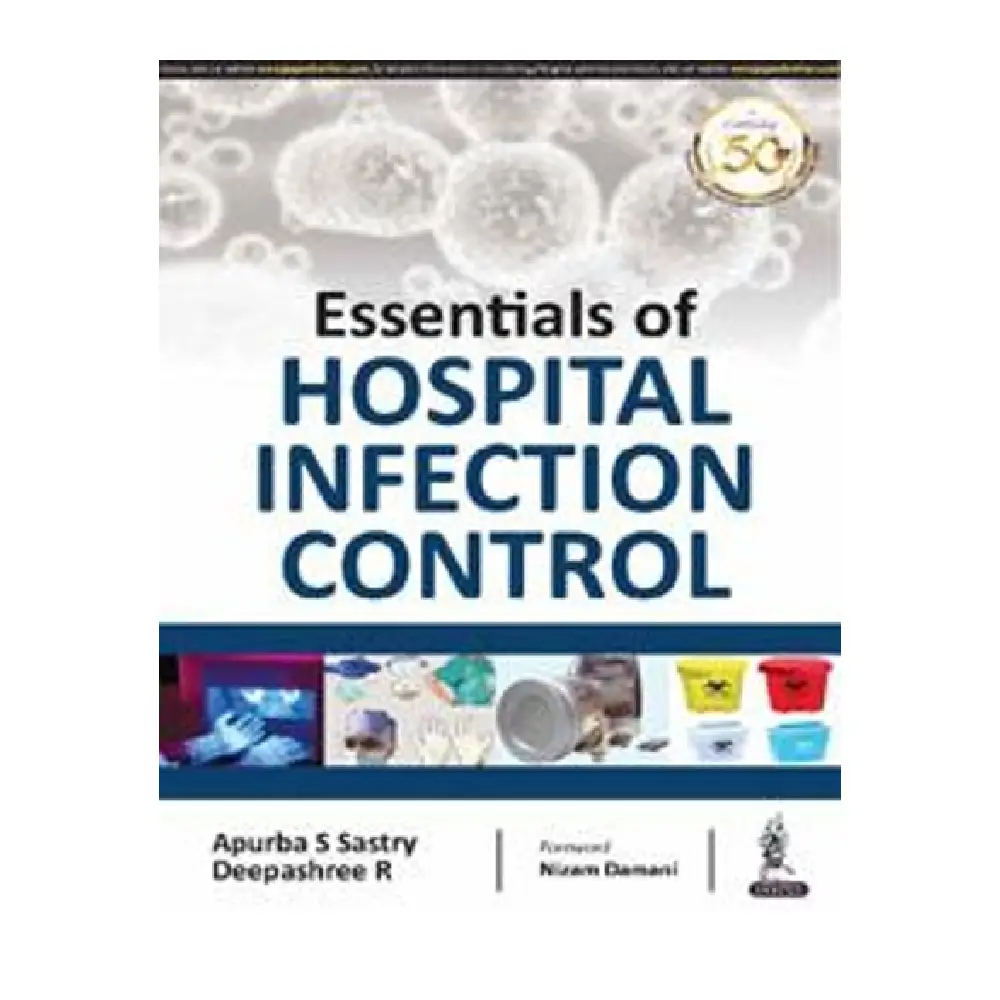


Essentials of Hospital Infection Control
Essentials of Hospital Infection Control is a clinically oriented guide that provides a comprehensive understanding of infection prevention and control (IPC) practices within healthcare facilities. Designed to support clinicians, infection control professionals, nurses, and public health practitioners, the book bridges the gap between theory and the practical implementation of infection control measures across hospital settings. It emphasizes evidence-based practices to prevent healthcare-associated infections (HAIs), safeguard vulnerable patients, and reduce the spread of antimicrobial resistance.
Importance of Infection Control in Healthcare
Healthcare environments pose unique risks for infection transmission due to the concentration of sick patients, frequent invasive procedures, antibiotic use, and close contact between patients and staff. HAIs—such as bloodstream infections, surgical site infections, ventilator-associated pneumonia, and catheter-associated urinary tract infections—cause increased morbidity, mortality, prolonged hospitalization, and substantial healthcare costs worldwide.
Effective infection control programs are essential components of patient safety frameworks in hospitals. They protect not only patients but also healthcare workers and visitors. Modern IPC programs combine surveillance, prevention strategies, education, policy development, and continuous evaluation to create safer healthcare environments.
Foundational Concepts
The book begins by laying out the fundamental principles of infection prevention. It explains the chain of infection—comprising the infectious agent, reservoir, mode of transmission, portal of entry, susceptible host—and identifies ways to interrupt this cycle. Understanding the epidemiology of HAIs helps institutions tailor their IPC strategies to specific risks and patient populations.
A clear distinction is made between standard precautions (applied to all patients) and transmission-based precautions (contact, droplet, and airborne). Standard precautions encompass hand hygiene, use of personal protective equipment (PPE), safe injection practices, respiratory hygiene, and environmental cleaning. Transmission-based precautions are additional measures implemented depending on the known or suspected infectious agent.
Surveillance and Reporting
Surveillance lies at the heart of any successful infection control program. The book outlines methodologies for tracking infection rates, identifying outbreaks, and interpreting data. Surveillance systems help institutions benchmark performance, identify trends, and implement corrective actions. Key metrics discussed include incidence and prevalence rates, device-associated infection rates (e.g., central line–associated bloodstream infections), and surgical site infection rates.
The book also covers reporting guidelines, both internal (to hospital leadership and clinical departments) and external (to national health authorities). Accurate reporting and transparent communication allow for system-wide improvements and can support public health responses during outbreaks.
Hand Hygiene and Standard Precautions
Hand hygiene is one of the most effective practices to reduce transmission of pathogens in healthcare settings. The book emphasizes the World Health Organization’s “Five Moments for Hand Hygiene” and compares methods such as handwashing with soap and water versus alcohol-based hand rubs. It also discusses compliance challenges and strategies to improve adherence among healthcare workers.
Standard precautions extend beyond hand hygiene to include appropriate use of gloves, gowns, masks, eye protection, and safe handling of sharps. The book discusses point-of-care risk assessments to determine correct PPE use based on the clinical scenario.
Transmission-Based Precautions
Transmission-based precautions are tailored to specific routes of pathogen spread:
-
Contact precautions: Used for infections transmitted by direct contact (e.g., Clostridioides difficile, multidrug-resistant organisms). These include private rooms, dedicated equipment, and enhanced cleaning.
-
Droplet precautions: Applied for pathogens spread by large respiratory droplets (e.g., influenza). Surgical masks and spatial separation are key.
-
Airborne precautions: Required for agents like Mycobacterium tuberculosis and measles, involving negative-pressure isolation rooms and respirators.
The book explains how to implement and discontinue these precautions safely and efficiently.
Environmental Cleaning and Disinfection
Hospital environments can harbor pathogens on surfaces and equipment. The text explains cleaning protocols for routine and high-touch areas and discusses choices of disinfectants based on activity against specific organisms (e.g., spores vs. vegetative bacteria). It also highlights sterilization processes for surgical instruments and reusable devices, describing methods such as autoclaving, chemical sterilants, and monitoring sterilization efficacy.
Antimicrobial Stewardship
Rising antimicrobial resistance is a global health threat compounded by inappropriate antibiotic use in hospitals. The book introduces antimicrobial stewardship as a complementary strategy to infection control. It explains principles of responsible antibiotic prescribing, de-escalation strategies, formulary restrictions, and collaboration between clinicians and pharmacists to optimize antimicrobial use. Stewardship programs not only help preserve antibiotic effectiveness but also reduce rates of resistant infections.
Outbreak Management and Emergency Preparedness
Hospitals must be prepared to identify and respond to outbreaks rapidly. The text outlines steps in outbreak investigations, including case identification, hypothesis formulation, environmental assessment, and implementation of control measures. It also discusses communication plans, resource allocation, and coordination with public health authorities.
Emergency preparedness—especially for novel pathogens such as SARS-CoV-2—requires flexible IPC plans, stockpiling of PPE, training drills, and surge capacity strategies. The book emphasizes the need to integrate IPC into overall hospital emergency response frameworks.
Education, Training, and Culture
One of the most influential determinants of infection control success is organizational culture. The book highlights the importance of ongoing education and training for all healthcare workers, from clinicians to housekeeping staff. Leadership engagement, performance feedback, and recognition programs can foster a safety culture in which adherence to infection control practices is valued and reinforced.
Implementation Challenges
Practical barriers—such as resource limitations, staff turnover, and compliance issues—are discussed honestly. The book provides guidance on adapting infection control practices to fit the context of different healthcare settings, including low-resource environments.
Conclusion
Essentials of Hospital Infection Control distills critical concepts into a practical, actionable format that equips healthcare professionals to design, implement, and sustain effective infection prevention and control programs. With its emphasis on surveillance, evidence-based strategies, education, and culture change, it is an essential resource for anyone involved in improving patient safety and reducing the burden of healthcare-associated infections.




Reviews
There are no reviews yet