
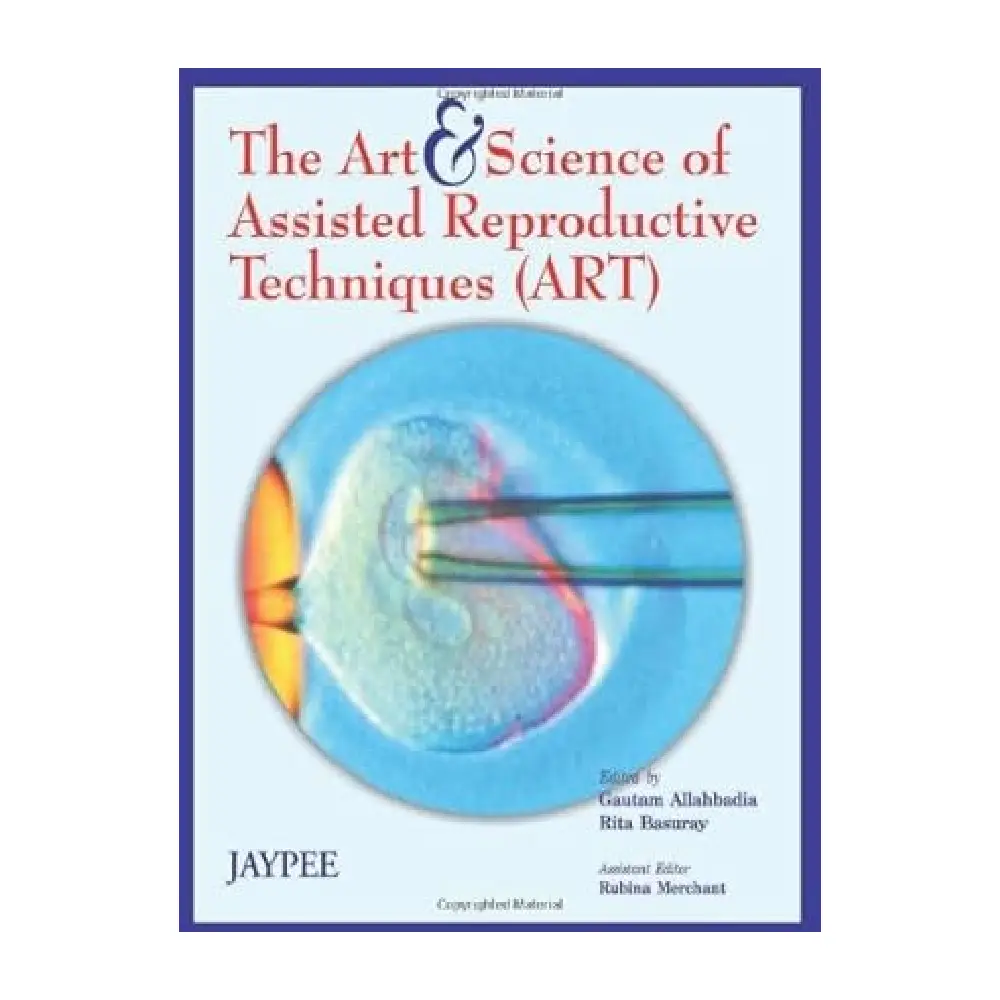
The Art & Science of Assisted Reproductive Techniques
The Art & Science of Assisted Reproductive Techniques (ART) is a comprehensive academic resource dedicated to the rapidly evolving field of reproductive medicine and infertility management. Designed for gynecologists, reproductive endocrinologists, embryologists, and postgraduate trainees, this book provides a detailed exploration of both the theoretical foundations and practical applications of assisted reproductive technologies. It successfully integrates scientific principles with clinical expertise, reflecting the dual nature of ART as both a precise laboratory science and a nuanced clinical art.
The book begins with foundational concepts in reproductive physiology. A clear understanding of the hypothalamic–pituitary–ovarian axis, folliculogenesis, spermatogenesis, fertilization, and embryo development is essential for mastering assisted reproduction. The text explains these biological mechanisms in depth, forming a scientific base upon which modern ART techniques are built. By grounding readers in reproductive endocrinology and gamete biology, the book prepares clinicians to interpret clinical scenarios and laboratory findings accurately.
One of the core sections of the book focuses on controlled ovarian stimulation (COS). It discusses various stimulation protocols, including long agonist, antagonist, mild stimulation, and individualized regimens tailored to ovarian reserve and patient characteristics. The text explains the pharmacology of gonadotropins, GnRH analogues, and ovulation triggers, emphasizing strategies to maximize oocyte yield while minimizing complications such as ovarian hyperstimulation syndrome (OHSS). Evidence-based recommendations and practical tips are provided to optimize patient outcomes.
The laboratory component of ART is extensively covered, highlighting procedures such as in vitro fertilization (IVF), intracytoplasmic sperm injection (ICSI), embryo culture, and cryopreservation. Detailed explanations are given regarding semen preparation techniques, oocyte retrieval methods, fertilization assessment, embryo grading, and blastocyst culture. The book underscores the importance of maintaining stringent laboratory standards, quality control measures, and proper equipment calibration to ensure high success rates and patient safety.
Embryology plays a central role in assisted reproduction, and the book dedicates significant attention to embryo development and selection. Modern advancements such as time-lapse imaging, preimplantation genetic testing (PGT), and vitrification techniques are discussed in depth. These technologies have revolutionized ART by improving implantation rates and reducing the risk of genetic disorders. The text balances scientific innovation with ethical considerations, acknowledging the complex decisions involved in genetic screening and embryo selection.
Another important focus of the book is male infertility. It outlines diagnostic evaluation including semen analysis, hormonal assessment, and imaging. Advanced sperm retrieval techniques such as testicular sperm aspiration (TESA) and micro-TESE are described, along with their indications and procedural details. The integration of andrology and embryology demonstrates the multidisciplinary nature of ART.
The clinical management of infertility cases forms a substantial portion of the content. The book addresses common causes of infertility including polycystic ovarian syndrome (PCOS), endometriosis, tubal disease, diminished ovarian reserve, and unexplained infertility. Each condition is discussed with respect to diagnostic pathways and appropriate ART interventions. Individualized treatment planning is emphasized, recognizing that patient age, ovarian reserve, and prior treatment response significantly influence outcomes.
Ethical, legal, and psychosocial aspects of ART are also examined. Assisted reproduction raises important questions related to donor gametes, surrogacy, cryostorage, and reproductive rights. The book encourages clinicians to practice within regulatory frameworks and maintain transparency with patients. Counseling strategies and communication skills are highlighted as essential components of fertility practice.
Complications and risk management are thoroughly addressed. Potential adverse outcomes such as multiple pregnancy, OHSS, ectopic pregnancy, and procedural complications are discussed along with preventive measures and management protocols. By incorporating safety guidelines and risk-reduction strategies, the book promotes responsible clinical practice.
Throughout the text, emphasis is placed on evidence-based medicine and continuous professional development. Advances in reproductive genetics, fertility preservation, and oncofertility are included to reflect the expanding scope of ART. Fertility preservation techniques such as oocyte freezing and ovarian tissue cryopreservation are particularly relevant in modern reproductive healthcare.
In conclusion, The Art & Science of Assisted Reproductive Techniques serves as an authoritative and practical guide for clinicians and laboratory specialists involved in fertility care. By combining scientific rigor with clinical insight, it equips readers with the knowledge and skills necessary to deliver high-quality assisted reproductive services. The book stands as a valuable reference in reproductive medicine, reflecting the dynamic interplay between medical science, technological innovation, and compassionate patient care.


Reviews
There are no reviews yet