
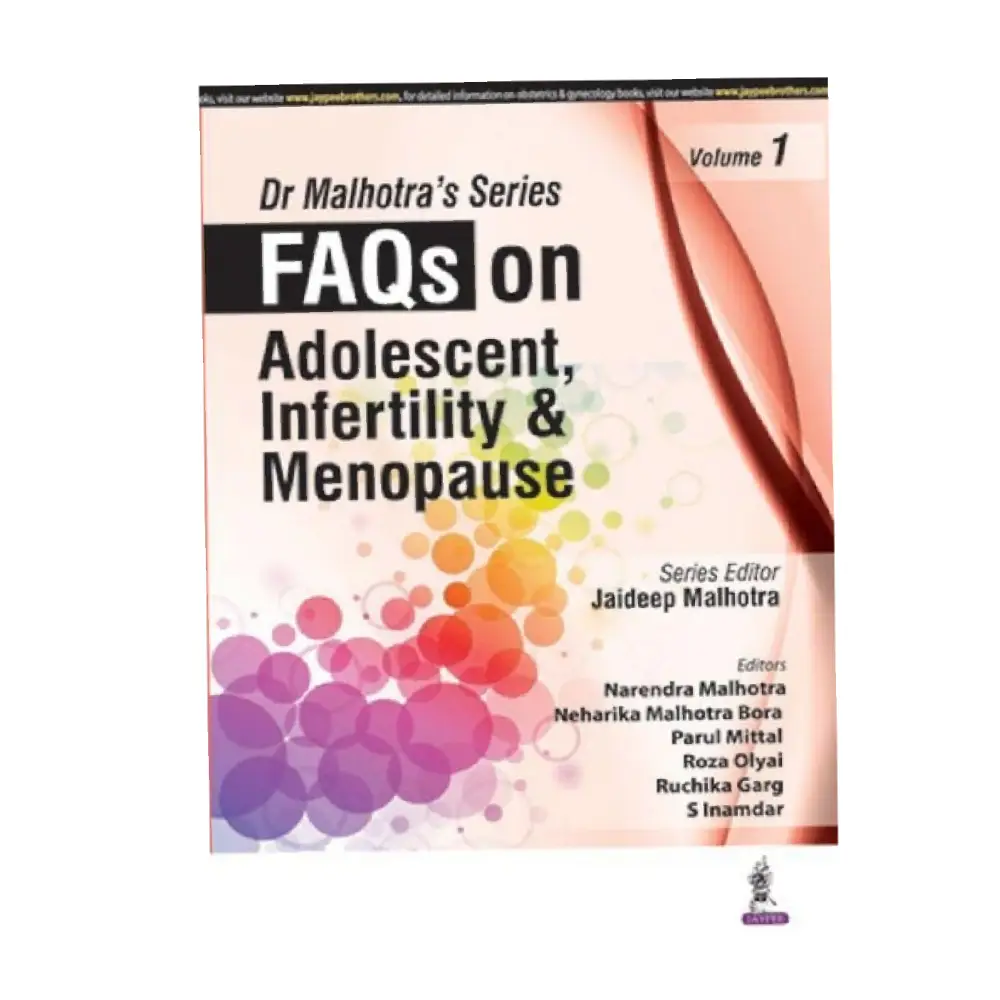
FAQs on Adolescent, Infertility & Menopause (Volume-1)
FAQs on Adolescent, Infertility & Menopause (Volume-1) is a clinically oriented reference book designed to address the most common and practical questions encountered in gynecological practice. Structured in a question-and-answer format, the book serves as a quick, evidence-based guide for postgraduate students, practicing obstetricians and gynecologists, and healthcare professionals involved in women’s health. The volume focuses on three critical phases of a woman’s reproductive life—adolescence, reproductive age with infertility concerns, and menopause—making it a comprehensive yet accessible resource.
The Q&A format is particularly useful for exam preparation, bedside discussions, and outpatient clinical decision-making. Instead of lengthy theoretical chapters, the book presents concise explanations, updated guidelines, and management algorithms that reflect contemporary practice standards. Each section is organized logically to move from basic concepts to advanced clinical management.
Section I: Adolescent Gynecology
The adolescent section addresses physiological and pathological conditions unique to teenage girls. Topics include:
-
Puberty and its hormonal regulation
-
Delayed puberty and precocious puberty
-
Primary and secondary amenorrhea
-
Abnormal uterine bleeding in adolescents
-
Polycystic ovarian syndrome (PCOS) in teenagers
-
Dysmenorrhea and endometriosis
-
Contraception counseling for adolescents
-
Sexually transmitted infections (STIs)
-
Vaccination strategies including HPV immunization
The book emphasizes sensitive counseling, confidentiality, and ethical considerations in adolescent care. Special attention is given to nutritional issues, eating disorders, anemia, and menstrual hygiene—important public health concerns in many developing regions. Algorithms for evaluating amenorrhea and abnormal bleeding are presented in a simplified, stepwise manner for practical use.
Section II: Infertility
The infertility section forms a core component of this volume. It systematically covers both male and female factors, ensuring a balanced and evidence-based approach. Frequently asked questions include:
-
What is the standard definition of infertility?
-
When should evaluation begin?
-
How to assess ovarian reserve?
-
Role of Anti-Müllerian Hormone (AMH) testing
-
Evaluation of tubal patency (HSG, laparoscopy)
-
Semen analysis interpretation
-
Management of anovulation
-
Unexplained infertility strategies
-
Indications for IUI and IVF
-
Luteal phase defects and hormonal therapy
The book integrates practical management protocols with updated recommendations. It discusses ovulation induction agents such as clomiphene citrate and letrozole, gonadotropin therapy, and assisted reproductive technologies. Counseling aspects—psychological stress, financial implications, and realistic success rates—are also addressed. Complications such as ovarian hyperstimulation syndrome (OHSS) and multiple pregnancy risks are explained clearly.
Additionally, the section touches on lifestyle factors affecting fertility, including obesity, thyroid dysfunction, hyperprolactinemia, and metabolic syndrome. By presenting common clinical scenarios in FAQ format, the text enhances clarity and retention.
Section III: Menopause
The menopause section provides comprehensive guidance on perimenopause and postmenopausal care. It answers common clinical questions such as:
-
What defines menopause?
-
How to manage vasomotor symptoms?
-
Indications and contraindications of Hormone Replacement Therapy (HRT)
-
Non-hormonal treatment options
-
Evaluation of postmenopausal bleeding
-
Osteoporosis screening and management
-
Cardiovascular risk after menopause
-
Urogenital atrophy and sexual dysfunction
The book emphasizes individualized treatment planning. It discusses risks and benefits of estrogen therapy, progesterone combinations, selective estrogen receptor modulators (SERMs), and non-hormonal alternatives. Lifestyle modifications, calcium and vitamin D supplementation, and weight-bearing exercise recommendations are included.
Special chapters focus on premature ovarian insufficiency (POI) and surgical menopause, highlighting differences in management compared to natural menopause. The evaluation of postmenopausal bleeding includes guidance on ultrasound endometrial thickness measurement and biopsy indications.
Key Features
-
Question-and-answer format for quick reference
-
Updated clinical guidelines and evidence-based practice
-
Practical algorithms and flowcharts
-
Focus on real-life clinical scenarios
-
Suitable for postgraduate exam preparation
-
Concise yet comprehensive coverage
The writing style is clear, structured, and clinically oriented. Tables and bullet points enhance readability. The book bridges the gap between theoretical knowledge and day-to-day practice, making it particularly useful in busy outpatient settings.
Target Audience
-
MD/MS (OBG) postgraduate students
-
DNB candidates
-
Practicing gynecologists
-
Family physicians
-
Reproductive medicine trainees
Conclusion
FAQs on Adolescent, Infertility & Menopause (Volume-1) is a practical and exam-focused resource that covers three crucial stages of women’s reproductive health. By addressing commonly encountered clinical questions in a structured and simplified manner, the book supports accurate diagnosis, evidence-based management, and patient-centered counseling. It serves as both a revision tool and a reliable clinical companion for healthcare professionals managing adolescent gynecology, infertility, and menopausal care.


Reviews
There are no reviews yet