
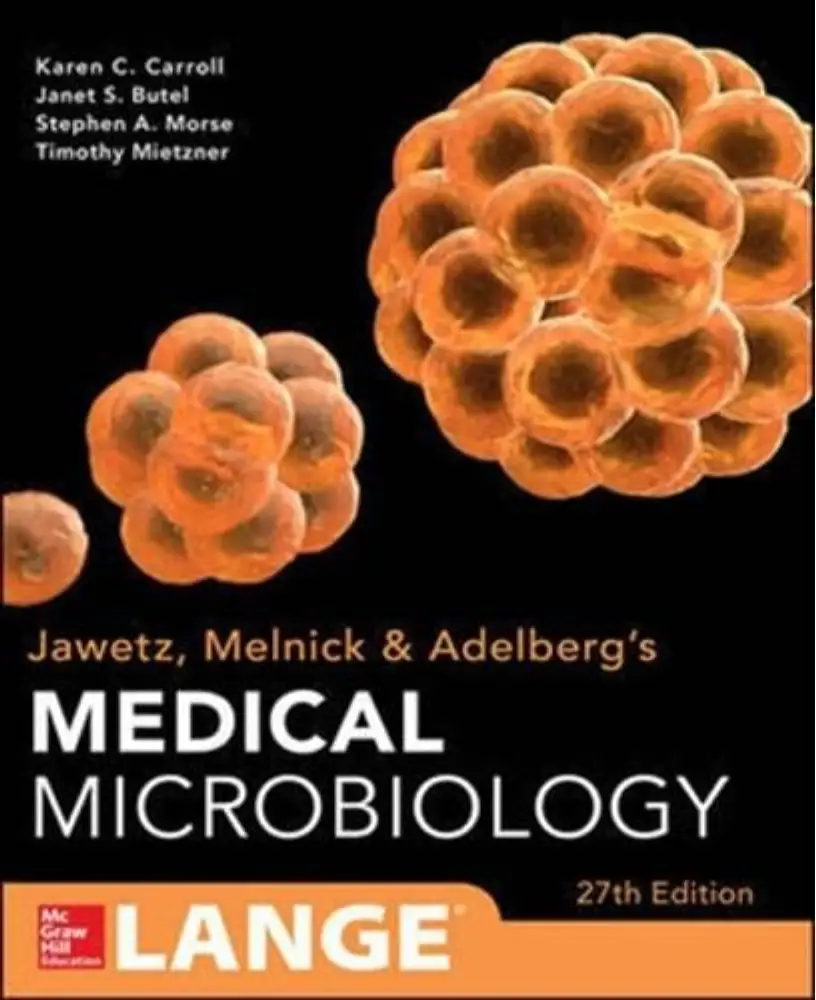

Jawetz, Melnick & Adelberg’s Medical Microbiology, 27th Edition
Jawetz, Melnick & Adelberg’s Medical Microbiology is one of the most respected and widely used textbooks in the field of clinical microbiology. The 27th edition continues the legacy of presenting essential microbiological concepts in a concise, clinically relevant manner suited for medical students, microbiology trainees, allied health professionals, and clinicians. Known for its clarity, authoritative coverage, and integration of basic science with clinical application, this edition reflects advances in pathogen biology, diagnostics, antimicrobial therapy, infectious disease epidemiology, and host‑pathogen interactions.
Purpose and Educational Value
The book’s primary objective is to provide a foundational understanding of the microorganisms that cause human disease and the mechanisms by which they cause illness. It bridges traditional microbiological science with clinical decision‑making, helping readers understand how pathogens are identified, how they interact with the host immune system, and how infections are prevented and treated. Emphasizing clinical relevance, this textbook includes numerous case studies, clinical correlations, diagnostic algorithms, and up‑to‑date therapeutic guidelines.
Structure and Organization
The text is organized into logical, interconnected sections that begin with general principles and progress into pathogen‑specific chapters:
-
General Concepts: These chapters introduce microbial classification, the structure and function of bacteria, viruses, fungi, and parasites, and fundamental concepts such as microbial genetics, virulence factors, pathogenesis, and antibiotic resistance. The host immune response—including innate and adaptive immunity—is treated in detail to explain how the body detects and combats infection.
-
Bacteriology: Pathogenic bacteria and the diseases they cause are discussed systematically. Each bacterial chapter reviews morphology, growth characteristics, virulence mechanisms, clinical manifestations, diagnostic features, and appropriate treatment options. Organisms are frequently grouped by clinical syndromes (e.g., respiratory pathogens, enteric pathogens) to aid understanding of disease presentations.
-
Virology: Viral pathogens are described with attention to their structure, replication strategies, and mechanisms of disease. Important human viruses—including influenza, hepatitis viruses, HIV, herpesviruses, and emerging pathogens—are covered. Discussions integrate pathophysiology with modern antiviral therapies and prevention strategies such as vaccination.
-
Mycology and Parasitology: Fungal and parasitic infections—though less common than bacterial and viral diseases—are clinically significant. This section includes systemic mycoses, opportunistic infections in immunocompromised hosts, and protozoal and helminth infections. Geographic distributions, life cycles, diagnostics, and specific pharmacotherapy are key teaching points.
Clinical Correlations and Diagnostics
A hallmark of Medical Microbiology is its emphasis on clinical application. Throughout the text, clinical case vignettes illustrate typical presentations, diagnostic pitfalls, and therapeutic strategies. These vignettes help readers apply microbiological knowledge to real patient scenarios—an essential skill for clinicians and trainees.
Laboratory diagnostics receive significant attention, reflecting their central role in modern infectious disease management. The manual explains traditional microbiological techniques—such as culture, microscopy, and staining—alongside molecular diagnostics including PCR, antigen detection, serology, and next‑generation sequencing. Each diagnostic modality is discussed in the context of sensitivity, specificity, turnaround time, and clinical utility.
Antimicrobial Therapy and Resistance
The 27th edition places special emphasis on antimicrobial therapy, providing a clear framework for selecting appropriate antibiotics, antivirals, antifungals, and antiparasitic agents. Drug mechanisms, spectrums of activity, pharmacokinetics, side effect profiles, and clinical indications are presented in user‑friendly tables.
Antimicrobial resistance—one of the greatest global health challenges—is a recurrent theme. The book explains mechanisms of resistance such as enzyme production (e.g., β‑lactamases), target modification, efflux pumps, and biofilm formation. Strategies for antimicrobial stewardship, infection control, and prevention of resistance emergence are incorporated into relevant chapters.
Epidemiology and Infection Control
Understanding how infectious diseases spread is crucial for both clinical management and public health. The textbook includes sections on epidemiology, modes of transmission (contact, droplet, airborne, vector‑borne), outbreak investigation, and surveillance. Infection prevention measures, including isolation precautions, sterilization and disinfection, vaccination policies, and outbreak containment strategies, are clearly explained.
Host‑Pathogen Interactions and Immunology
The interplay between pathogen virulence factors and host defenses underlies the clinical manifestations of infectious diseases. Medical Microbiology provides a detailed but accessible explanation of the immune system, including barriers to infection, pattern recognition receptors, cytokine signaling, cell‑mediated immunity, and antibody responses. These concepts help readers understand why certain populations—such as neonates, the elderly, or immunocompromised patients—are at higher risk of severe infection.
Emerging and Re‑emerging Infections
The 27th edition reflects modern challenges in infectious diseases, including outbreaks of emerging pathogens and re‑emergence of previously controlled diseases. Discussions include SARS‑CoV‑2 and COVID‑19, Ebola virus disease, Zika virus, antibiotic‑resistant organisms such as MRSA and CRE, and vaccine‑preventable infections with resurging incidence. These sections link microbiological principles with global health concerns and real‑world clinical implications.
Educational Features
To support learning, the book incorporates features such as chapter summaries, key points, review questions, glossaries, and visual aids including diagrams, flowcharts, and photographs of pathogens and diagnostic results. These elements make the textbook suitable for self‑study, classroom instruction, and exam preparation.
Conclusion
Jawetz, Melnick & Adelberg’s Medical Microbiology, 27th Edition remains an indispensable resource in the field of microbiology and infectious diseases. Its blend of foundational science, clinical application, diagnostic reasoning, and evidence‑based therapy makes it essential for medical education and clinical practice. By integrating traditional microbiology with modern advances in diagnostics, antimicrobial therapy, and epidemiology, this edition equips readers with the knowledge and clinical judgment needed to confront the evolving landscape of infectious diseases with confidence and competence.
Reviews
There are no reviews yet